
Antique Books
When you explore antique books, you step into centuries of paper, print, and binding that preserve past thought and design.
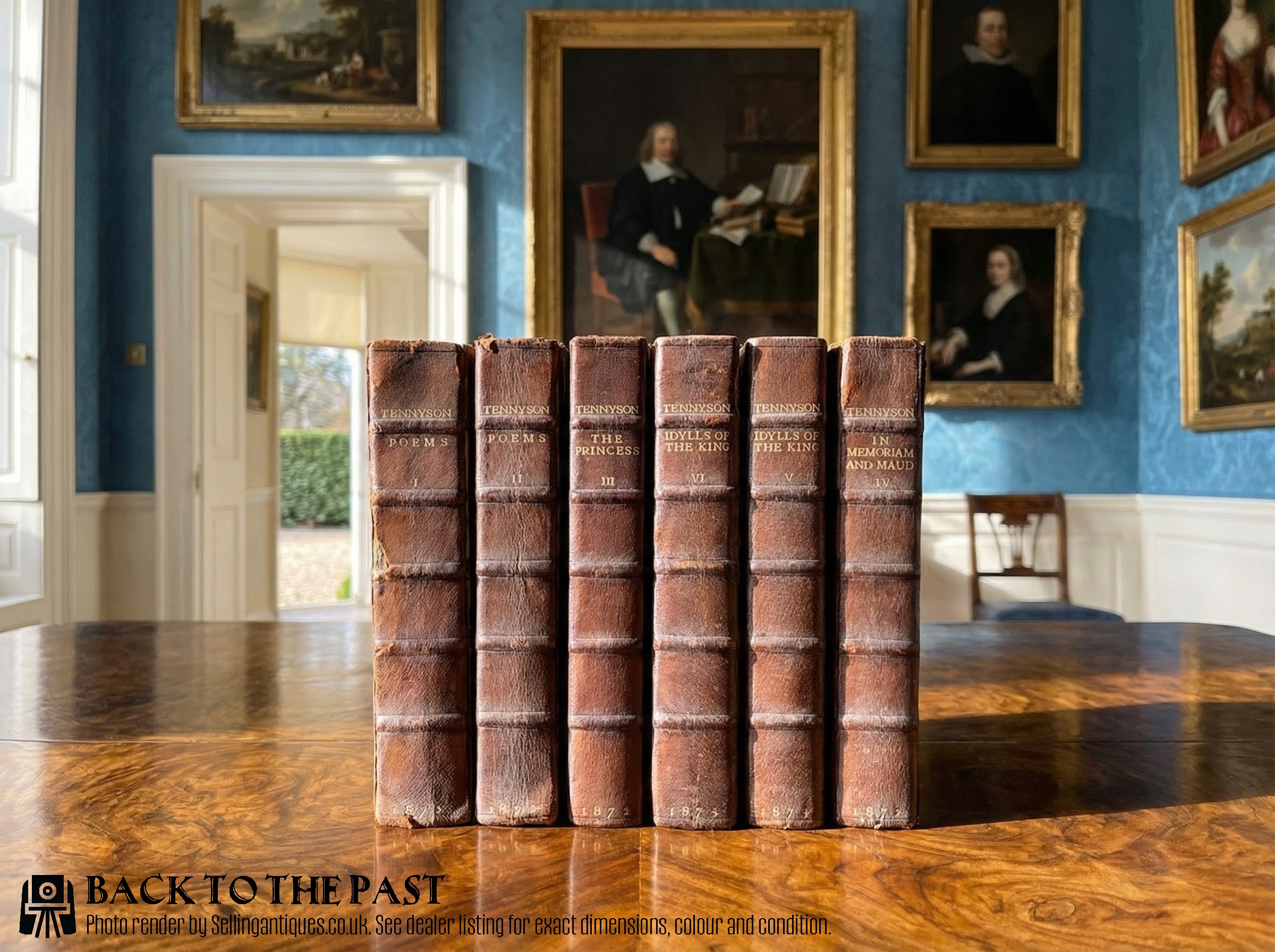
Antique Books
When buyers search for antique books, they encounter bound volumes, collected sets, and literature spanning the Georgian, Victorian, and Edwardian eras. These pieces include complete sets of plays, bound periodicals, and specialist journals printed on paper and secured within period bindings.
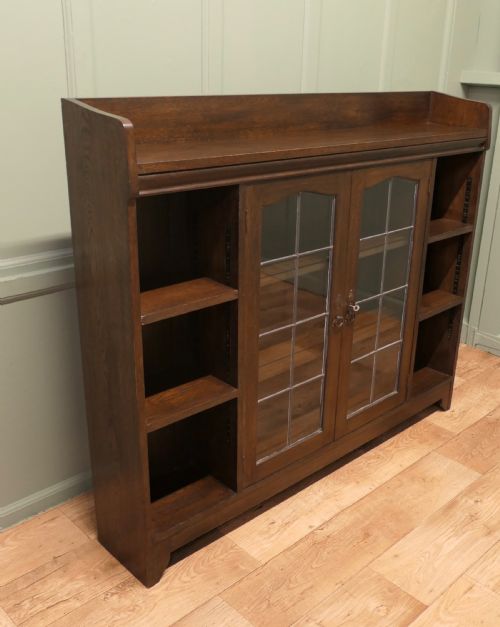
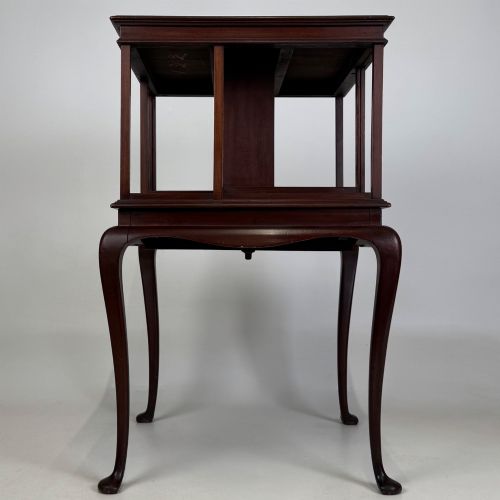
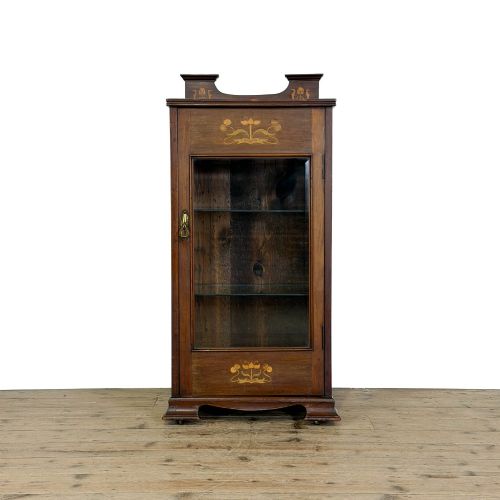
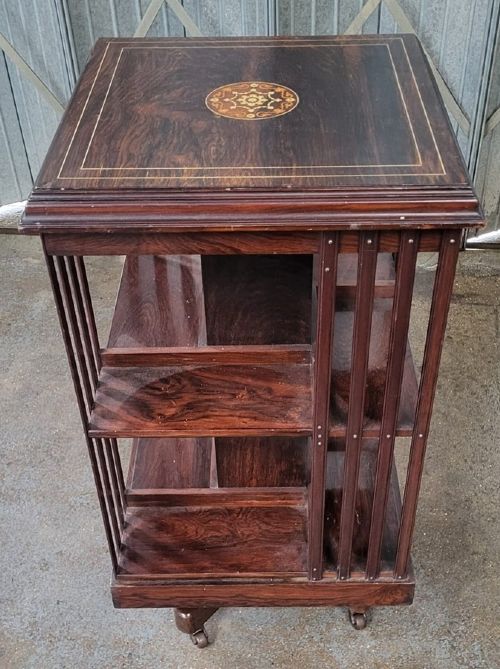
The selections available here range from single volumes printed in the mid-eighteenth century to multi-volume sets and journals from the late nineteenth and early twentieth centuries. Buyers also find related reading accessories such as bookstands, revolving bookcases, and carved bookslides.
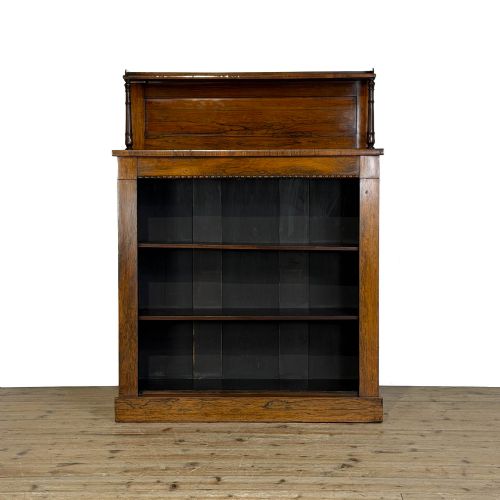
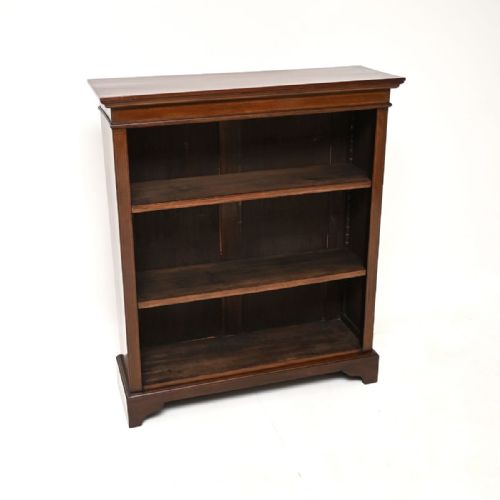
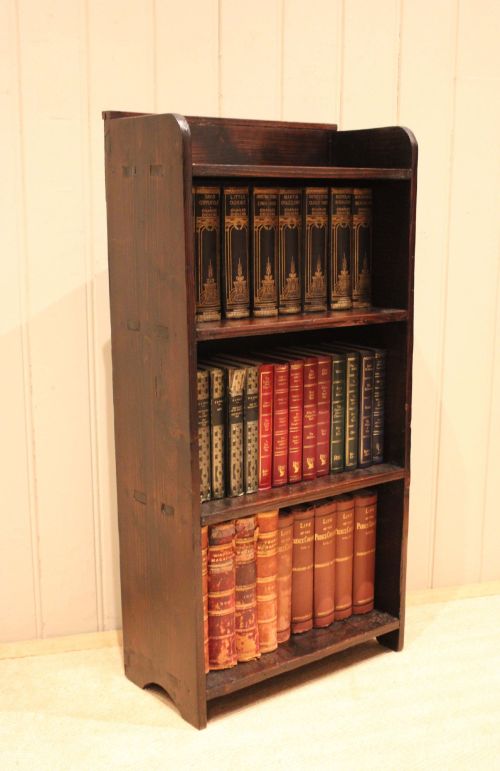
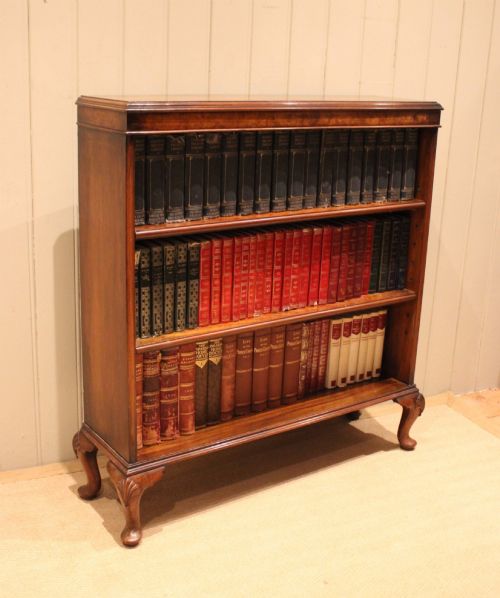
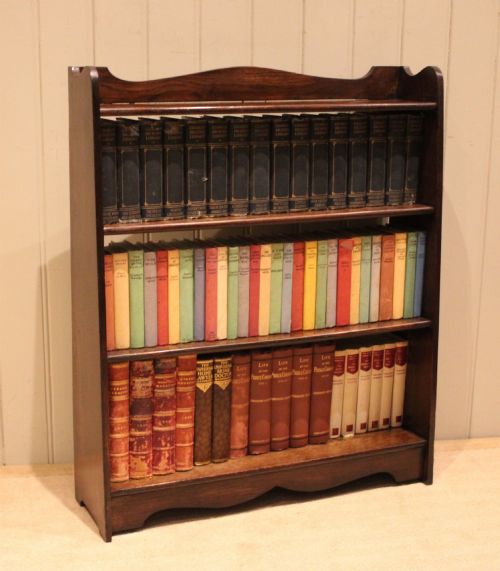
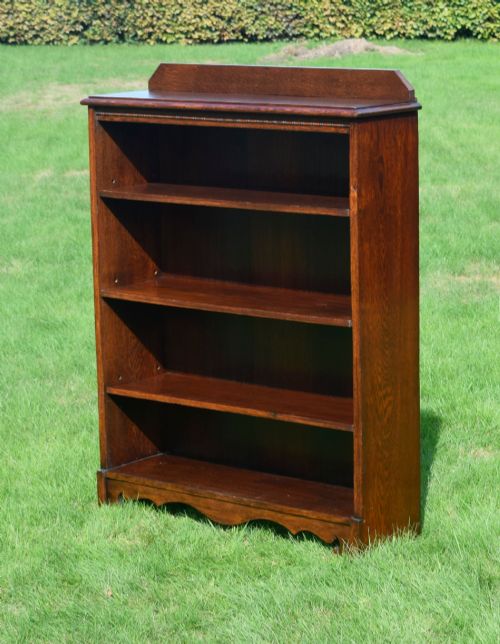
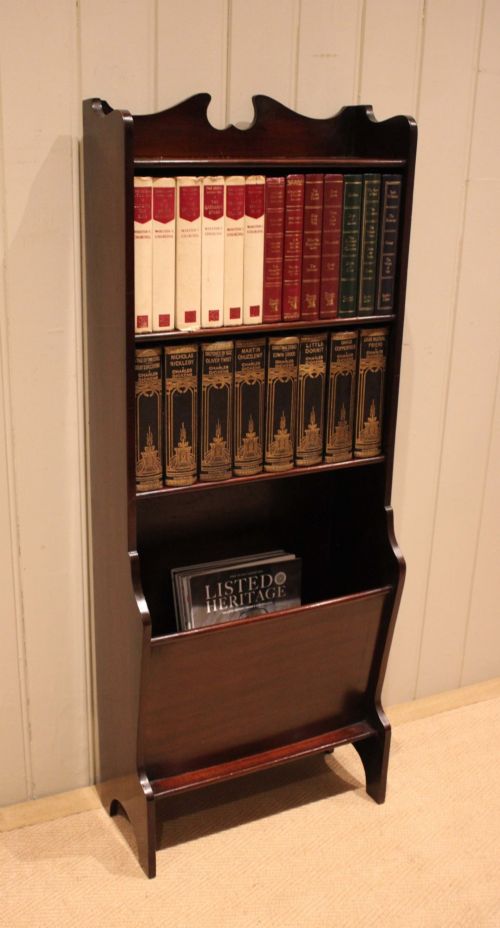
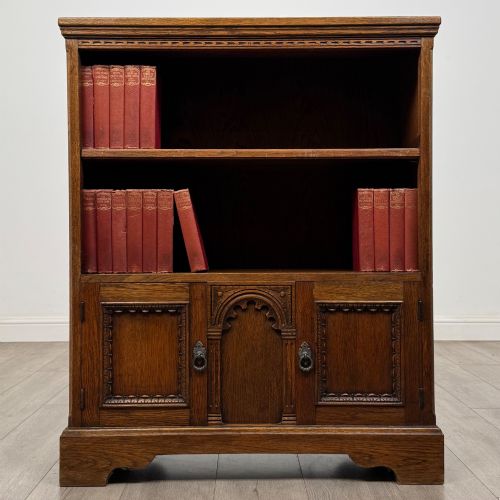
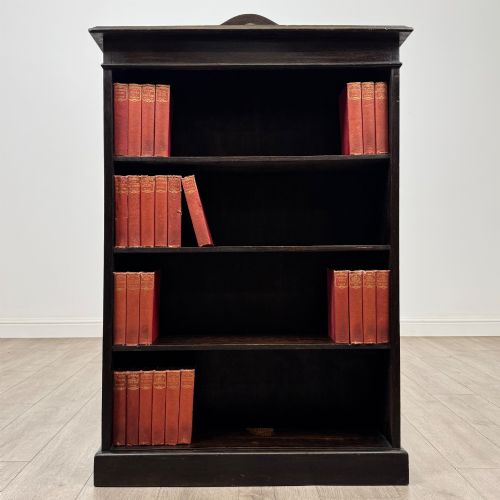
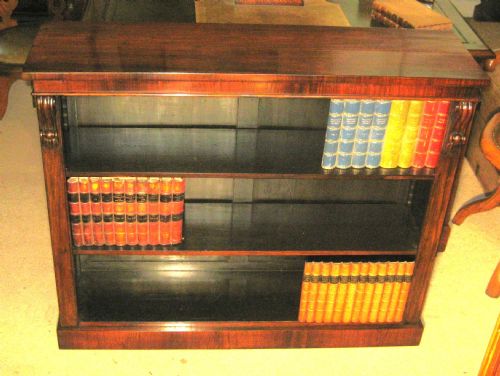
Period bindings often feature tactile surfaces like vellum and leather, while accompanying shelving utilises rich timbers such as mahogany, oak, and walnut. Selecting these volumes allows collectors to integrate historic literature directly into period interiors.
Materials and Construction
The material record highlights traditional papermaking and natural timber construction, relying on durable organic matter that survives across generations. Pages consist of high-rag paper stock paired with sturdy boards for covers.
Binders utilised leather, vellum, and gold leaf tooling to protect and ornament spines and covers. Furniture makers supplemented these volumes using dense hardwoods like mahogany, walnut, oak, and rosewood for housing them.
Joinery techniques on related shelving and bookstands involve traditional housing joints, dovetailing, and turnery for revolving mechanisms. Metal accents, where present, typically employ brass or gilt bronze.
History travels quietly in a stack of old law reports.
Evaluating Quality
The distinction between tiers of quality rests on the integrity of the original binding and the preservation of the paper stock. Superior examples retain crisp print, complete sets without missing volumes, and original leather or vellum covers with legible tooling.
Craftsmanship in associated pieces, such as revolving bookcases and bookstands, shows in smooth mechanical rotation and stable timber construction. Finer items exhibit careful timber selection, such as figured walnut or matched mahogany grain, rather than plain utility boards.
The Antique Books Glossary
- Vellum
- A fine parchment made from calfskin, frequently used for durable historic book bindings. It provides a smooth, creamy surface that accepts gold leaf lettering exceptionally well.
- Revolving bookcase
- A freestanding tabletop or floor-standing bookcase mounted on a hidden pivot. This allows a reader to access multiple shelves of books from a single seated position.
- Bookslide
- An adjustable rack designed to hold a small selection of volumes upright on a desk or table. Extending ends usually feature decorative carving or metal mounts.
- Waterfall bookcase
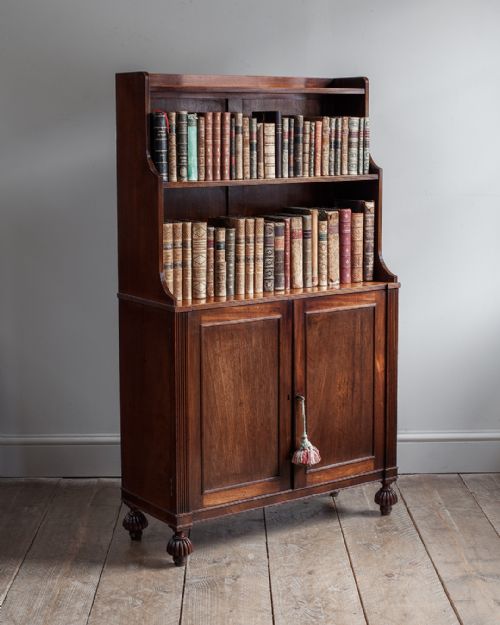
- A set of open bookshelves where each successive shelf steps back from the one below it. The cascading profile became popular during the Regency and Edwardian periods.
Antique Books: Frequently Asked Questions
What periods do these books represent?
The available selection spans from mid-eighteenth-century printings through the Georgian, Regency, and Victorian eras, extending into Edwardian publications.
Collectors encounter everything from eighteenth-century instructional texts to late-Victorian bound periodicals and twentieth-century literature sets.
How should I care for leather-bound volumes?
Leather-bound books require stable environmental conditions away from direct sunlight and excessive humidity to prevent the natural material from drying out.
Handling them with clean hands and allowing adequate airflow around shelving helps preserve the integrity of the paper and bindings.
Are period bookstands designed for heavy use?
Period bookstands and revolving bookcases were built from solid hardwoods like oak and mahogany to support substantial weights of dense paper volumes.
While robustly constructed with traditional joinery, they benefit from balanced loading to ensure smooth operation of moving parts.
How do I identify a complete set?
Complete sets typically share uniform publisher bindings, matching spine titling, and consecutive volume numbering across all included books.
Checking the publication dates and volume sequences against historical records confirms whether a multi-volume work remains intact.