




Georgian Bound Books
Georgian bound books bring together centuries of literature, history and science, encased in hand-tooled leather and gold leaf.
Georgian Bound Books
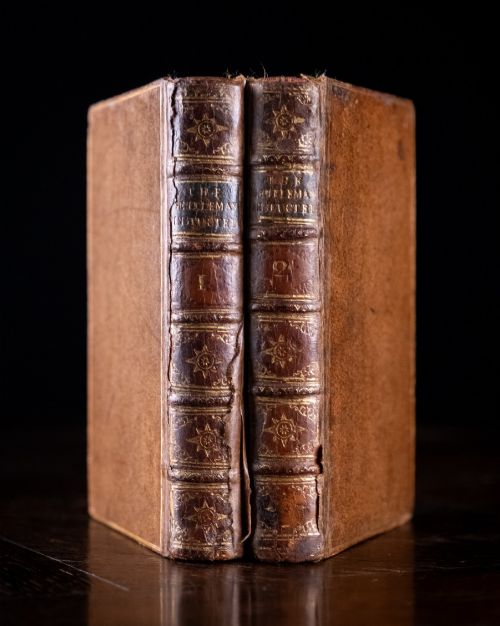
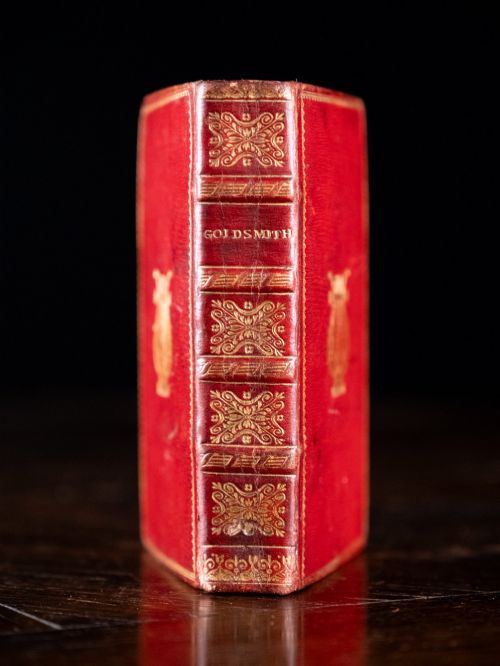
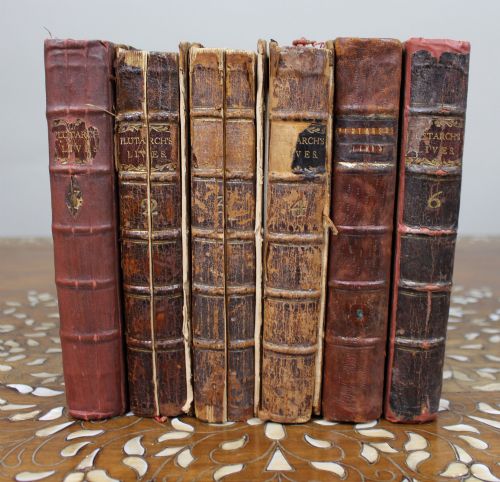
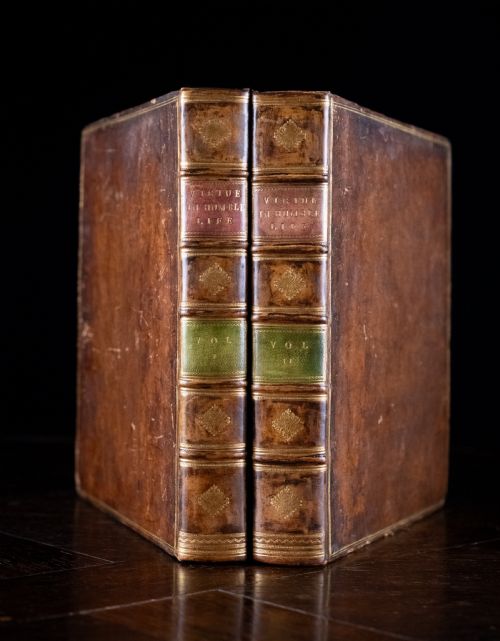
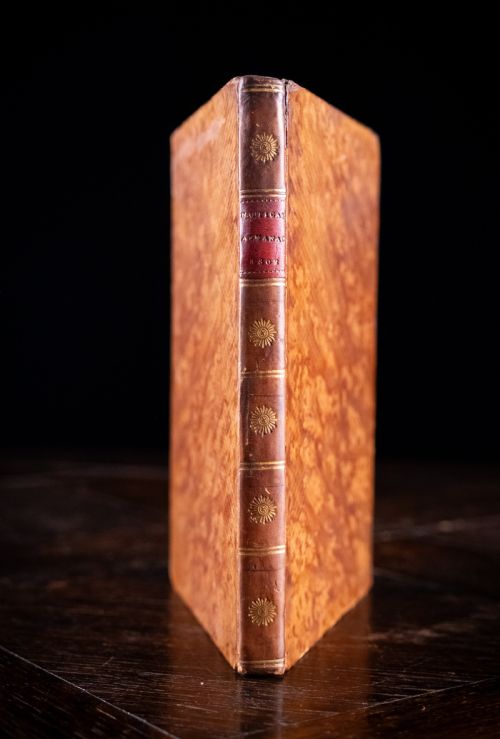
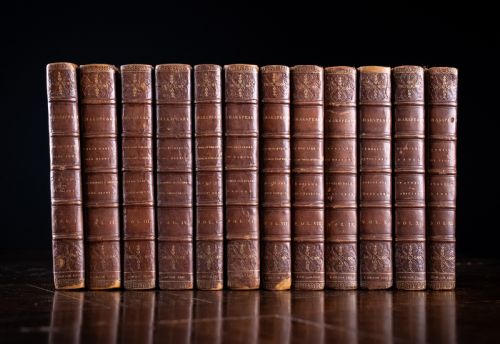
Georgian bound books comprise volumes produced during the eighteenth and early nineteenth centuries, encompassing multi-volume sets of plays, essays, religious texts and almanacs. Buyers searching for georgian bound books encounter everything from single miniature Bibles to extensive sets spanning six or twelve volumes.
The selections on this page feature works by notable historical authors alongside specialised prints like nautical almanacs and law books. Formats range from standard library editions down to miniature books designed to be carried or displayed in custom cabinets.
Evaluating Quality and Condition
The distinction between tiers often lies in the completeness of multi-volume sets and the original integrity of the leather binding. Uniformity across a complete run of several volumes commands greater interest than mismatched or partially assembled sets.
The crispness of the gold leaf tooling and the legibility of the spine lettering also indicate the skill of the original binder. Volumes retaining their original board structure and uncompromised internal paper blocks represent higher levels of preservation.
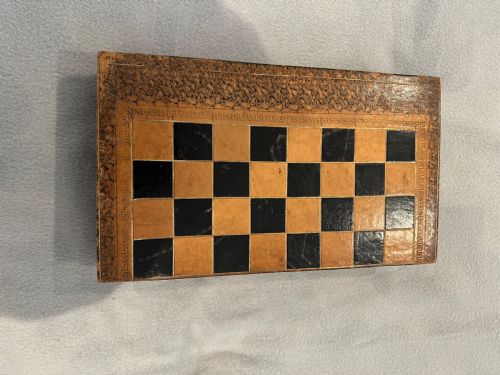
Victorian craftsmen occasionally produced leather-bound faux books that doubled as hidden games boards for the parlor.
J. and R. Tonson·Jean Dassier·J. Wheble·R. Wilkin·Newbery
The Georgian Bound Books Glossary
- Calfskin
- Leather derived from the hide of a calf, valued for its smooth grain and flexibility in bookbinding. It forms the primary protective covering for many volumes from this period.
- Gold leaf
- Extremely thin sheet gold applied to the leather surface for lettering and decoration. It provides the bright metallic finish seen on spine titles and border patterns.
- Miniature book
- An exceptionally small volume, often measuring only a few inches in height. These tiny works required specialised printing and binding techniques.
- Board
- The stiff material forming the core of the book cover beneath the leather. Historically made from compressed paper or wood, it gives rigidity to the binding.
- Raised bands
- Horizontal ridges across the spine created by the cords or strings used to sew the gatherings together. Binders often placed gold tooling between these ridges.
Georgian Bound Books: Frequently Asked Questions
How should I store these books?
Keep volumes away from direct sunlight and excessive moisture to prevent the leather from drying out or cracking. Upright storage on sturdy shelves prevents warping of the text block.
Ensure adequate air circulation around the books and handle the leather bindings with clean, dry hands to preserve the surface finish.
Are these complete sets?
Many listings comprise multi-volume sets, such as twelve-volume Shakespeare editions or multi-part historical works. Descriptions specify whether a set is complete.
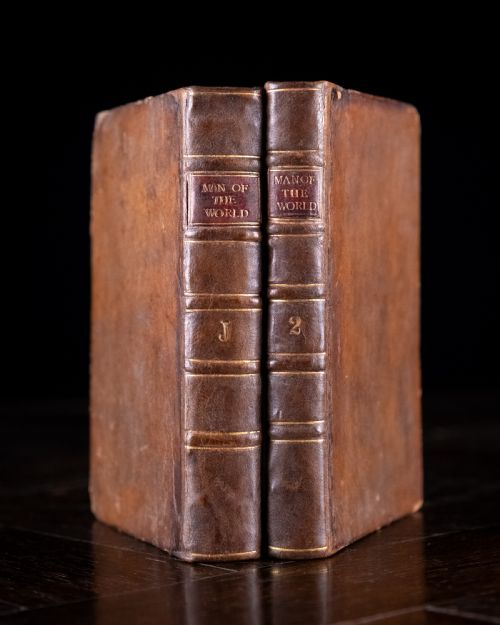
Individual volumes and smaller two-book sets also appear frequently among the available selections.
What subjects do they cover?
The topics span a wide range of eighteenth and nineteenth-century interests, including literature, poetry, religion, law and astronomy. Specialised publications like nautical almanacs and sporting magazines are also represented.
This variety reflects the broad publishing output of the Georgian era.
How can I tell the period?
Publication dates are frequently printed on the title pages or stamped into the bindings of these volumes. Stylistic clues in the leather tooling and typography also assist in dating.
Reference to reigns such as the Georgian or Regency periods helps contextualize the manufacturing era.