




Red Leather Book
These red leather book pieces span antiquarian volumes, games boards, and desk accessories bound in leather and gold leaf.
Red Leather Book
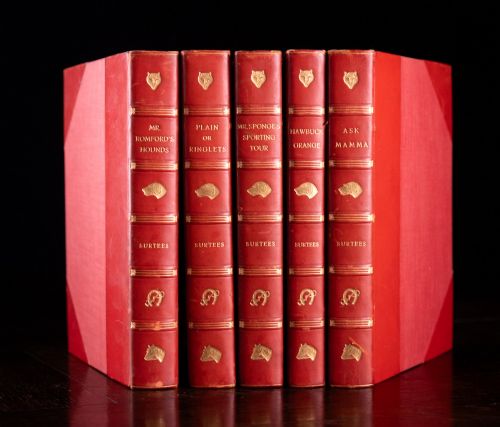
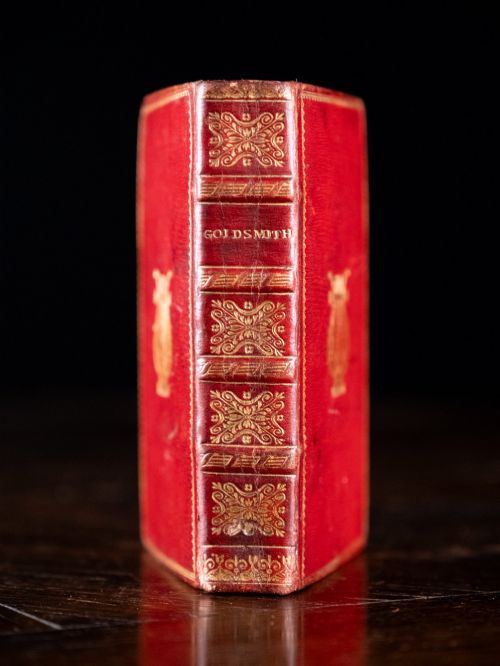
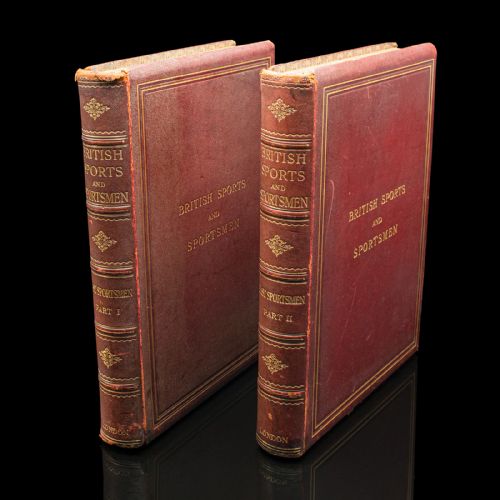
When you search for a red leather book, you encounter a varied selection of antique volumes, sets, and book-form objects produced across the nineteenth and early twentieth centuries. The pieces range from single miniature volumes and illustrated fiction to multi-volume sets of sporting novels and essays.
You are most likely to meet Victorian and Edwardian examples on this page, alongside earlier Regency items and William IV pieces. Beyond standard reading matter, the selection includes desk accessories, notebooks, chess and backgammon boxes, and games boards disguised as leather-bound volumes.
The material identity of these items rests primarily on leather bindings enhanced with gold leaf tooling. Accompanying materials like paper, cloth, brass, sterling silver, cardboard, and mahogany appear across the diverse assortment of books and book-form boxes.
How they were made
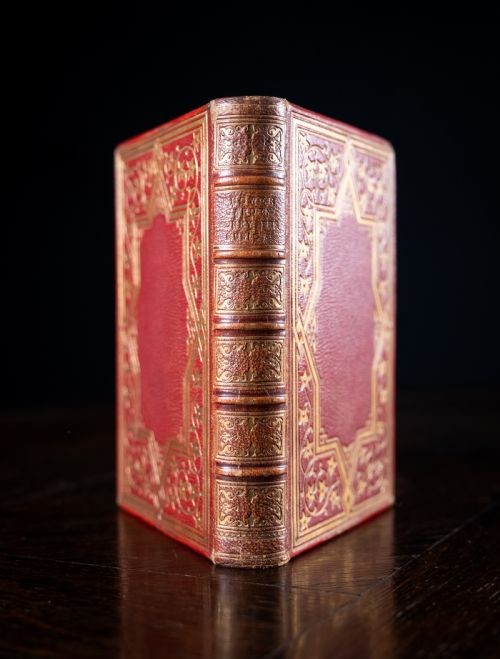
Makers constructed these volumes and boxes using sturdy card or paper text blocks encased in leather bindings. Artisans applied gold leaf tooling to the spines and covers to create decorative titles and intricate borders.
Specialist items incorporate supplementary elements such as brass fittings, sterling silver fronts, and mahogany frames. Games boards and boxes utilise carved wood and clever book-form construction to mimic actual literature.
The listings feature items spanning the Regency, Victorian, and Edwardian periods, constructed from leather, gold leaf, mahogany, and sterling silver.
What varies in quality
The grade of leather and the crispness of the gold leaf tooling determine the initial visual impact of each volume or box. Finer pieces display sharp, deeply impressed gilding and robust, uniform bindings that have endured decades of handling.
Completeness alters the character of multi-volume sets, where uniform bindings across all books indicate careful preservation. The inclusion of original plates, illustrations, or specialised sterling silver mounts elevates the execution of desk accessories and functional boxes.
The Red Leather Book Glossary
- Antiquarian
- Relating to books, manuscripts, and texts valued for their age and rarity. These items usually date from before the twentieth century.
- Gold leaf
- A sheet of beaten gold applied to leather bindings for lettering and decoration. This technique creates the bright metallic details on the spine and covers.
- Regency
- A period in British history spanning the early nineteenth century. Furniture and book arts from this time often reflect neoclassical design influences.
- Tooling
- The process of impressing decorative designs and lettering onto leather bindings. Artisans use heated tools to press gold leaf into the surface.
- Miniature book
- An extremely small volume designed for portability or decorative display. These tiny editions often feature detailed leather bindings.
Red Leather Book: Frequently Asked Questions
What periods do these books come from?
The listings include items originating from the Regency era, the Victorian period, and the Edwardian years. Many pieces date specifically across the nineteenth and early twentieth centuries.
Specific publication dates recorded in the evidence range from eighteen hundred and sixteen up to nineteen hundred and four. This chronology spans diverse literary and decorative bindings.
Are these items strictly books?
While many listings comprise actual printed volumes and multi-volume sets, several objects take the form of books for alternative functions. These include games boards, desk accessories, chess boxes, and notebook covers.
Craftsmen historically fashioned boxes and game boards to resemble leather-bound literature for discreet storage. This category blends traditional bookbinding with cabinet making.
What materials are used in the bindings?
Leather serves as the primary exterior covering for these volumes and boxes, frequently paired with gold leaf lettering. Internal structures incorporate paper, cardboard, and cloth.
Selected items feature more durable structural elements like mahogany wood, brass, and sterling silver fronts. These added materials appear on specialised desk accessories and decorative boxes.
How do multi-volume sets differ?
Sets vary from small collections of three volumes up to larger groupings of sixteen uniformly bound books. They cover subjects ranging from sporting novels to essays, poetry, and plays.
Authors represented in these sets include figures such as Robert Smith Surtees, Oliver Goldsmith, and George Meredith. The uniformity of the binding helps identify works published together.