






Regency Period Book
A regency period book or piece of library furniture brings together figured timbers and classical lines to hold a gentleman's library.
Regency Period Book
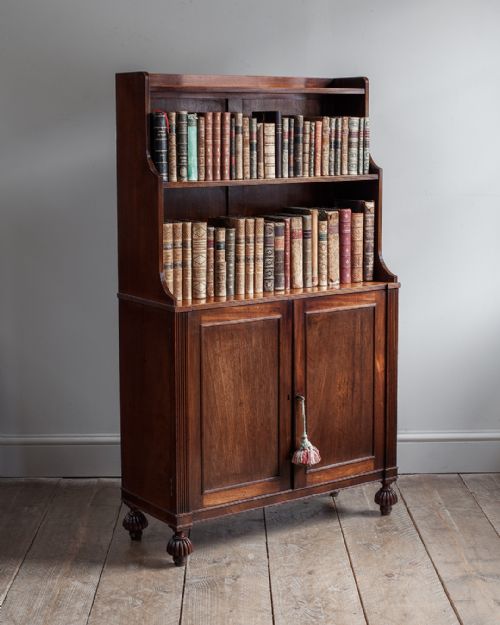
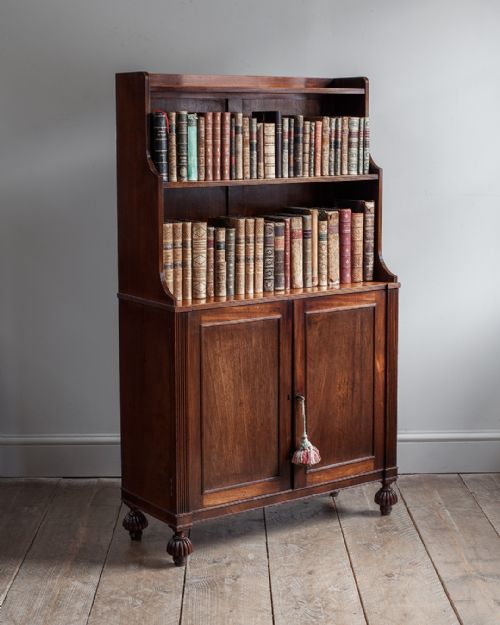
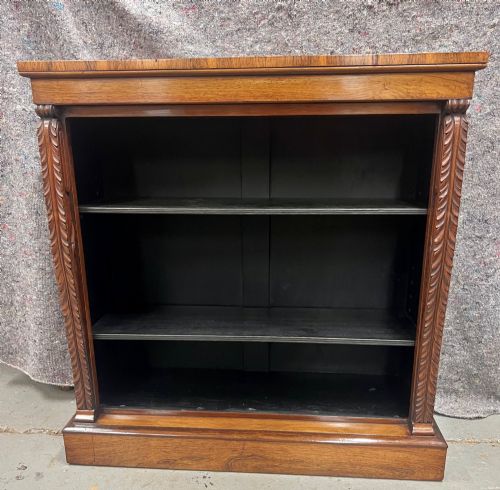
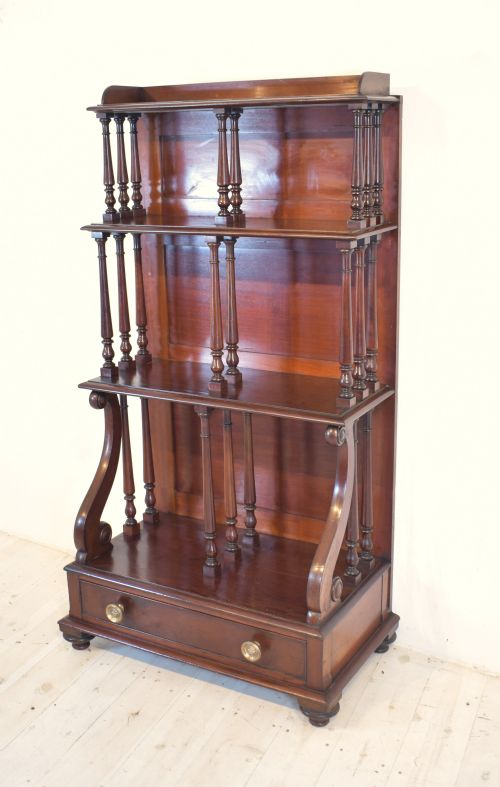
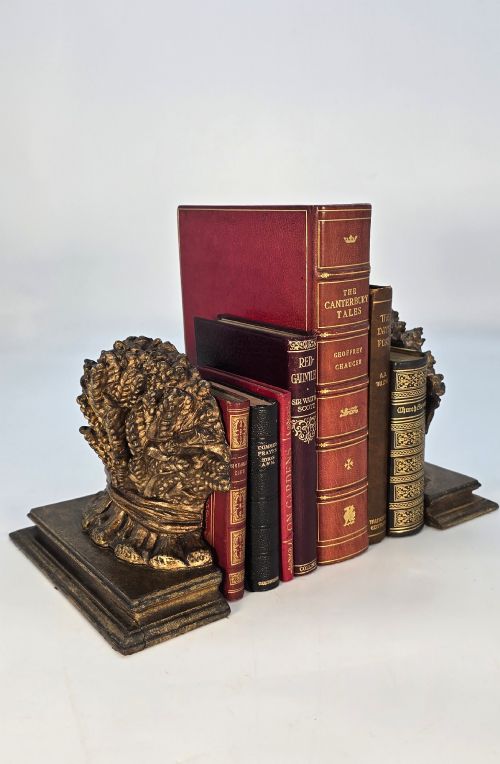
When a buyer explores a regency period book search, they encounter a range of library furniture designed to house and display volumes during the early nineteenth century. The selection spans open bookcases, multi-tiered waterfall bookcases, small dwarf cabinets, and portable book carriers.
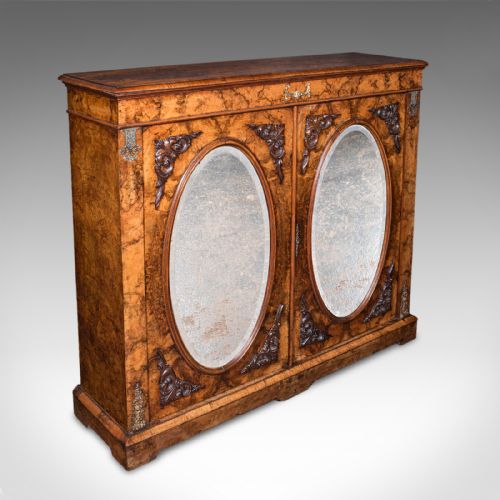
The pieces most frequently met on this page are mahogany and rosewood open bookcases and cabinet bookcases dating from the Regency and George IV eras. These range from compact dwarf units to large breakfront architectural pieces intended for the principal rooms of a country house.
Materials and construction methods
Cabinet makers of the period relied heavily on dense hardwoods, selecting figured mahogany and richly grained rosewood as the primary surfaces for library furniture. Secondary timbers such as oak and pine appear in carcases and drawer linings, whilst brass details, ormolu mounts, and leather inserts provide functional contrast.
Construction relies on precise cabinet-making techniques, including dovetail joints for drawers and graduated shelving supported on wooden racks or brass pins. Glazed doors utilise individual astragal mouldings to hold panes of glass, and open shelves often incorporate graduated tiers that recede towards the top.
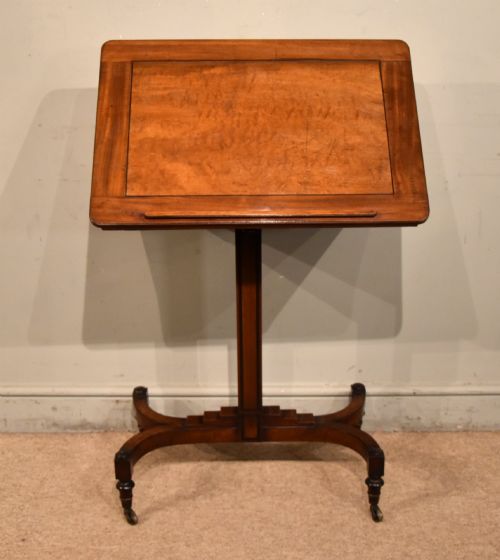
The listings combine mahogany and rosewood library furniture with smaller items including desk stands, music reading tables, and framed portrait art.
Distinctions in craftsmanship
The standard of a regency period book cabinet rests upon the selection of timber veneers and the crispness of applied carving rather than sheer scale. Pieces featuring book-matched flame mahogany or richly figured rosewood demonstrate greater ambition from the workshop.
Proportion and architectural detail set finer examples apart from standard provincial work. Well-executed brass inlay, finely turned columns, and integrated secretaire drawers indicate superior design and construction by leading cabinet makers.
Walker of Lancaster·Gillows of Lancaster·Mathew Gregson
The Regency Period Book Glossary
- Waterfall bookcase
- A graduated set of open shelves where each tier steps back from the one below, creating a cascading profile popular during the Regency period.
- Secretaire bookcase
- A tall cabinet featuring a pull-out writing drawer with a fitted interior of small drawers and pigeon holes concealed behind a drop-front panel.
- Breakfront
- A cabinet design where the central section projects forward from the flanking wings, adding architectural depth to large library bookcases.
- Astragal glazed
- Doors fitted with thin wooden bars that divide the glass into smaller panes, allowing books to be viewed while protected from dust.
- Book carrier
- A small portable stand or trough fitted with a central handle, designed to hold a selection of volumes on a desk or table.
Regency Period Book: Frequently Asked Questions
How do I care for a rosewood bookcase?
Keep wooden library furniture away from direct sunlight and strong heat sources to prevent the rosewood veneers from drying out and splitting over time.
Apply a traditional beeswax polish sparingly with a soft cloth to maintain the natural sheen of the timber without building up a heavy residue.
Were these bookcases meant for ordinary novels?
Library furniture of this era was commissioned by wealthy patrons to house leather-bound reference volumes, classical texts, and first editions rather than cheap modern novels.
Many tall cabinets incorporate adjustable shelving specifically to accommodate folio volumes and large plate books.
How can I tell a Regency bookcase from a Victorian copy?
Examine the interior construction and timber fixings, as Regency pieces typically use hand-cut dovetails and solid secondary woods like oak rather than cheap pine.
Check the glass in glazed doors for small bubbles and slight distortions that indicate older cylinder or crown glass production.
Where were low bookcases placed in a Regency interior?
Low open bookcases and dwarf cabinets were designed to stand beneath parlour windows or against drawing room walls without blocking the natural light.
Their upper surfaces provided a convenient ledge for displaying small bronzes, decorative ceramics, or table clocks.