
Antique Book Stand Desk
These antique book stand desk options bring functional Victorian and Regency reading furniture into daily study spaces.
Antique Book Stand Desk
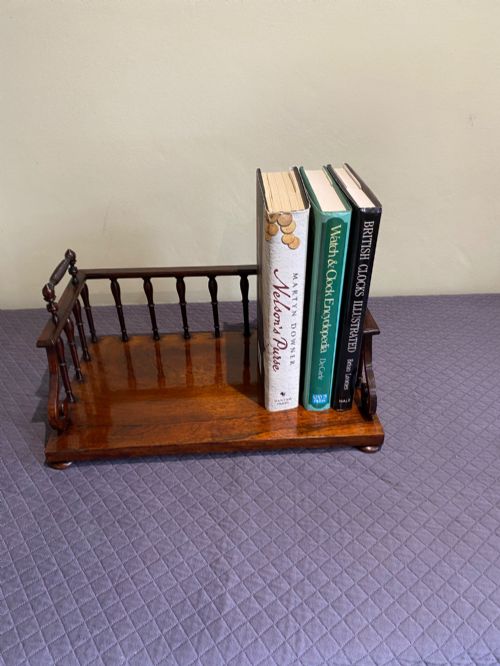
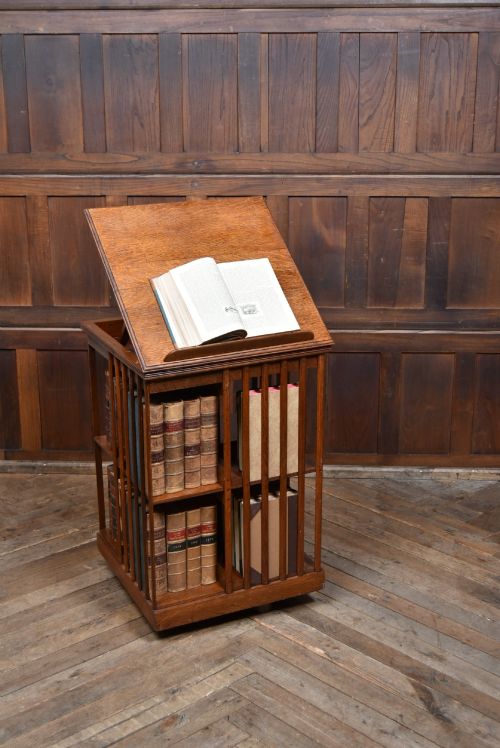
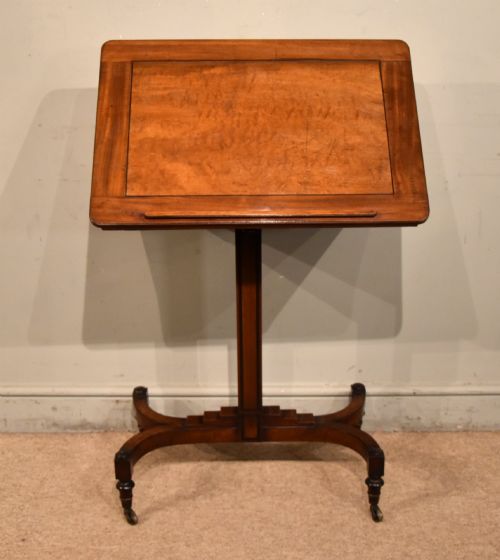
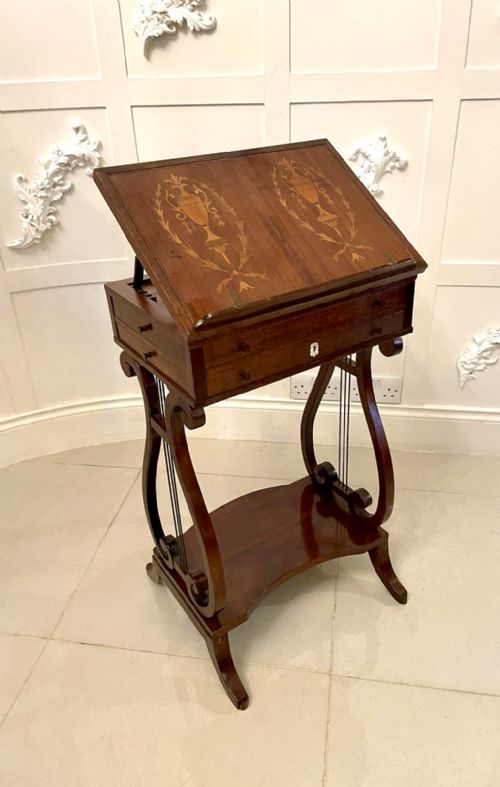
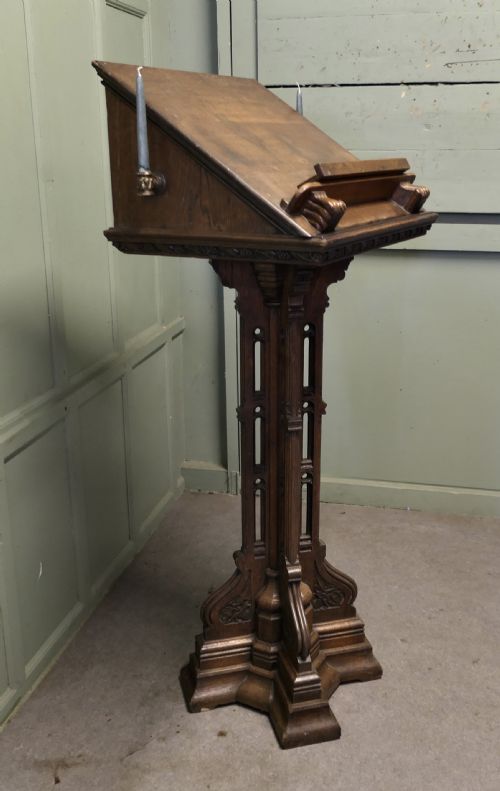
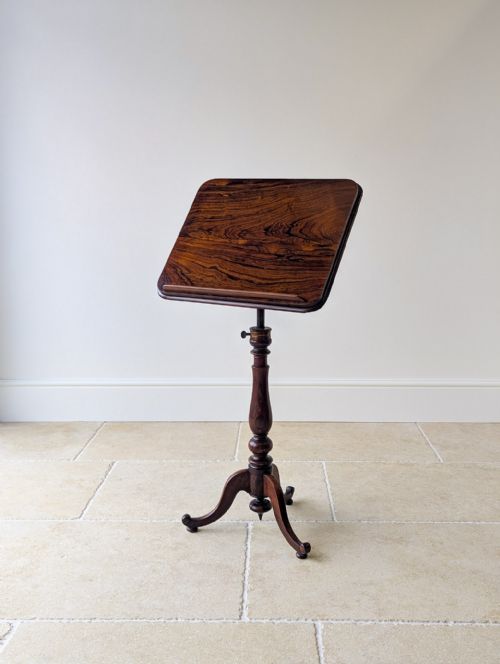
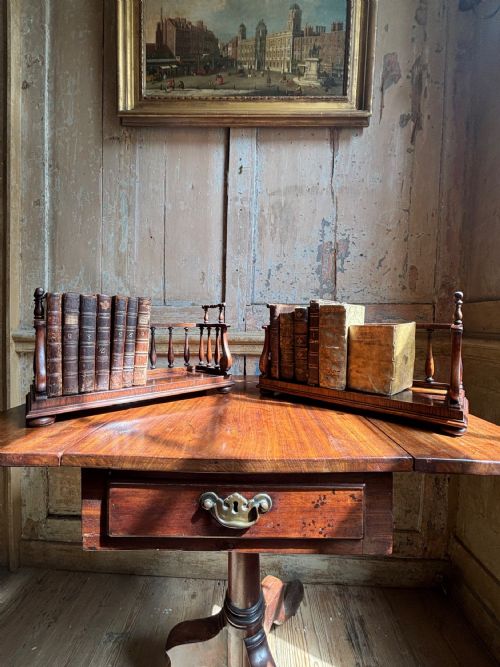
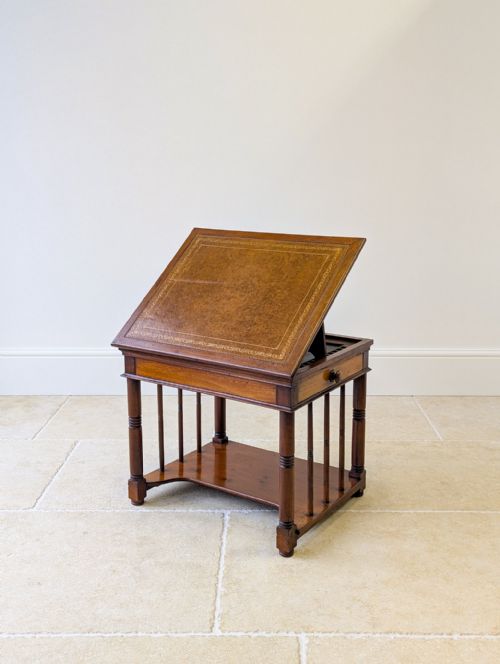
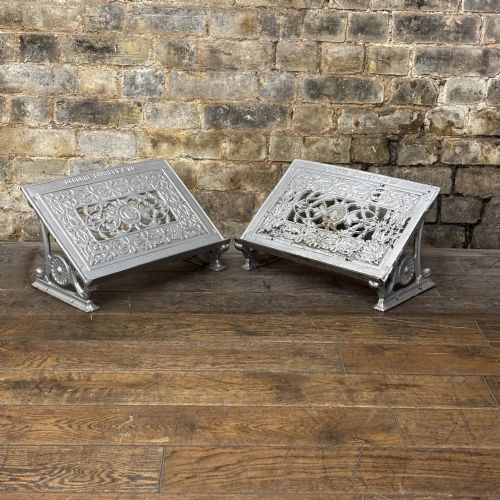
An antique book stand desk gathers portable table-top book rests, reading tables, and adjustable lecterns intended for holding texts at a comfortable angle. When searching for an antique book stand desk, buyers meet diverse forms ranging from compact mahogany book carriers to heavy oak church lecterns and revolving bookstands.
The selection on this page draws heavily from nineteenth-century and early twentieth-century workshops, encompassing Regency, Victorian, and Edwardian eras. Pieces vary from simple pine book slides to elaborate rosewood reading tables combined with occasional or writing furniture.
Materials and construction
Cabinetmakers utilised dense timbers such as mahogany, oak, rosewood, and walnut, frequently selecting figured grains for visible surfaces. Brass fittings appear on adjustable ratchets, hinges, and sliding bookends to provide secure mechanical movement.
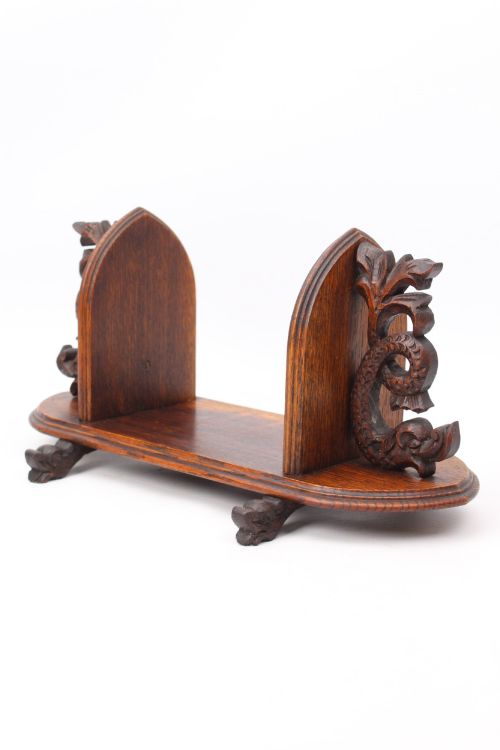
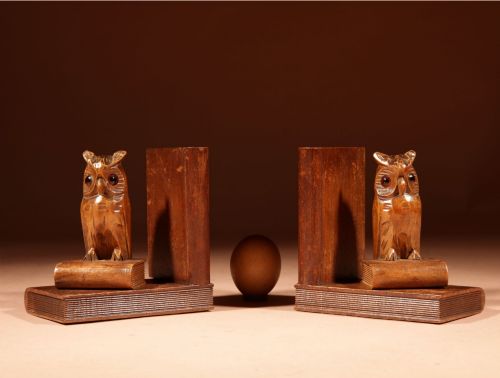
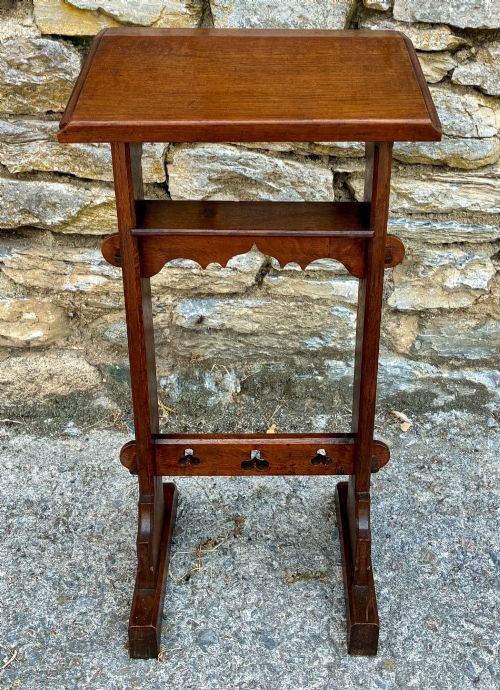
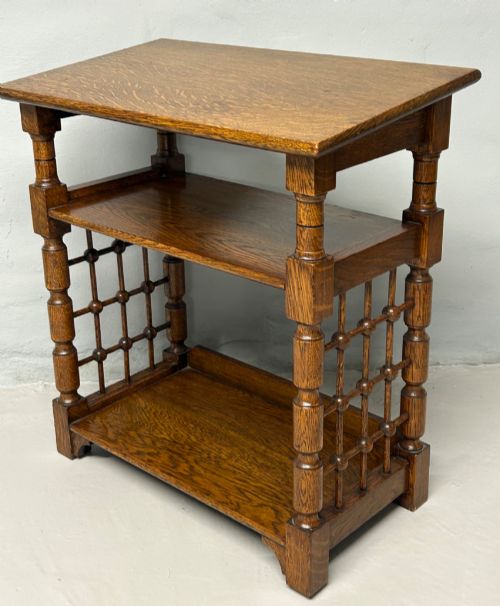
Carving and joinery define the decorative elements, seen in the pierced fretwork of Arts and Crafts stands and the naturalistic animal carvings of Black Forest bookends. Pine and cast iron provide sturdy structural support for heavier church lecterns and institutional reading stands.
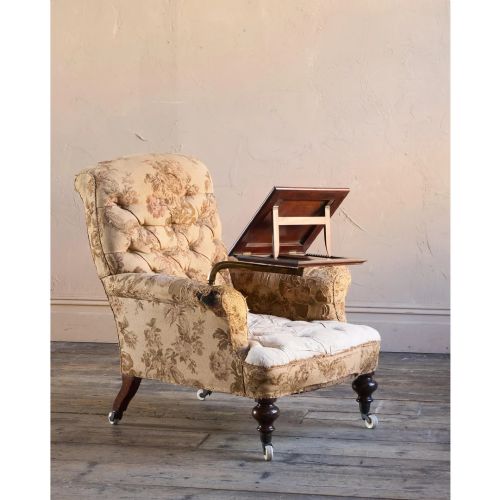
Object types range from desk-top book rests and church lecterns to revolving bookcases and library armchairs with reading attachments.
What separates the grades
The standard of timber selection and complexity of mechanical adjustment dictate the tier of a piece. Finer examples integrate smoothly operating brass ratchets and screw mechanisms that hold heavy volumes securely without slipping.
Hand-carved detailing, such as the sculptural depth found on Black Forest owl bookends or Gothic Revival tracery, distinguishes superior workshop output from simpler utilitarian items.
Arthur Simpson·Osborne Garrett and Co·Carters Of London·Gillows
The Antique Book Stand Desk Glossary
- Lectern
- A tall stand with a sloping top designed to hold a book for reading aloud. These often appear in oak or pine for ecclesiastical or institutional use.
- Book slide
- An expanding rack with sliding ends that keeps volumes upright on a desk surface. They frequently incorporate brass mounts and exotic woods.
- Reading table
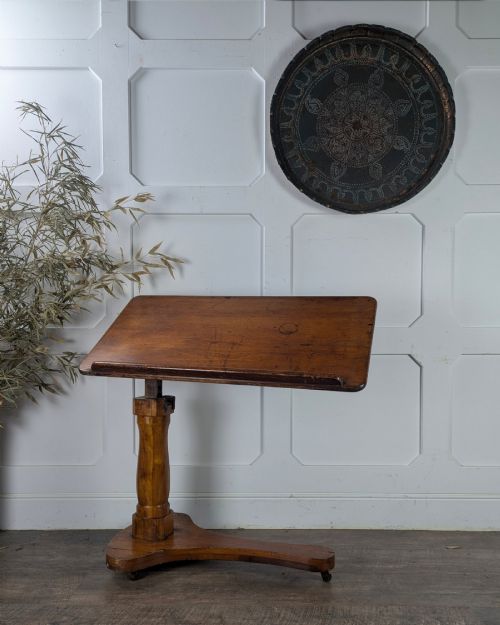
- A specialised table equipped with an adjustable top for supporting books or writing materials. Many date from the Regency and Victorian periods.
- Revolving bookcase
- A compact shelving unit mounted on a pivot that allows access to books from any angle. They appear in walnut and mahogany forms.
- Book trug
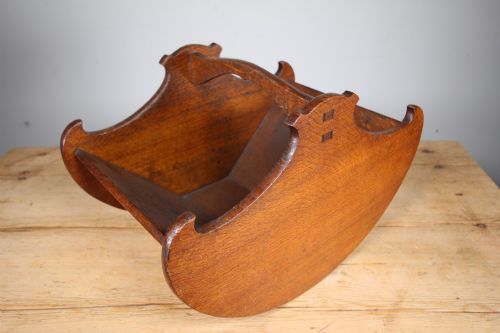
- A shallow wooden carrier fitted with a central handle for transporting volumes between rooms. Arthur Simpson examples are notable within the Arts and Crafts tradition.
Antique Book Stand Desk: Frequently Asked Questions
How do I adjust the reading angle?
Most antique reading stands utilise a brass ratchet mechanism fitted beneath the book rest. Lifting the wooden ledge allows the support arm to drop into successive notches for the desired slope.
Heavier library tables and campaign stands often employ screw adjustments or folding struts. Care should be taken to support the weight of the book while altering the angle to protect older brass components.
Where were these stands used originally?
These reading supports served multiple environments across the home, church, and study. Smaller book carriers and desk rests sat upon large writing tables in private libraries.
Larger lecterns and podiums found placement in churches, restaurants, and reception areas. Revolving bookcases provided convenient book storage beside armchairs and writing desks.
How do I care for rosewood and mahogany?
Polishing timber surfaces requires traditional beeswax applied sparingly with a soft cloth. Avoid placing these pieces in direct sunlight or near heat sources to prevent the wood from splitting.
Brass fittings benefit from gentle cleaning without abrasive metal polishes that might damage the surrounding timber. Regular dusting keeps the carved details and joints free from grit.
Are these stands suitable for modern books?
Most antique book rests and slides accommodate modern hardbacks and reference volumes easily. Adjustable ledges and sliding ends adapt well to varying book thicknesses and weights.
Extra care is necessary with heavier volumes on delicate nineteenth-century ratchets. Selecting appropriately sized stands ensures both the book and the antique mechanism remain secure.