
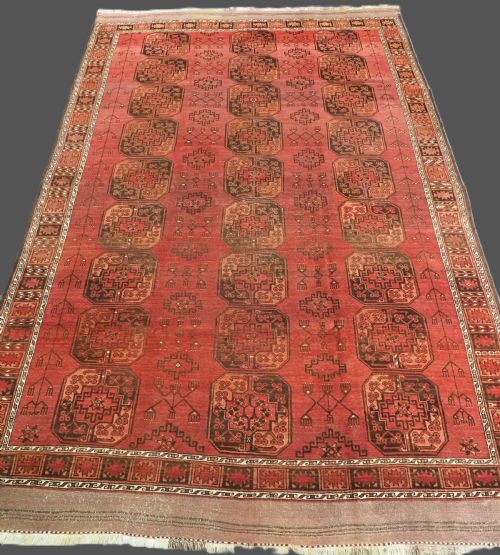


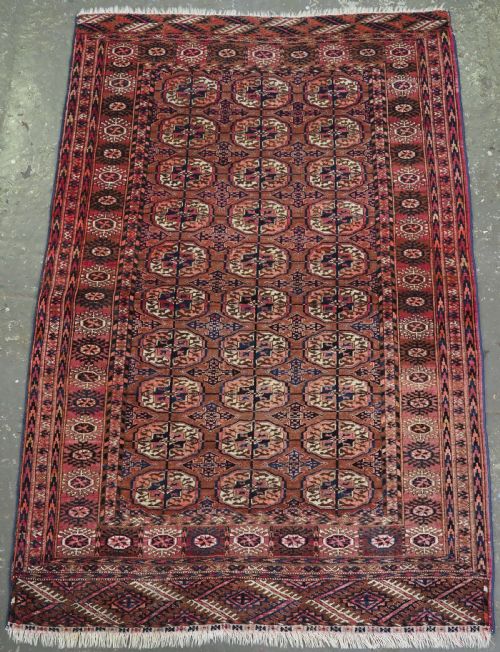

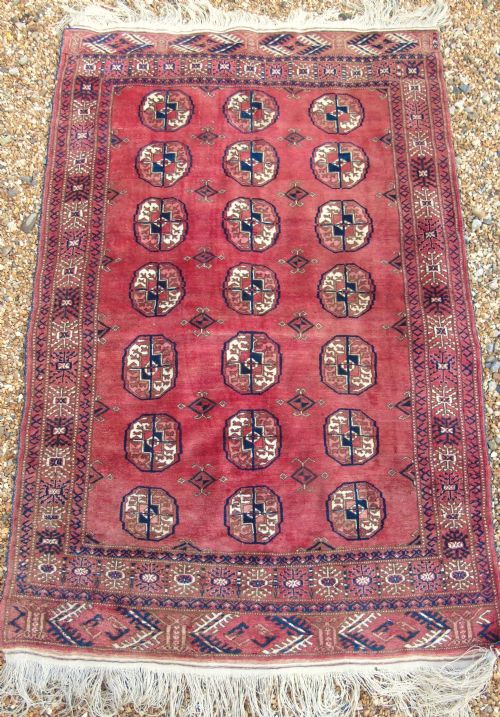

Antique Bokhara Area Carpet
These hand-knotted tribal floor coverings deliver rich, deep reds and repeating geometric guls that anchor a traditional interior.
Antique Bokhara Area Carpet
An antique bokhara area carpet brings centuries of Central Asian tribal weaving tradition directly into a modern domestic setting. These pieces primarily encompass Turkmen tribal works, particularly from the Tekke and Ersari groups, alongside Afghan village variations.
The selections span from the mid-nineteenth century through to the early twentieth century, showing formats that range from intimate dowry rugs to expansive main carpets. Buyers encounter distinct regional sub-types, including Beshir weaves and Russian export pieces, defined by their structured layouts.
The primary forms on this page include large floor carpets, square formats, and smaller wedding or dowry rugs. Each piece carries the distinct geometric vocabulary of its makers, executed in traditional formats passed down through generations.
How They Were Made
These carpets are constructed using wool for both the pile and the foundational structure, yielding a dense, hard-wearing textile designed for sustained daily use. Weavers utilised natural dye sources to achieve the characteristic warm red grounds, occasionally incorporating cochineal highlights.
The techniques rely on precise knotting traditions tied to specific tribal groups such as the Tekke and Ersari, creating firm foundations and durable pile. Artisans structured the fields with repeating geometric motifs, meticulous borders, and end finishes that reflect the practical demands of nomadic and village life.
Listings feature wool Turkmen tribal rugs and carpets dated between eighteen sixty and nineteen thirty.
What Varies in Quality
The standard of a weaving is visible in the density of the knotting and the crispness of the geometric gul motifs across the field. Finer examples maintain an even, full pile and precise symmetry in the border arrangements.
Depth and variation in the natural dye colours contribute significantly to the visual weight of the textile. Pieces retaining soft wool textures and vibrant cochineal or warm red tones demonstrate superior material selection.
The Antique Bokhara Area Carpet Glossary
- Gul
- A primary octagonal medallion motif repeated across the field of Turkmen carpets. Each tribal group utilises distinct variations of these primary design elements.
- Ersari
- A Turkmen tribe inhabiting the Amu Darya basin, recognised for larger main carpets with bold, spacious geometric designs. Their palette often incorporates broader colour variation than other tribal groups.
- Beshir
- A sub-type of Ersari weaving originating from the middle Amu Darya region, known for more unusual prayer designs and floral influences. These pieces display greater freedom in their layout.
- Dowry rug
- A smaller textile woven as part of a bride's traditional possessions, often featuring delicate proportions and soft wool. These examples were frequently kept for ceremonial use.
- Main carpet
- A large-format floor covering intended for principal domestic spaces within a tribal or village dwelling. These substantial pieces require considerable time and skill to produce.
Antique Bokhara Area Carpet: Frequently Asked Questions
How do I clean an antique carpet?
Surface dust should be removed gently using a suction-limited vacuum without a beating bar. Professional textile cleaners experienced in antique wool should handle any deep washing.
Water and harsh chemical detergents must be avoided to protect the natural wool pile and traditional dyes. Prompt attention to spills by blotting prevents moisture from settling into the foundation.
Where were these carpets made?
These textiles originate from Central Asia, specifically regions associated with Turkmen tribes and Afghan village workshops. The historical Emirate of Bukhara served as a major trading hub for these goods.
Nomadic and settled weavers across these territories produced the rugs for local use, regional trade, and export markets. European demand later shaped the production of specific export formats.
Are these carpets suitable for heavy foot traffic?
Many examples were constructed to be hard-wearing and heavy-duty, making them durable enough for everyday domestic use. The dense wool pile handles standard walking when placed over an appropriate underlay.
Placing delicate dowry rugs in low-traffic areas preserves their fine pile and softer structure. Main carpets and utility rugs easily accommodate regular placement in active rooms.
How do I identify a Tekke rug?
Tekke pieces are distinguished by orderly rows of repeating octagonal guls set against a warm red ground. The secondary motifs and borders maintain a strict, balanced geometry.
Finer examples exhibit tight knotting on the reverse and rich cochineal highlights within the field. The scale of the guls helps differentiate them from larger Ersari or Beshir works.