




Antique Boarded Coffer
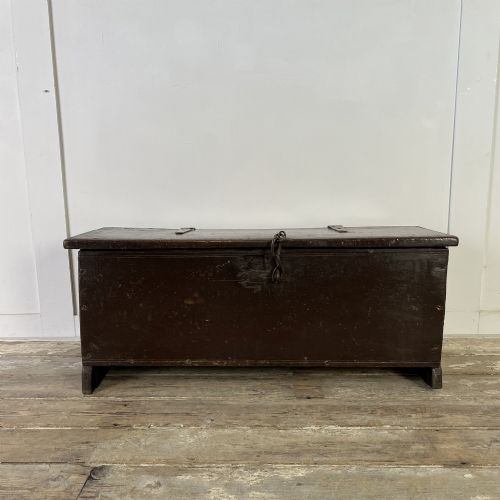
An antique boarded coffer is a robust storage piece built from solid timber planks, offering tangible links to early domestic life.
Antique Boarded Coffer
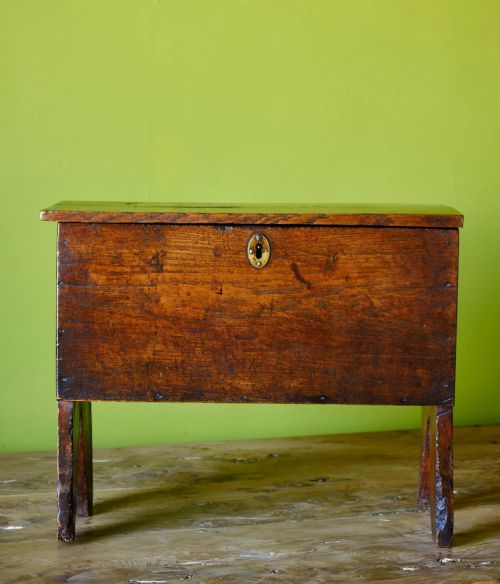
When you search for an antique boarded coffer, you are looking at early utilitarian storage chests built directly from thick wooden boards rather than a framed structure. These pieces span from the 16th century through the 18th century, showcasing vernacular country craftsmanship alongside more ornamented Elizabethan and Tudor examples.
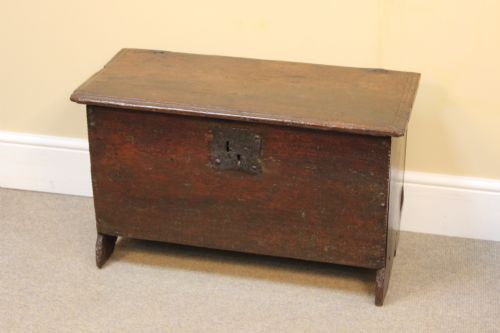
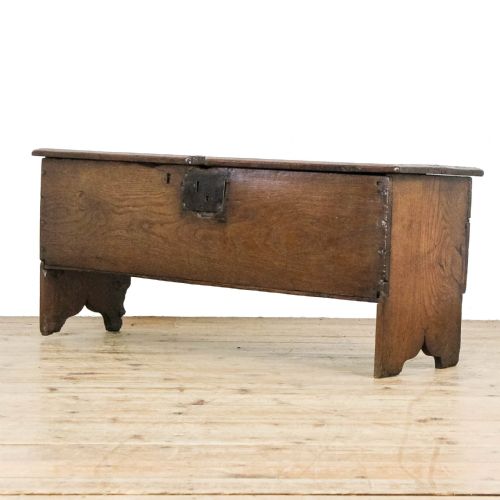
The most common version you will meet on this page is the six-plank chest, constructed from sturdy oak or elm planks joined edge to edge. Many examples function as sword chests or simple domestic storage, originating from English and Welsh workshops.
How they were made
These chests rely entirely on solid timber boards of oak and elm, joined simply at the corners with nails, pegs, or dowels. Wrought iron strapwork often reinforces the structure, while brass details appear on select pieces.
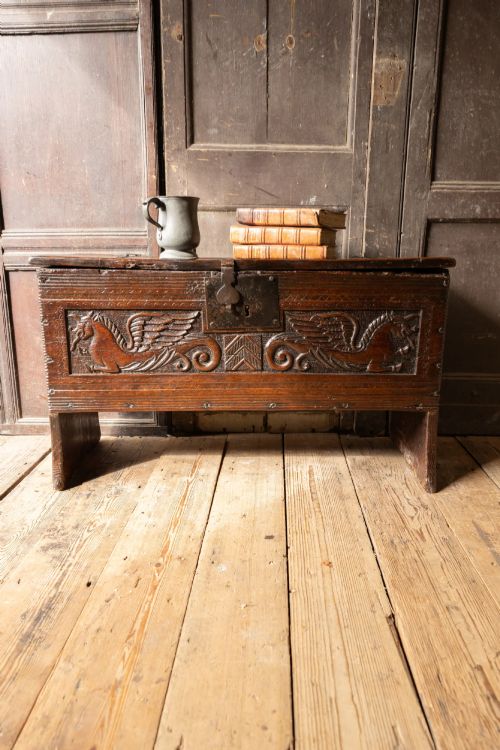
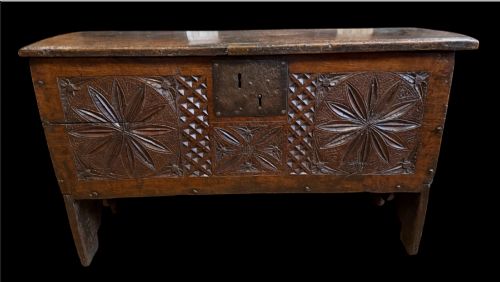
Early makers shaped the heavy planks using basic hand tools, sometimes adding carved decoration directly onto the timber face as seen on Elizabethan and Tudor pieces.
Antique Boarded Coffer Retail Price Guide 2026
Typical asking prices for boarded coffer among the pieces listed under this phrase on Sellingantiques today, from the lower quarter to the upper quarter. They describe what is for sale here now, not the wider market.
Wrought iron and brass appear as reinforcement materials on early plank chests, supporting the heavy lids and corners.
What varies in quality
The distinction between pieces rests on the weight of the timber and the integrity of the original board construction. Surviving surface patination and untouched construction methods separate utilitarian country items from heavily restored or later adaptations.
Carved ornament quality also differentiates the stock, ranging from plain functional plank work to sophisticated period carving featuring winged fantastic beasts.
The Antique Boarded Coffer Glossary
- Boarded coffer
- A storage chest constructed primarily from flat planks of timber rather than a panelled frame. These pieces represent some of the earliest forms of domestic furniture.
- Six-plank chest
- A simple chest built using six individual boards for the front, back, sides, lid, and base. This form forms the majority of early vernacular storage pieces.
- Sword chest
- A narrow coffer specifically designed for storing weaponry such as swords. They frequently appear in oak from the 17th and 18th centuries.
- Vernacular country furniture
- Everyday items made by local makers using regional woods and traditional methods rather than following high court styles. Elm and oak are typical materials.
- Wrought iron
- Iron beaten into shape by hand, frequently utilised for strap hinges and corner brackets on early storage chests.
Antique Boarded Coffer: Frequently Asked Questions
What is an antique boarded coffer?
An antique boarded coffer is a heavy storage chest constructed from thick planks of timber joined at the edges. These pieces date primarily from the 16th to the 18th centuries.
They served as secure containers for valuables, textiles, and weapons in early homes before freestanding wardrobes and drawers became common.
How do I date an early coffer?
Dating relies on observing construction methods, joint types, wood species, and any period carving present on the boards. Earlier pieces from the Tudor and Elizabethan eras often feature specific vernacular motifs.
Later examples from the 18th century tend to show simpler lines and different tool marks left by the maker.
Where were these chests made?
The pieces originate from regional workshops across England and Wales, reflecting local timber supplies such as oak and elm. Specific regional variants include Welsh vernacular items from Montgomeryshire.
Makers utilised whatever strong local wood was available to construct durable storage for domestic use.
How should I live with one?
These robust chests function well as coffee tables, blanket boxes, or entryway benches while providing practical storage space. Keep them away from direct heat sources to protect the aged timber.
Allow the natural surface patination to show by applying traditional beeswax rather than modern synthetic finishes.