


Antique Blue Serving Tray
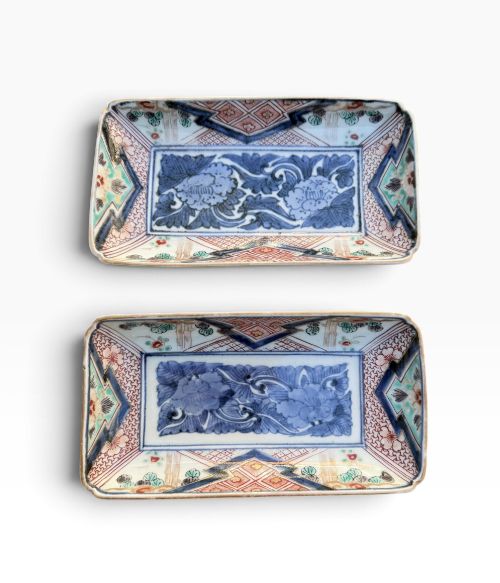
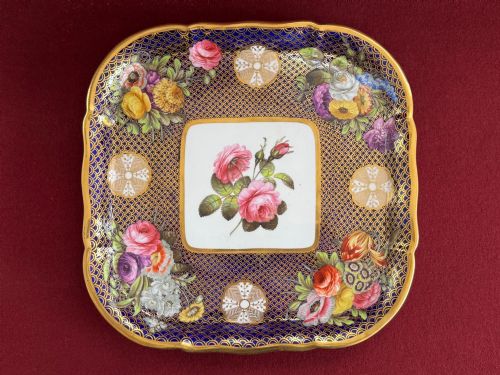
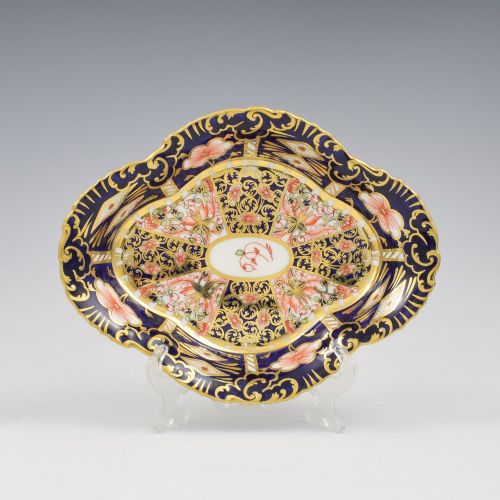
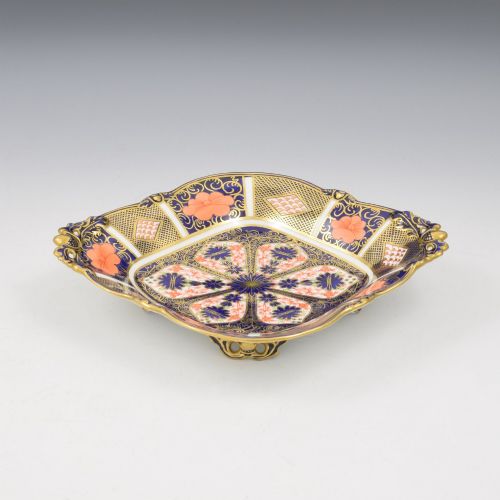
An antique blue serving tray brings cobalt transfer prints, Imari palettes and hand-painted florals together on ceramic, porcelain and metal.
Antique Blue Serving Tray
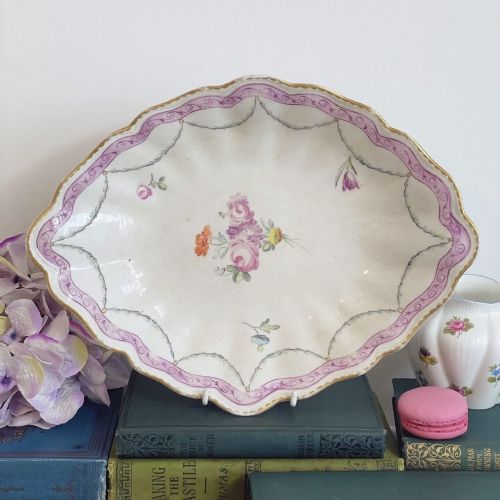
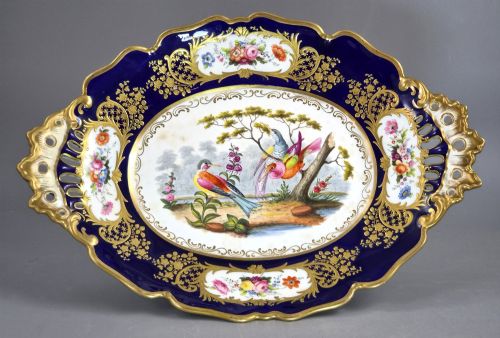
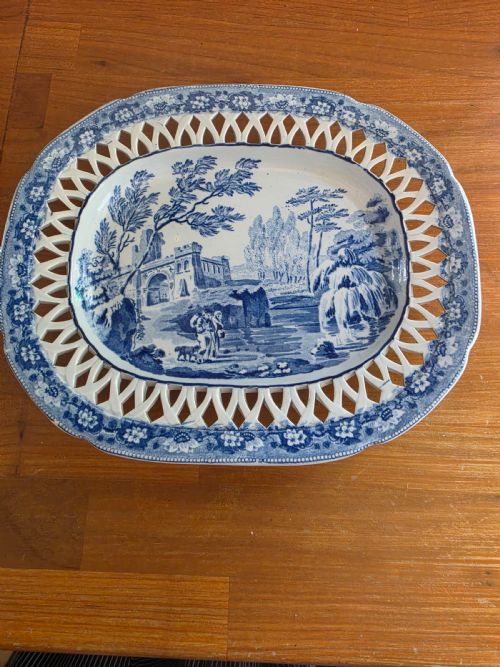
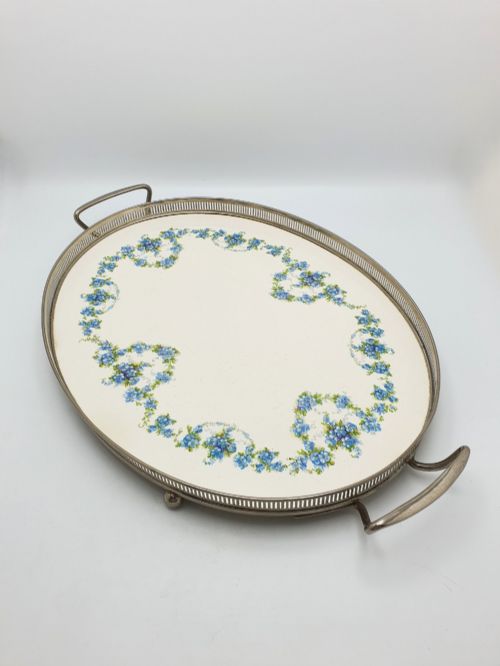
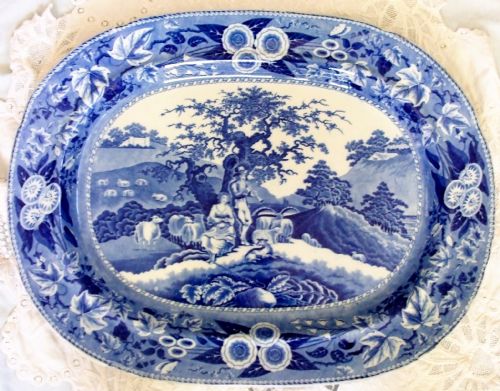
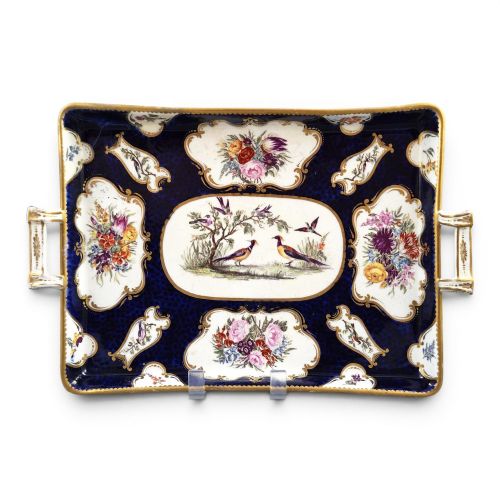
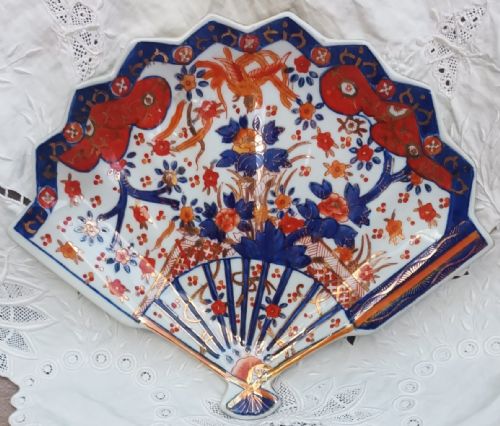
An antique blue serving tray encompasses everything from earthenware meat platters and pottery bread stands to delicate porcelain dessert dishes and cloisonne enamel trays. When searching for an antique blue serving tray, collectors encounter large transfer-printed platters from the Georgian and Victorian eras alongside continental porcelain and Japanese Imari wares.
The forms span deep well-and-tree meat dishes, pierced fretwork trays, and scalloped leaf dishes intended for display or formal dining. Most examples rely on rich cobalt decoration, whether applied via transfer printing or painted by hand with botanical, avian or scenic motifs.
How they were made
Potters and porcelain manufacturers utilised earthenware, pearlware, ironstone and hard-paste porcelain, shaping them into platters and trays before applying tin or lead glazes. Cobalt oxide served as the primary pigment for blue and white transfer printing, enduring high kiln temperatures to yield deep, permanent colour.
Higher-tier pieces received hand-painted polychrome details over the blue, or additions of gold leaf and gilding. Metal trays incorporated silver plating or brass frames to secure cobalt mirror glass or cloisonne enamel panels.
Seated shepherds and leaping koi share shelf space with exotic birds on these blue trays.
What varies in quality
Quality rests in the crispness of the transfer print or the brushwork control on hand-painted botanical and scenic reserves. Finer items exhibit precise moulding, such as pierced fretwork rims or moulded Rococo scrollwork, which require expert handling of clay while wet.
The depth and uniformity of the cobalt glaze distinguish master potteries from standard production wares. Superior pieces balance complex pictorial depth with clean, unblemished ceramic bodies.
Royal Crown Derby·Coalport·Davenport·Worcester·Minton·Spode·Copeland and Garrett·Samson Paris·Thomas Lakin·Don Pottery·Mason s Ironstone·Royal Worcester·Ridgway
The Antique Blue Serving Tray Glossary
- Transfer printing
- A method of applying intricate engraved designs to ceramic surfaces using a paper tissue transfer from a copper plate. This technique enabled factories to produce complex scenic patterns consistently across large batches.
- Pearlware
- A refined earthenware developed by Josiah Wedgwood featuring a bluish-tinted glaze that pooled in recesses to mask the underlying cream-coloured body. It gained widespread popularity during the Georgian and Regency periods.
- Ashet
- A regional Scottish term commonly used in the trade for a large meat platter or serving dish. These substantial vessels often included wells and channels for collecting juices.
- Imari
- A Japanese export porcelain style characterised by underglaze blue combined with iron red and gilt highlights. European potteries frequently copied these dynamic patterns during the eighteenth and nineteenth centuries.
Antique Blue Serving Tray: Frequently Asked Questions
Can I use these trays for serving food?
Many sturdy earthenware and ironstone platters remain robust enough for culinary use, provided you handle them with care.
Delicate porcelain or gilt-decorated trays suit decorative display or light service better to protect their historical surfaces from cutlery marks.
How do I date a blue and white transfer platter?
Examine the back of the piece for maker stamps, pattern names, registration diamond marks or impressed potter ciphers.
Stylistic clues such as floral borders, Chinoiserie figures or classical ruins also help narrow down the period of production.
What is the difference between earthenware and porcelain?
Earthenware is an opaque, porous ceramic fired at lower temperatures, often used for heavy utilitarian meat platters and transfer-printed dinner services.
Porcelain is a denser, vitrified material that rings when tapped and sometimes transmits light through the body, typically reserved for finer dessert trays.