






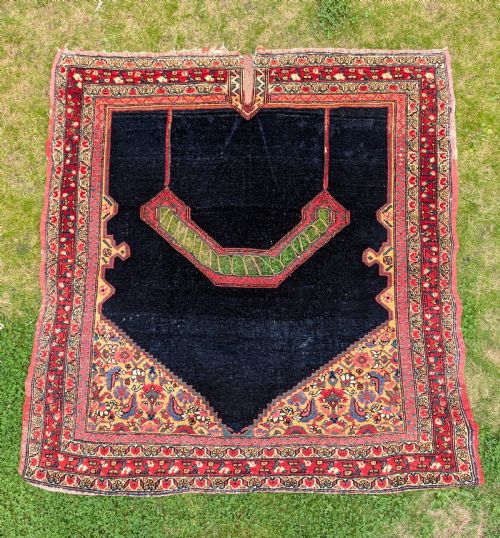
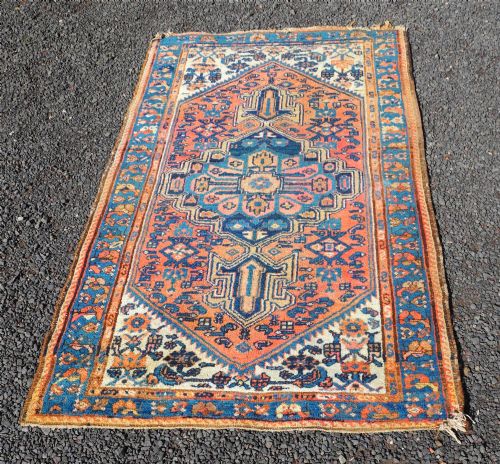
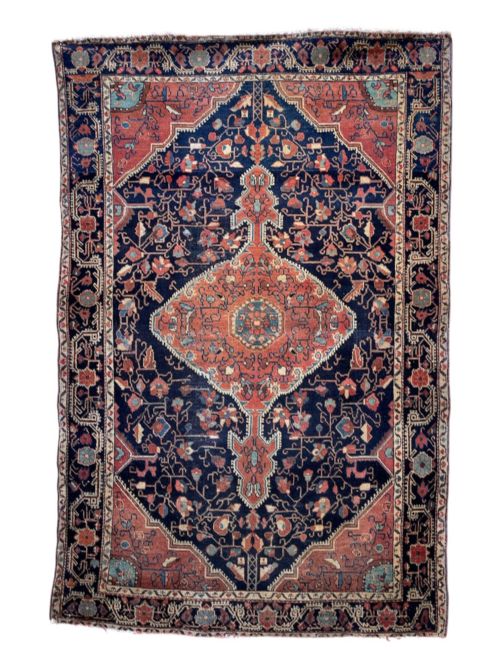


Antique Blue Rug
An antique blue rug brings centuries of woven artistry, rich indigo dye grounds and enduring tribal character straight to your floor.
Antique Blue Rug
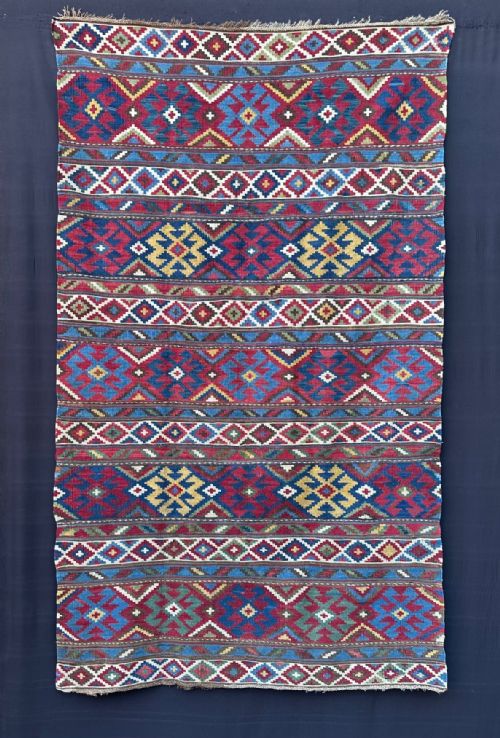
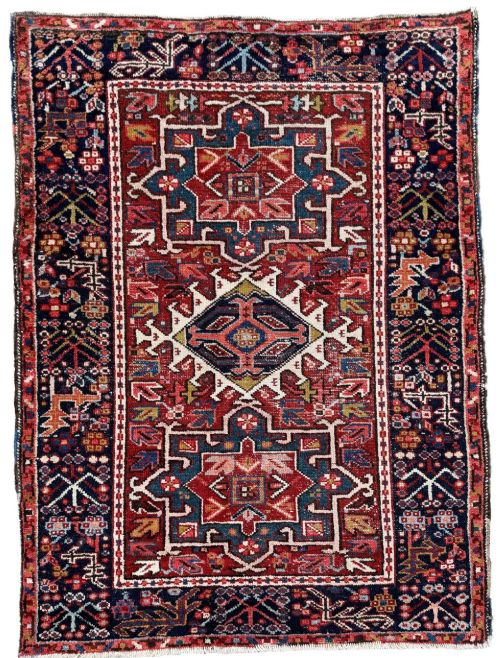
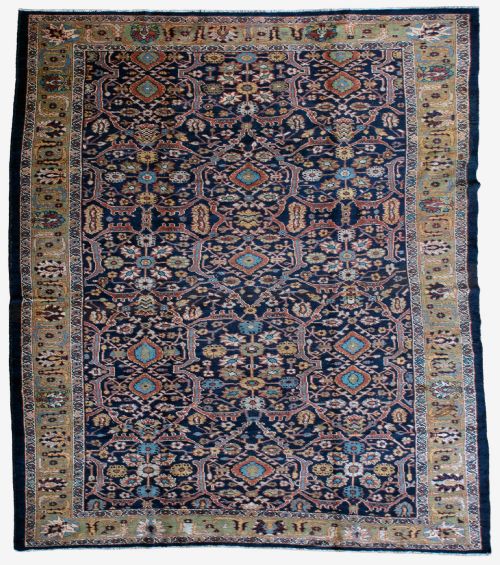
When searching for an antique blue rug, buyers encounter hand-woven textiles originating primarily from Persian, Caucasian, Anatolian, and Afghan workshops and nomadic groups. These pieces date from the nineteenth and early twentieth centuries, spanning periods from the eighteen-fifties through the nineteen-thirties.
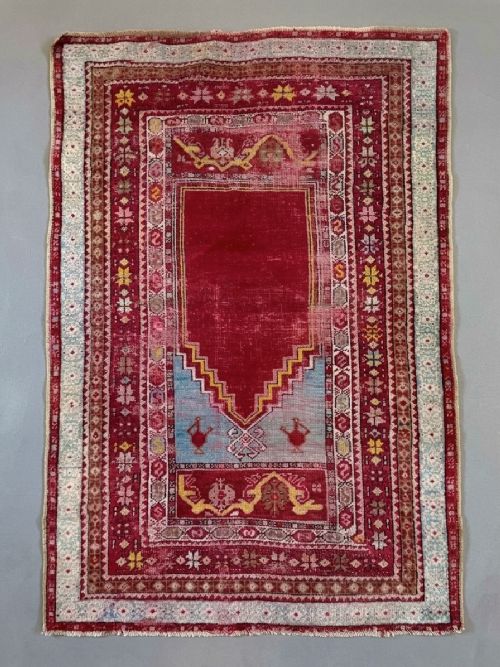
The selections on this page range from small prayer rugs and hearth-sized mats to room-sized carpets and elongated runners. Tribal formats such as Baluch, Timuri, and Qashqai examples frequently feature deep indigo or powder blue fields alongside larger Heriz, Ushak, and Kazak room pieces.
How they were made
Weavers constructed these carpets predominantly from wool, hand-spun wool, and cotton foundations, occasionally incorporating silk highlights or glass beads for textural contrast. Natural dye techniques created varying shades of blue, from soft sky tones to saturated indigo, often resulting in subtle tonal shifts known as abrash.
Nomadic and village pieces were tied by hand on vertical or horizontal looms, utilising sturdy knotting methods that ensured structural longevity. Flat-woven kilims and pile rugs alike relied on local animal fibres, spun by hand and dyed with plant extracts.
A tiny number of antique rugs include discreet glass beads woven directly into the pile to ward off the evil eye.
What varies in quality
Quality in these textiles depends heavily on the precision of the knotting, the complexity of the design, and the depth of the dye work. Tightly woven village and workshop carpets demonstrate greater structural integrity and finer graphic definition than simpler utilitarian pieces.
The chemical stability and source of the blues also set examples apart, with rich, uneven natural indigo grounds commanding greater appreciation than flat, uniform dyes. The integrity of the original wool pile and the survival of complete borders further distinguish superior specimens.
The Antique Blue Rug Glossary
- Abrash
- A natural variation of colour within a rug field, caused by changes in dye batches or hand-spun wool lots over time. This tonal shifting is a hallmark of traditional vegetable dyeing.
- Prayer rug
- A small textile featuring a mihrab or arch design at one end, traditionally used for personal devotion. These pieces often display specific directional motifs.
- Kelleh
- A large, elongated format carpet traditionally used in Middle Eastern domestic interiors. They are narrower than standard room carpets but wider than runners.
- Kilim
- A flat-woven carpet produced without a pile by tightly interweaving warp and weft threads. These textiles are lighter and thinner than knotted pile rugs.
- Boteh
- A stylised floral or almond-shaped motif representing a bush or sprouting seed, commonly found in Persian and tribal weaving. This ancient symbol recurs across numerous regional styles.
Antique Blue Rug: Frequently Asked Questions
How do I care for an antique wool rug?
Vacuum gently without using a rotating brush bar to protect the aged wool fibres and delicate foundation threads.
Keep the textile out of direct sunlight to prevent the natural blue dyes from fading over time.
What does an abrash field look like?
An abrash field displays subtle horizontal bands of shifting colour within the blue wool ground.
This variation occurs naturally when a weaver changes to a fresh batch of hand-dyed yarn during production.
How can I tell a runner from a standard carpet?
Runners are significantly longer and narrower in proportion, designed specifically for hallways, staircases, and narrow passages.
Standard carpets offer wider rectangular dimensions suited for centring beneath furniture in principal living areas.