






Antique Blue Delft
Antique blue delft comprises tin-glazed earthenware vessels and plates decorated in cobalt pigment, prized for centuries for their hand-painted pictorial depth.
Antique Blue Delft
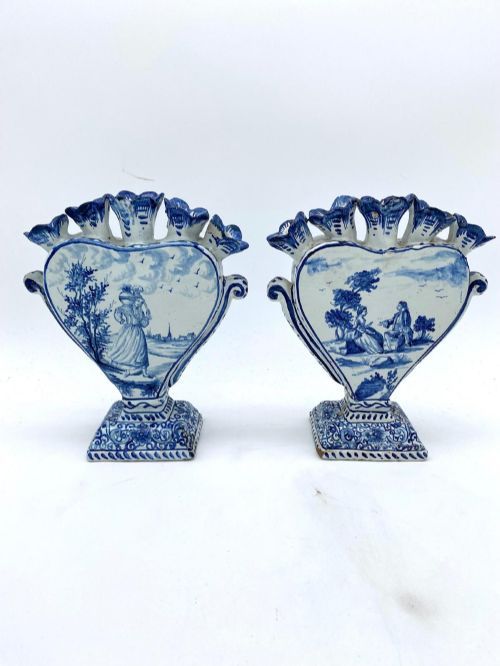
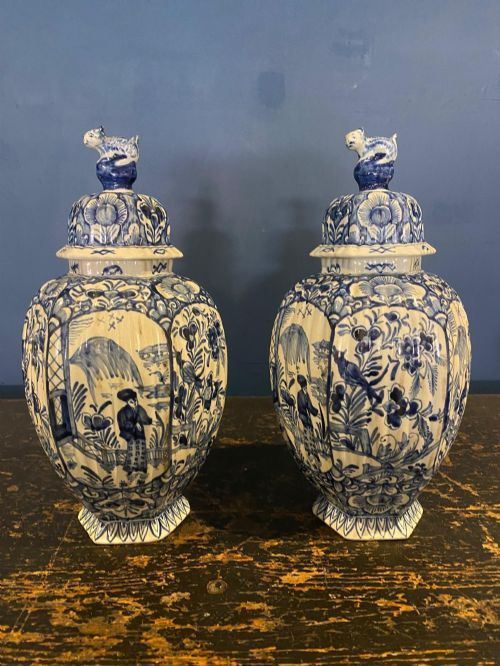
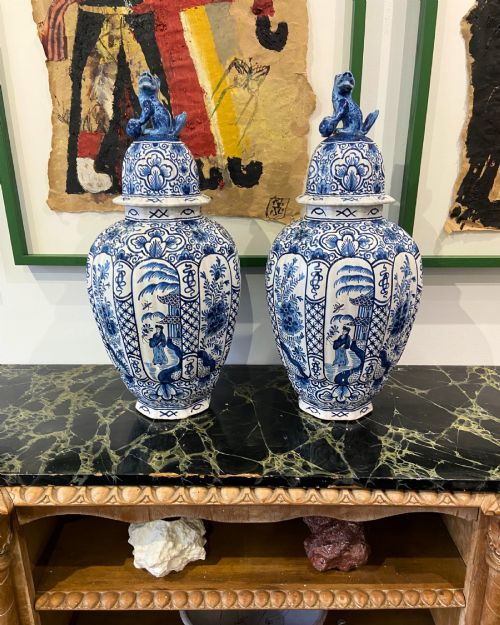
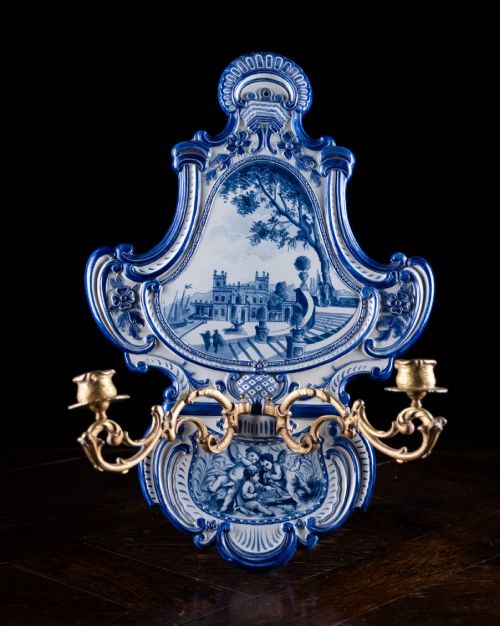
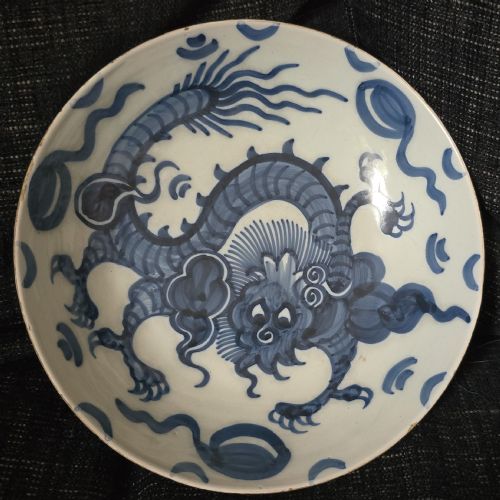
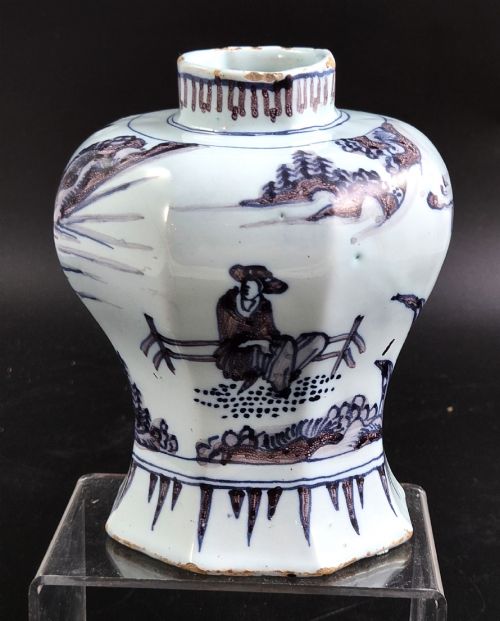
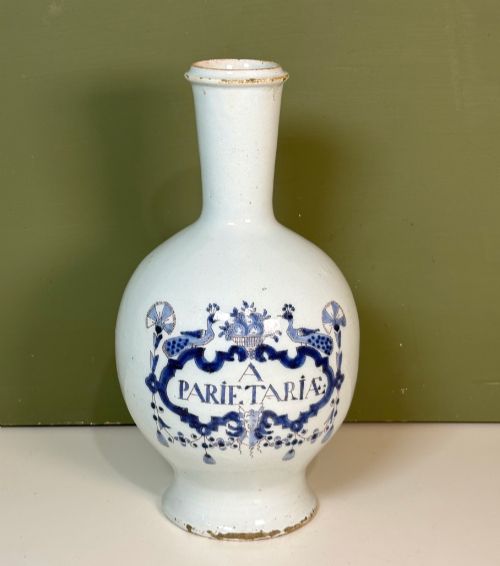
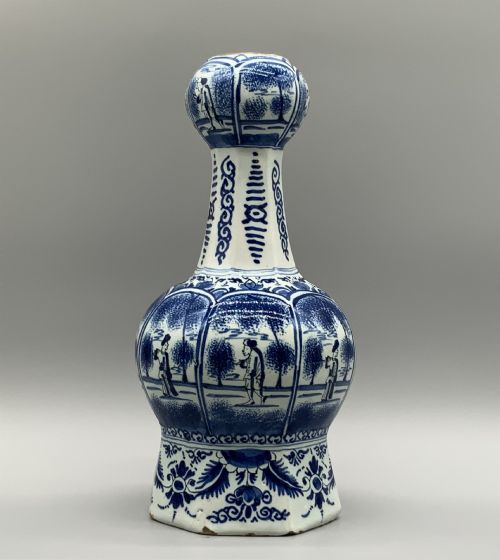
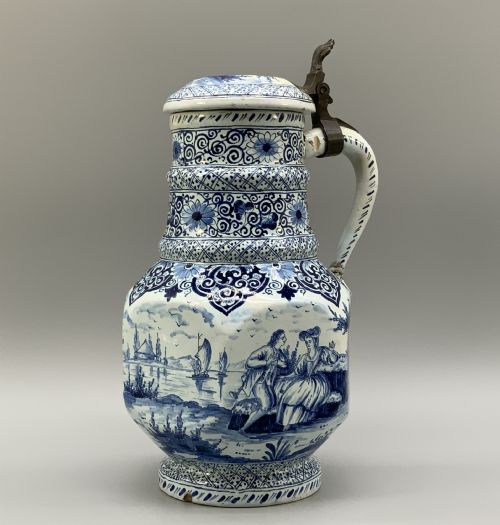
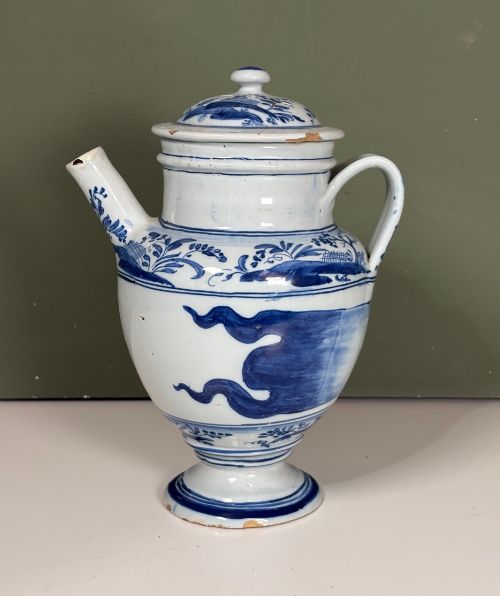
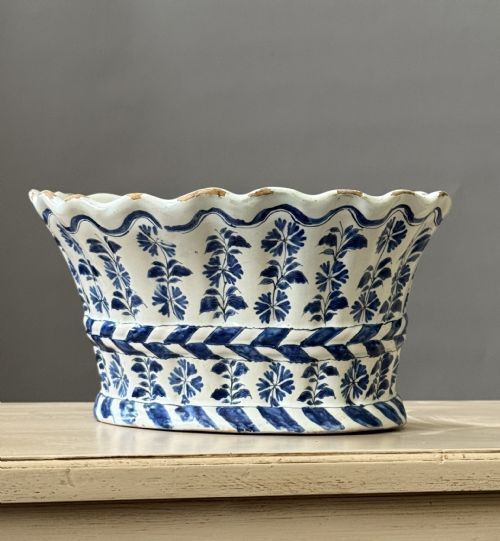
When searching for antique blue delft, collectors encounter chargers, plates, vases, and apothecary jars originating from Dutch and English kilns across the seventeenth, eighteenth, and nineteenth centuries. The pieces on this page span domestic tableware, decorative chargers with Chinoiserie scenes, and utilitarian pharmacy vessels.
Vases and baluster forms dominate the earlier centuries, often displaying robust earthenware bodies designed for display on mantelpieces or within cabinet collections. Chargers and large dishes appear frequently, meant to be hung on walls or set upon tables to catch the light.
The aesthetic bridges European domestic production and inspired adaptations of Chinese porcelain, creating a distinct visual language of cobalt blue against white tin glaze. Eighteenth-century examples often lean towards botanical or figurative subjects, while nineteenth-century items include revival pieces and figural groups such as cows and miniature chairs.
Materials and Technique
Potters built these objects using local earthenware clays, which were shaped either on the wheel or pressed into moulds before undergoing an initial bisque firing. Artisans then coated the hardened clay body in a liquid tin glaze, creating an opaque white surface suitable for direct brushwork.
Painters applied cobalt oxide pigments directly onto the porous, unfired glaze layer, a technique requiring immense precision because the material absorbed the colour instantly. A final transparent lead glaze was often applied before a high-temperature kiln firing fixed the blue pigment permanently into the tin surface.
Antique Blue Delft Retail Price Guide 2026
Typical asking prices for blue delft among the pieces listed under this phrase on Sellingantiques today, from the lower quarter to the upper quarter. They describe what is for sale here now, not the wider market.
Earthenware cows and miniature armchairs prove that historic potters possessed a delightful sense of domestic whimsy.
Craftsmanship and Execution
The distinction between ordinary utility wares and exceptional pieces rests upon the confidence of the brushwork and the clarity of the cobalt pigment against the tin glaze. Superior examples exhibit fluid, spontaneous painting rather than stiff, hesitant outlines.
The smoothness of the tin glaze and the stability of the earthenware body during firing determine the longevity and visual harmony of the finished object. Finer specimens maintain crisp painted details without excessive blurring of the cobalt oxide into the surrounding white glaze.
Pieter Verburg·Franz Anton Mehlem·Villeroy and Boch
The Antique Blue Delft Glossary
- Tin-Glazed Earthenware
- Pottery covered with a glaze made opaque by the addition of tin oxide, providing a white background for painted decoration. This technique forms the foundation of all authentic delft production.
- Cobalt Pigment
- A metallic oxide used to achieve the characteristic blue colour on ceramic surfaces under high kiln temperatures. It reacts with the tin glaze to produce varying shades from soft grey-blue to deep cobalt.
- Charger
- A large ornamental plate or dish intended for display on a wall or sideboard rather than for dining use. These pieces often carry the most ambitious painted scenes.
- Chinoiserie
- European artistic styles reflecting Chinese decorative motifs, heavily adapted during the seventeenth and eighteenth centuries. Painters utilised these fanciful oriental landscapes on blue and white vessels.
- Faience
- European tin-glazed earthenware produced in imitation of imported Chinese porcelain and Italian majolica. The term encompasses various regional traditions of white-glazed pottery.
- Apothecary Jar
- A cylindrical or globular container used by pharmacists to store dried herbs, syrups, and medicinal compounds. Many feature labelled cartouches surrounded by floral or figural ornament.
Antique Blue Delft: Frequently Asked Questions
How do I date antique blue delft?
Dating relies upon stylistic markers, changes in the tin glaze composition, and the evolution of cobalt painting techniques from the seventeenth to the nineteenth century. Earlier pieces often display thinner potting and looser botanical or Chinoiserie motifs.
Examination of the foot rim and the underlying earthenware body reveals clues about the period of manufacture. Nineteenth-century revival pieces typically present heavier bodies and brighter, more uniform glazes than their seventeenth-century precursors.
Were these pieces used for dining?
While chargers and plates originated as tableware in earlier centuries, their delicate tin glaze made them susceptible to scratching and chipping during daily use. Most surviving historic examples transitioned quickly into decorative display objects.
Specialised forms like apothecary jars, posset pots, and puzzle jugs served specific domestic or medicinal functions rather than everyday dining. Their survival in cabinets points to early appreciation as ornamental works of art.
What is the difference between Dutch and English delft?
Dutch production, centred largely around Delft, frequently employed a thinner, highly refined tin glaze and drew heavy inspiration from imported Chinese porcelain. English kilns, operating in places like London, Bristol, and Liverpool, often utilised a warmer, slightly softer earthenware body.
Colour variations also offer distinction, with English potteries occasionally incorporating polychrome pigments alongside the standard cobalt blue. Both traditions maintained the core technique of painting directly onto raw tin glaze.
How should I display delft in my home?
Chargers and large dishes mount securely on walls using specialised plate hangers, bringing historic pattern and colour to vertical spaces. Vases, bowls, and apothecary jars sit well on wooden sideboards or within glass-fronted cabinets away from direct sunlight.
Keeping these ceramic objects in stable indoor environments protects the porous earthenware body and the historic tin glaze from rapid humidity shifts. Gentle dusting with a dry cloth is sufficient for routine maintenance.