
Antique Black Table
When you search for an antique black table, you uncover a diverse collection ranging from Victorian lacquer to dark ebonised woods that anchor a room.
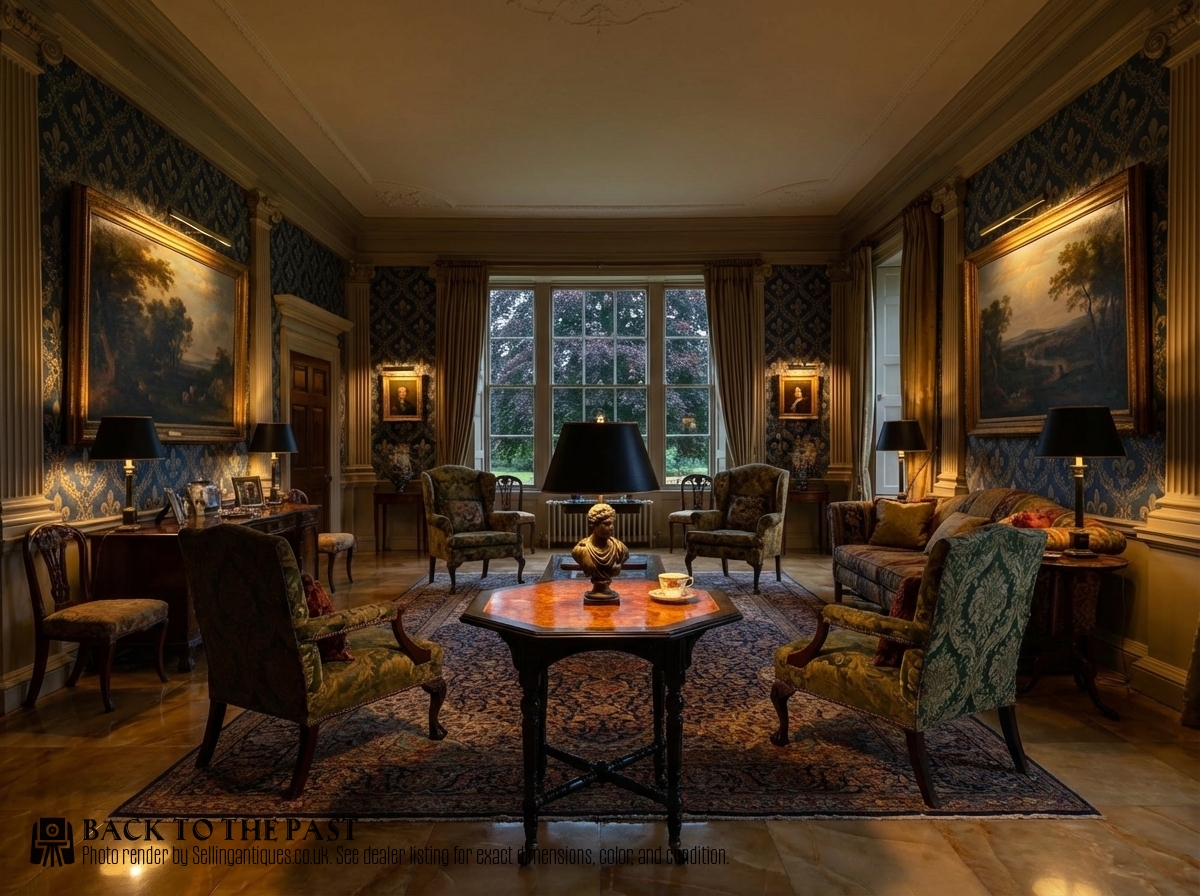
Antique Black Table
An antique black table encompasses a variety of forms designed for domestic utility and display, ranging from occasional surfaces to grand library tables. When exploring this phrase, buyers encounter pieces fashioned from deeply stained woods, ebonised finishes, and glossy oriental lacquer.
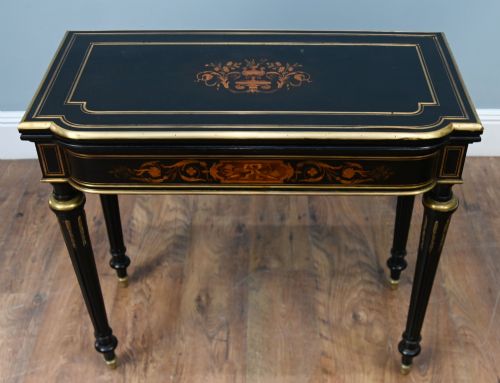
The selection bridges multiple centuries and stylistic movements, reflecting the shifting tastes of makers from the Georgian era through to the Art Deco period. Side tables, tray tables, and centre tables dominate the offerings, often embellished with gilt decoration, hand-painted motifs, or inlaid marquetry.
Regional diversity shapes these pieces significantly, moving from English ebonised Victorian library furniture to Japanese export lacquer and Swiss Black Forest carvings. Each piece serves a specific functional purpose within the home, whether acting as a bedside stand, a coffee table, or a prominent console.
How they were made
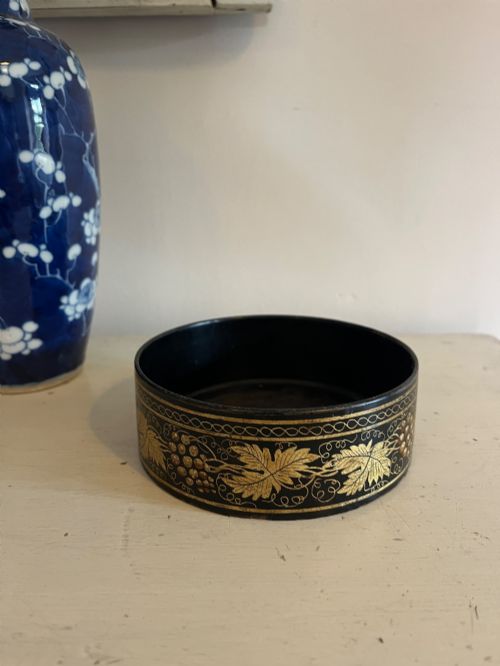
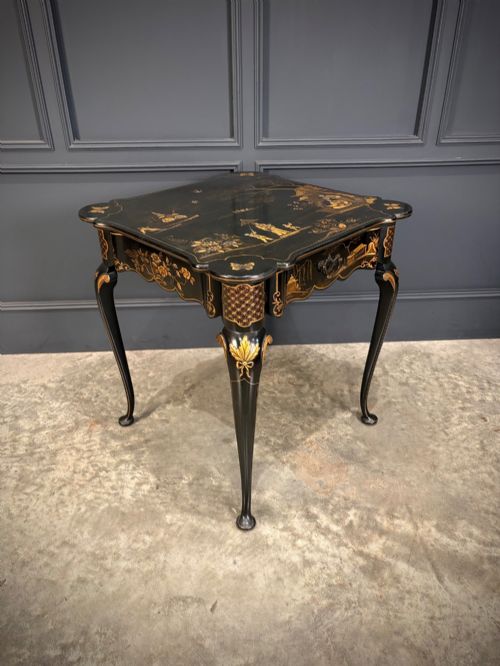
Craftsmen achieved deep dark surfaces primarily through ebonising fruitwood or mahogany, applying successive layers of black stain and polish to imitate expensive ebony. Alternatively, artisans utilised traditional lacquer techniques, building up resin layers on wood bases before adding intricate gold leaf decoration or hand-painted Chinoiserie scenes.
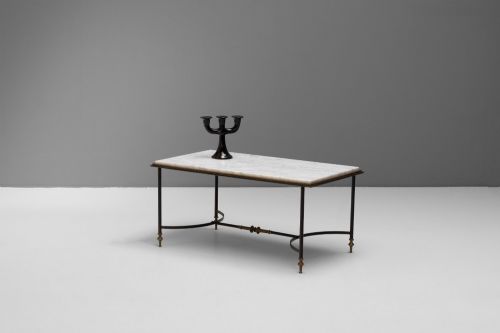
Structural integrity relied on traditional joinery methods appropriate to the period, such as dovetailing for drawers and mortise and tenon joints for frames and legs. Premium examples integrated materials like marble tops, brass mounts, and leather writing inserts to elevate the durability and visual weight of the furniture.
Listings feature periods from the eighteenth century through to the 1930s, utilising brass, marble, lacquer, and ebonised wood.
What varies in quality
The distinction between ordinary and exceptional pieces rests upon the precision of the hand-applied finish and the intricacy of any decorative ornamentation. Superior examples display crisp, hand-painted details and deeply polished surfaces that retain their depth without clouding, whereas lesser items show flat, uniform industrial spraying or flaking lacquer.
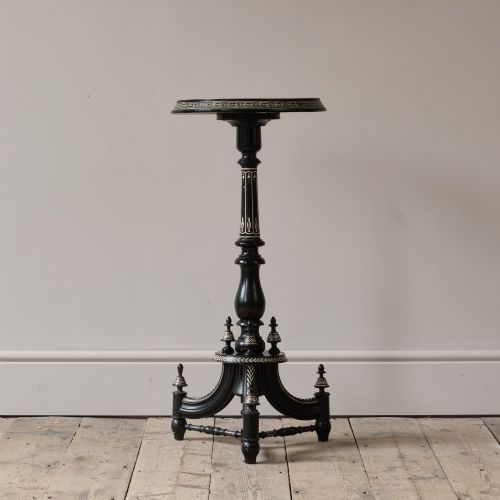
Structural execution also determines value, visible in the stability of tripod bases, the smooth operation of drawers, and the integration of secondary timbers. Pieces bearing the signatures of established makers or retaining their original hardware and marble inserts command greater respect among collectors.
Maple and Co·Johnstone and Jeanes·EW Godwin·Widenham of London·John Faber Snr·Hans Holbein the Younger
The Antique Black Table Glossary
- Ebonised
- Wood treated with stain or paint to simulate true ebony. This dark finish gained immense popularity during the Victorian and Aesthetic periods.
- Chinoiserie
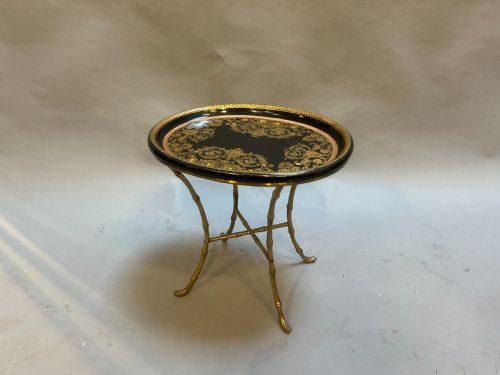
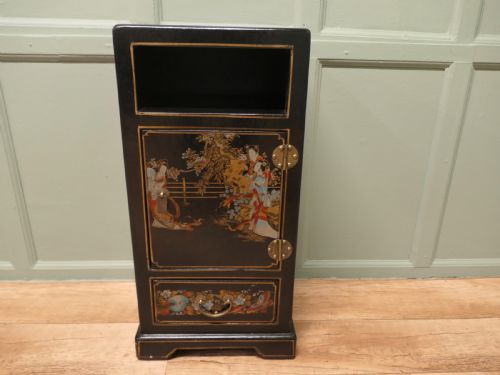
- European interpretations of Chinese and East Asian artistic traditions. It frequently appears as raised gold motifs on black lacquered table surfaces.
- Tripod Table
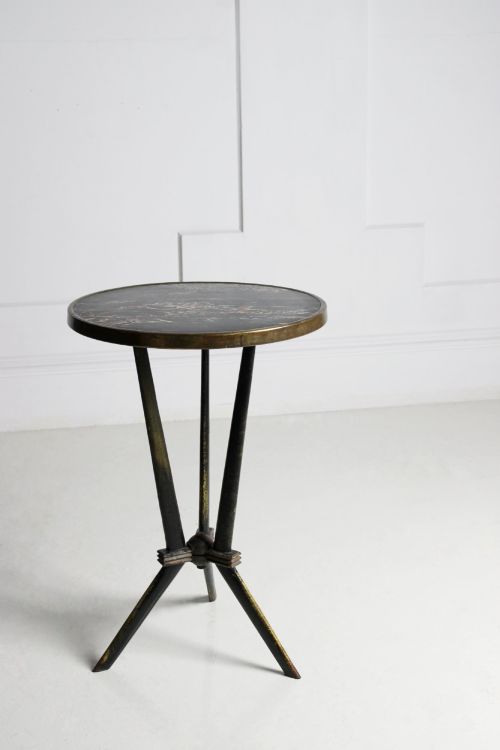
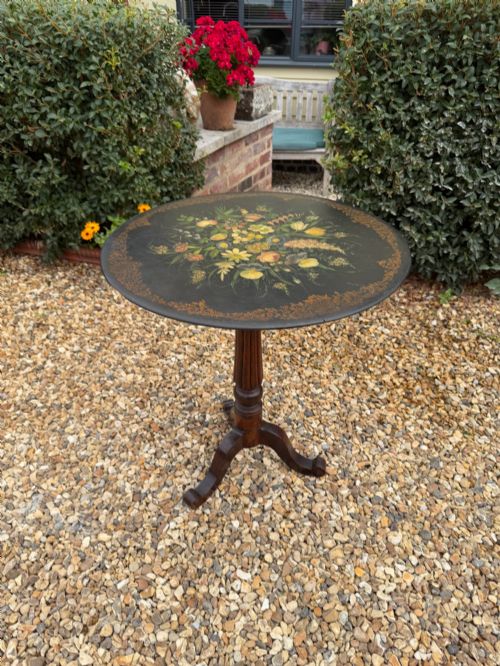
- A small occasional table supported by a central pillar resting on three feet. This form became common in mahogany and ebonised woods during the eighteenth and nineteenth centuries.
- Papier Mâché
- A composite material made from paper pulp or layers of paper bound with glue. It was moulded and lacquered to create durable trays and small table tops.
- Marquetry
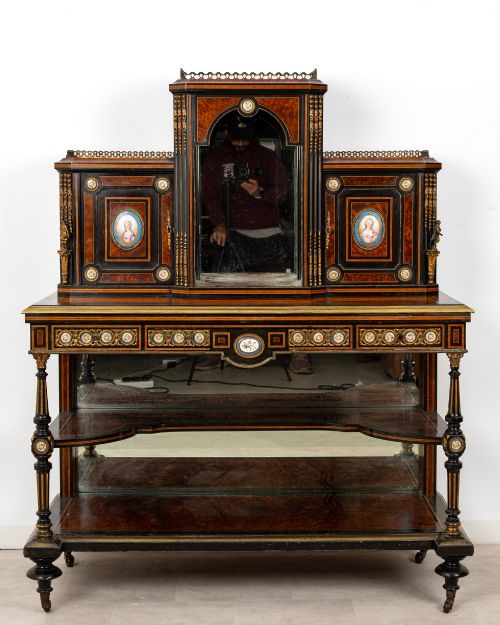
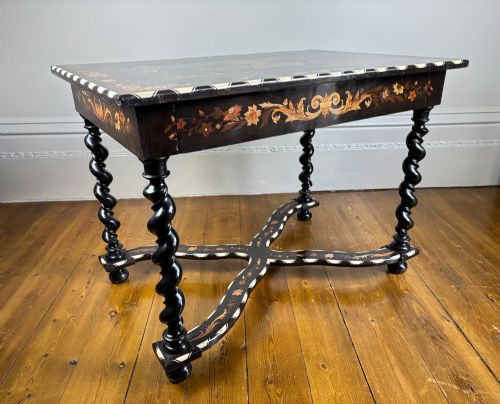
- The art of applying pieces of veneer to a structure to form decorative patterns. Walnut and exotic woods frequently contrast against darker backgrounds in this technique.
Antique Black Table: Frequently Asked Questions
Are these tables suitable for everyday use?
Many of these pieces were built for practical domestic tasks, such as serving tea, holding books, or writing letters. Sturdier models handle daily routines quite well.
Delicate antique lacquer or marble tops require coasters and placemats to prevent scratching or staining. Assess the structural stability of joints before placing heavy objects on older occasional tables.
What is the difference between ebonised and ebony?
Ebony is a dense, naturally black tropical hardwood prized for its weight and dark colour. Ebonising is the process of staining a more common timber, such as beech or fruitwood, to achieve the same dark appearance.
Most nineteenth-century black tables utilise ebonised wood rather than solid ebony, which was scarce and expensive. Close inspection under good light reveals the underlying grain structure of the base timber.
How can I tell the Victorian pieces apart?
Victorian tables often combine ebonised finishes with gilt highlights, Aesthetic movement designs, or heavy papier mâché construction. They frequently reflect a revival of earlier historical styles.
Earlier eighteenth-century examples tend toward simpler painted tripod designs or genuine export lacquer. Examining the interior construction timbers and fastening methods helps clarify the manufacturing era.