

Antique Black Credenza Cabinet
An antique black credenza cabinet brings dark timber and gilt mounts to a room, offering display space and enclosed storage in one piece.
Antique Black Credenza Cabinet
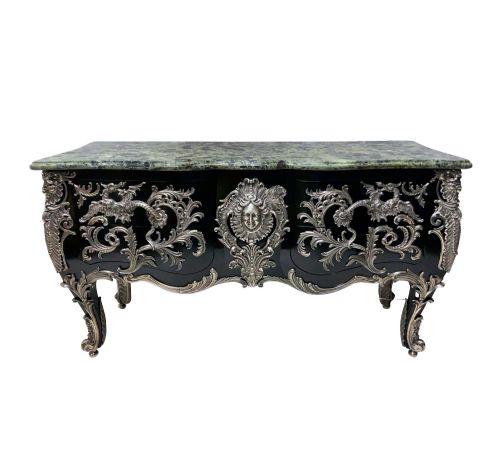
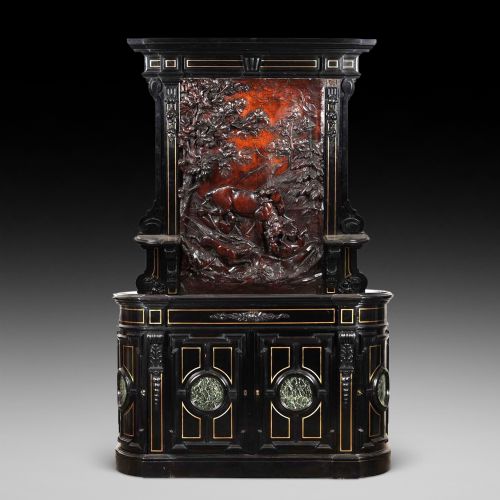
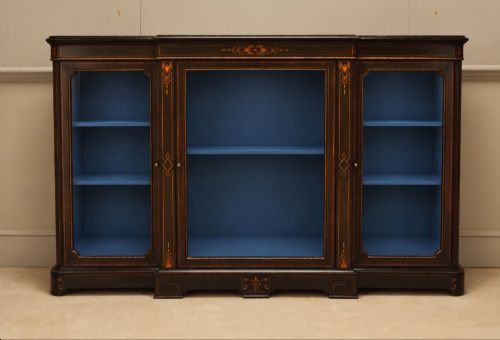
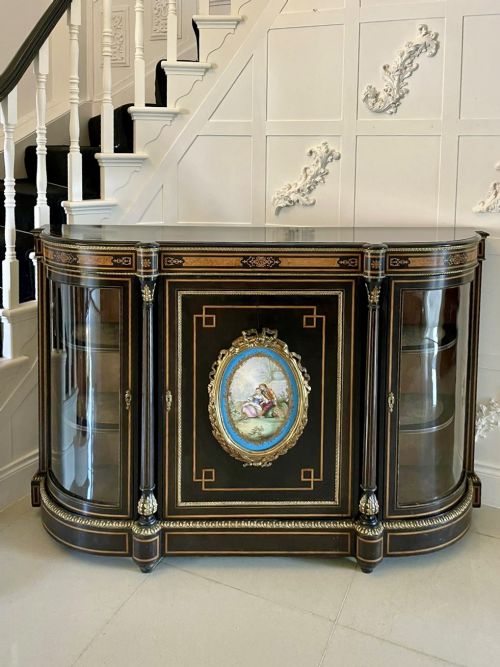
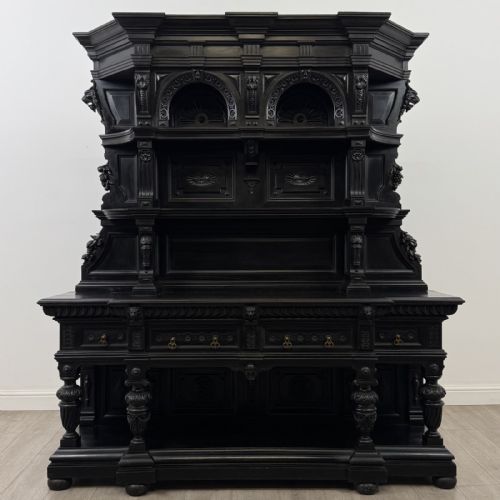
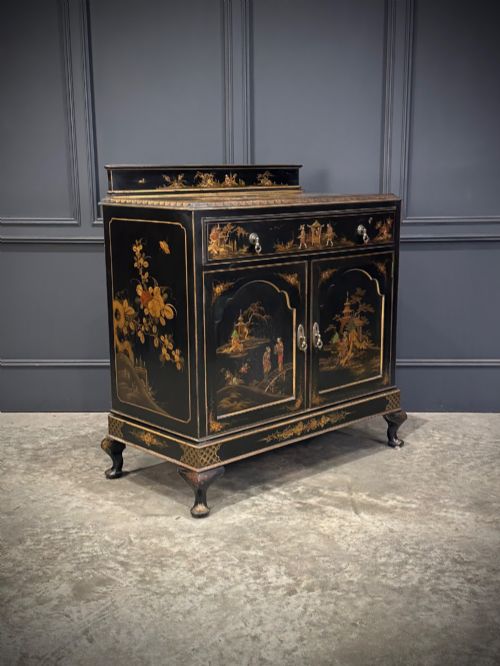
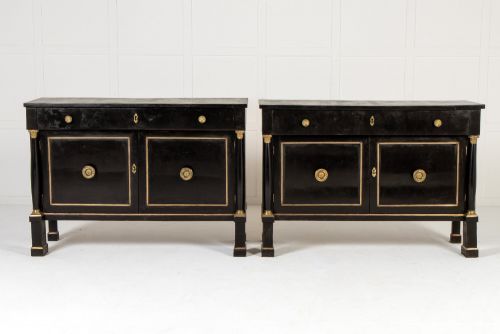
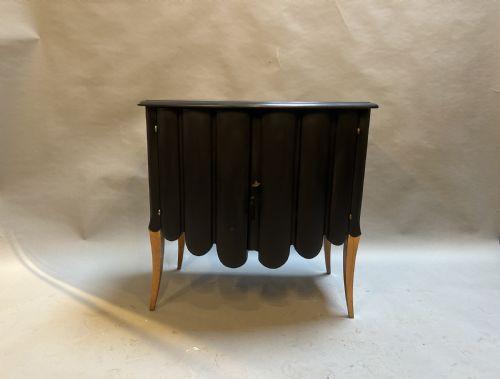
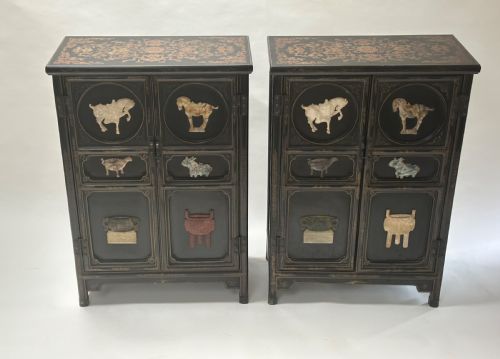
When searching for an antique black credenza cabinet, you encounter dark timber and ebonised carcasses designed for principal reception rooms. The pieces span the nineteenth century, including Victorian interpretations and French Napoleon III examples.
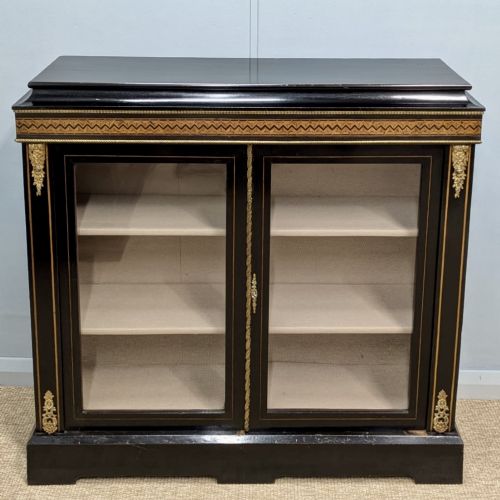
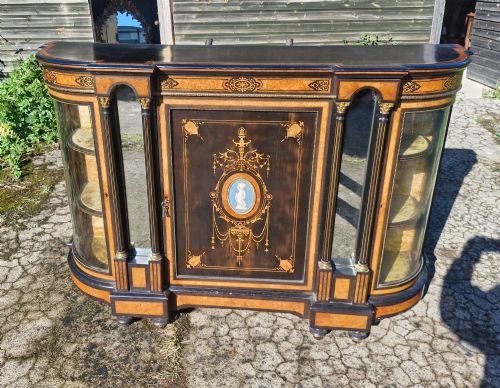
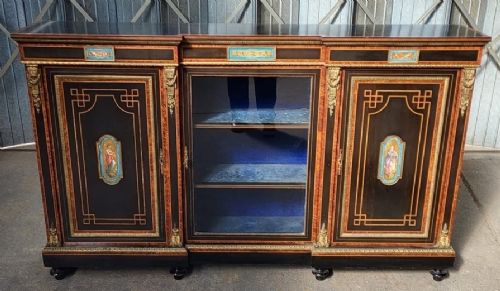
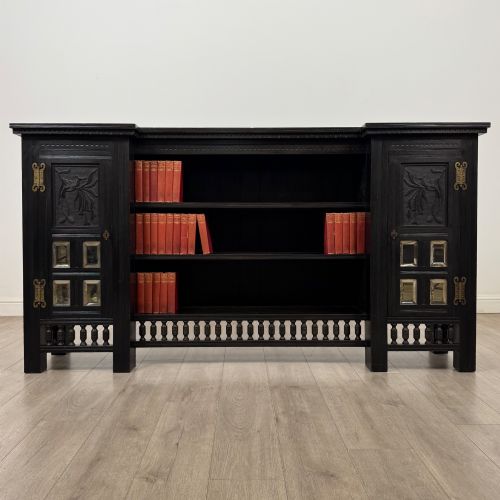
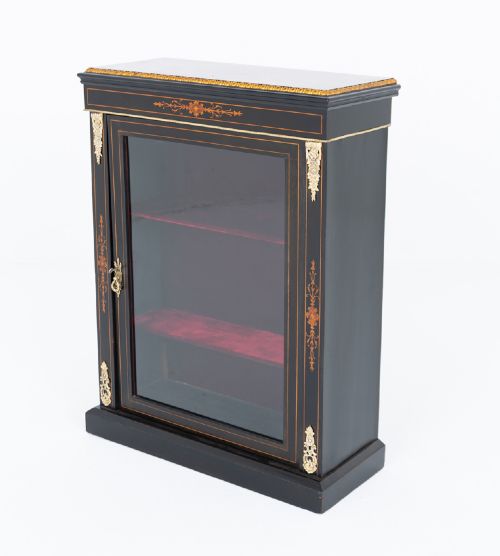
Most frequent among these listings are Victorian ebonised side cabinets and credenzas featuring glazed doors and central cupboards. Forms range from low pier cabinets to breakfront bookcases and chiffoniers.
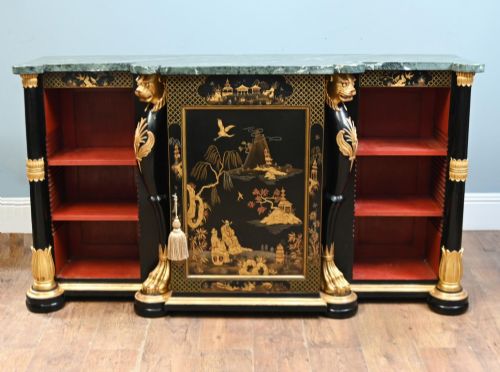
Origins include English workshops and French ateliers, alongside later revival pieces embracing Chinoiserie and Japanned decoration.
How they were made
Construction relies on ebonised wood or dark timbers such as walnut and mahogany, finished with hand-polished surfaces. Boullework marquetry and tortoiseshell inlay add intricate detail to the primary panels.
Mounts of ormolu, gilt-metal, and brass frame the doors and corners, while Sevres style porcelain plaques punctuate the friezes and central panels. Glass doors utilise bevelled panes set within timber framing.
Antique Black Credenza Cabinet Retail Price Guide 2026
Typical asking prices for black credenza cabinet among the pieces listed under this phrase on Sellingantiques today, from the lower quarter to the upper quarter. They describe what is for sale here now, not the wider market.
Some nineteenth-century makers hid musical movements inside cabinet carcasses to serenade guests while they admired the marquetry.
What varies in quality
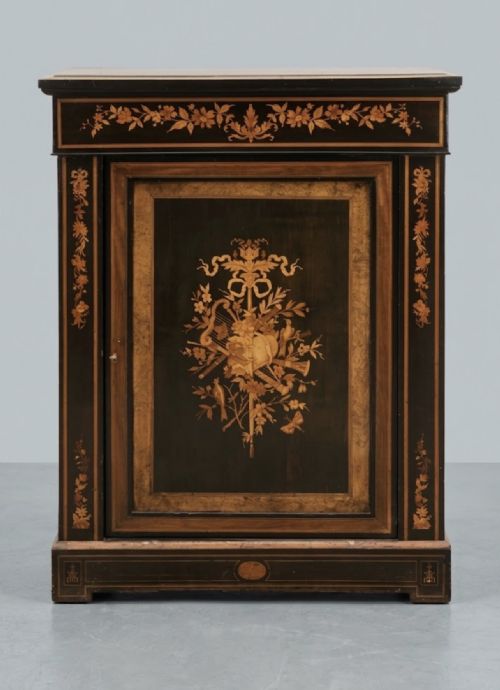
Execution of the marquetry and floral inlay dictates the refinement of the piece, distinguishing standard workshop production from exceptional cabinet-making. The crispness of lion mask carvings and cast ormolu mounts shows the skill invested in the ornamentation.
Selection of secondary timbers and the precision of the ebonised finish determine the durability and visual depth of the dark surfaces. Integrated porcelain plaques and original glass preservation further separate standard items from superior examples.
Garnett & Sons
The Antique Black Credenza Cabinet Glossary
- Ebonised
- Timber treated to resemble ebony through staining or painting. This dark finish became popular during the nineteenth century for furniture mimicking more expensive exotic woods.
- Ormolu
- Gilt bronze ornamentation applied to furniture mounts and feet. The technique involves coating metal in a gold amalgam and firing it.
- Boulle
- Marquetry technique utilising brass and tortoiseshell inlaid in intricate patterns. Named after the French cabinet-maker André-Charles Boulle.
- Credenza
- A low dining or reception room cabinet used for display and storage. Nineteenth-century examples often feature glazed side compartments flanking a central door.
- Japanned
- European imitation of East Asian lacquerwork achieved through layered varnishing and painting. It frequently depicts oriental figures and landscapes in gold on a dark ground.
Antique Black Credenza Cabinet: Frequently Asked Questions
What is an antique black credenza cabinet?
It is a low nineteenth-century storage unit finished in dark ebonised wood, often incorporating glazed doors and decorative mounts.
These pieces served as formal display furniture in Victorian and French drawing rooms.
How do I style a credenza at home?
Place the unit against a principal wall in a dining room or hallway to ground the space with its dark timber. Use the surface for lamps or ceramics while storing glassware inside.
Keep surrounding colours neutral to let the ebonised finish and gilt mounts stand out.
Are these cabinets purely decorative?
While prized for their aesthetic impact, they provide substantial enclosed shelving for books, linen, or tableware. Glazed sections allow for the display of collections.
Their substantial construction makes them functional focal points in modern interiors.
How do I identify Victorian ebonised pieces?
Look for dense ebonised wood combined with floral marquetry, gilt-metal mounts, and occasionally porcelain plaques. The hardware and joinery typically reflect nineteenth-century English or French manufacturing methods.
Stylistic influences often draw from the Aesthetic Movement or Napoleon III designs.