



Victorian Lion Mask Cabinet
A victorian lion mask cabinet brings substantial timber and fierce carved brass or woodwork into a room.
Victorian Lion Mask Cabinet
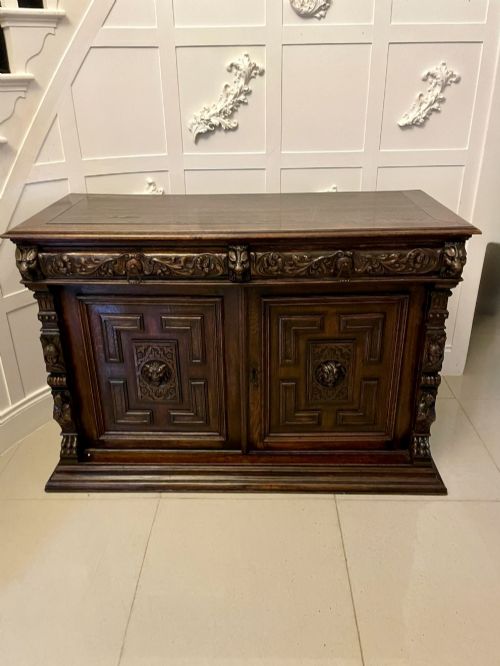
A victorian lion mask cabinet encompasses substantial storage furniture from the nineteenth century, including sideboards, cupboards, and cabinets on stands. These pieces are chosen for their commanding presence and robust timber construction.
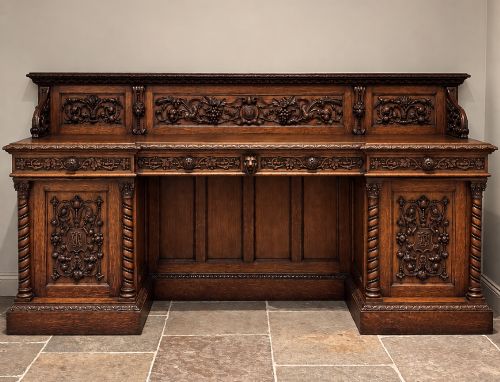
The version most commonly encountered on this page is carved from oak, frequently displaying the heavy ornamentation associated with Renaissance Revival and Flemish Renaissance Revival styles. Such items anchor a room with dark wood and bold sculptural detail.
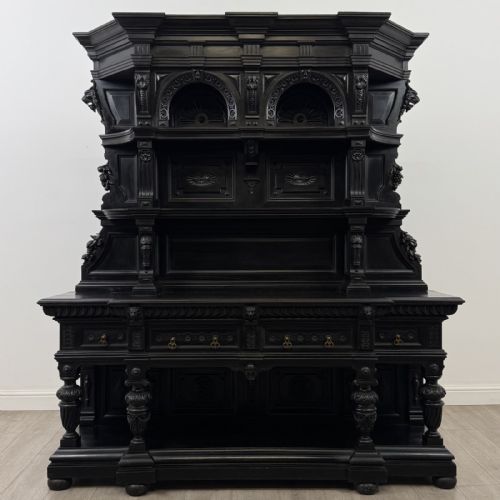
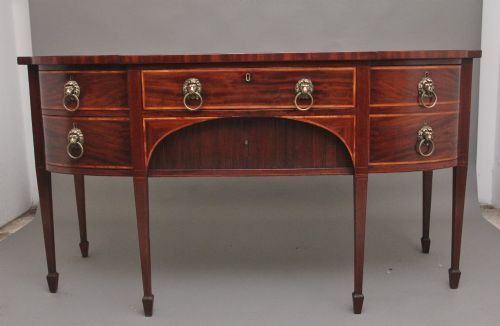
Makers of this era also utilised mahogany, ebonised hardwood, and pollard oak to create credenzas, desks, and bookcases featuring the characteristic leonine carvings. Each form serves a practical storage function while displaying elaborate nineteenth-century craftsmanship.
How they were made
Makers constructed these cabinets using solid timbers such as oak, mahogany, and pollard oak, often accented with boxwood inlay and brass fittings. The dense grain of the wood provided a stable foundation for deep relief carving.
Carvers applied chisel and gouge directly to the timber to render the lion masks, foliage, and architectural motifs characteristic of Flemish and Gothic revivals. Ebonised hardwood pieces received a dark, smooth finish that imitated more costly exotic woods.
Victorian Lion Mask Cabinet Retail Price Guide 2026
Typical asking prices for victorian lion mask cabinet among the pieces listed under this phrase on Sellingantiques today, from the lower quarter to the upper quarter. They describe what is for sale here now, not the wider market.
Listings feature items dated from eighteen-fifty to eighteen-eighty, spanning the Victorian period and various revival styles.
What varies in quality
The depth and vigour of the woodcarving separate standard production from superior examples, particularly in the rendering of the lion masks and foliage. Crisp undercut details demonstrate a higher degree of sculptural skill than flat, repetitive moulding.
The choice of timber and secondary woods affects the overall substance of the piece, with figured pollard oak and rich golden oak sitting at the heavier end of the scale. Construction integrity in the drawers, panel doors, and original brass or metal hardware completes the assessment of merit.
The Victorian Lion Mask Cabinet Glossary
- Lion mask
- A carved or cast representation of a lion's face, frequently depicted with a ring in its mouth and utilised as a decorative motif on nineteenth-century furniture.
- Renaissance Revival
- A nineteenth-century design movement that drew inspiration from sixteenth-century European architecture and decorative arts, favouring heavy symmetry and classical ornamentation.
- Pollard oak
- Timber taken from a tree that has been pollarded, resulting in a dense grain pattern with distinctive knots and swirls prized for cabinet fronts.
- Ebonised
- Wood treated with a stain or finish to imitate ebony, creating a dense black surface popular during the Victorian period.
- Credenza
- A large sideboard or buffet cabinet designed for dining rooms, typically featuring enclosed cupboards and a flat top surface.
Victorian Lion Mask Cabinet: Frequently Asked Questions
How were these cabinets used originally?
These pieces served as functional storage furniture in dining rooms, libraries, and hallways of Victorian homes. Cupboards and sideboards held porcelain, silver, or linens, while bookcases stored household libraries.
Their substantial presence also projected status and taste within the formal rooms of the house.
How do I live with dark oak furniture?
Dark oak and ebonised pieces anchor a room visually and pair well with both neutral walls and rich, saturated interior colours. Lighting is key, as proper placement allows the deep carved details of the lion masks to catch the light.
Keeping the timber polished with appropriate wax maintains the rich sheen of the wood over time.
How can I tell the different revival styles apart?
Flemish and Renaissance revival styles typically display heavy scrolling foliage, architectural columns, and bold lion masks carved directly into the oak. Gothic revival pieces lean towards pointed arches and tracery, while later Victorian designs might incorporate simpler lines or boxwood inlay.
Examining the specific motifs helps identify whether a piece leans towards Flemish, Gothic, or general nineteenth-century classicism.