


Antique Bisque Statues
These antique bisque statues bring unglazed tactile softness to interiors, capturing classical figures and romantic subjects in fine ceramic detail.
Antique Bisque Statues
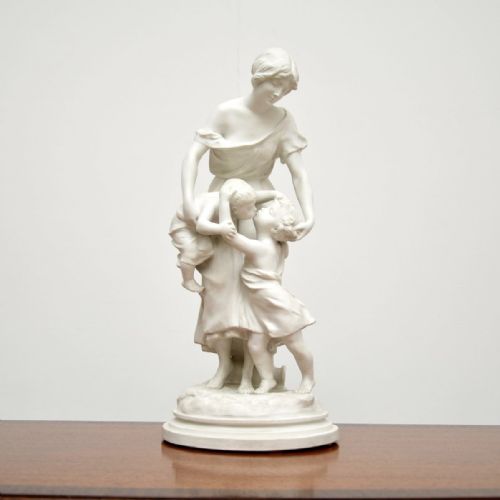
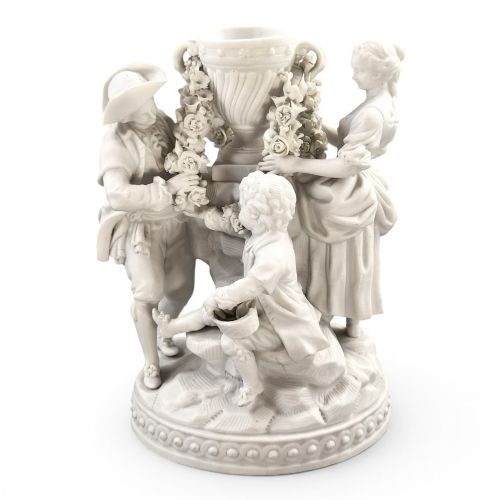
When you search for antique bisque statues, you encounter unglazed porcelain figures and sculptural groups originating primarily from the nineteenth century. These pieces capture the smooth matte texture favoured by makers who wished to emulate marble without the weight.
Makers utilised biscuit porcelain and parian ware to render drapery, hair, and facial expressions with remarkable crispness. These sculptural forms served as parlour ornaments that demonstrated refinement and cultural literacy in nineteenth-century homes.
Methods and Materials
Bisque porcelain, also known as biscuit porcelain, is fired once without glaze to produce a porous, matte surface that resembles marble. Parian ware, a specific formulation developed in Victorian Britain, contains a high proportion of feldspar that vitrifies during firing to create a translucent, marble-like finish.
Certain models incorporate highlights of gold leaf, enamel, or paint to accentuate garments, jewellery, and floral garlands. These pigments and gilding layers were applied over the fired body and fixed in a muffle kiln.
Listings feature nineteenth-century French and British porcelain bodies, including parian ware and biscuit porcelain across Victorian and neoclassical styles.
Distinguishing Quality
The refinement of the modelling separates superior statues from standard commercial output. Master modellers achieved subtle musculature, expressive hands, and deeply undercut drapery that catches light differently across the unglazed surface.
Royal Dux Bohemia·Vion et Baury·Copeland·Minton·Sevres·Letu and Mauger
The Antique Bisque Statues Glossary
- Bisque porcelain
- Unglazed ceramic body fired once to produce a matte, porous finish resembling marble.
- Parian ware
- British porcelain variety developed in the nineteenth century to imitate carved marble through its dense, slightly translucent body.
- Biscuit porcelain
- Alternative term for unglazed ceramic material used across French and continental manufactories.
- Piano baby
- Small, decorative porcelain figurine manufactured to sit on the front of a piano during the Victorian era.
- Neoclassical
- Design style drawing inspiration from classical antiquity, frequently seen in nineteenth-century sculptural subjects.
Antique Bisque Statues: Frequently Asked Questions
How do I clean antique bisque statues?
Unglazed ceramic surfaces absorb dust and oils easily because of their porous nature. Use a soft, dry brush to remove surface particles rather than wet cloths.
Avoid chemical cleaning agents or water immersion, which can stain the matte porcelain or damage applied gold leaf and paint highlights.
What is the difference between bisque and parian?
Bisque refers generally to any unglazed porcelain body fired once to achieve a matte, chalky texture. Parian is a specific nineteenth-century Victorian porcelain recipe containing feldspar that melts during firing to yield a smoother, marble-like translucency.
Parian pieces often possess a subtle sheen compared to the drier, flatter appearance of standard biscuit porcelain.
Where were these statues displayed originally?
Nineteenth-century households placed these sculptural groups on mantelpieces, credenzas, and side tables in formal reception rooms. They acted as conversation pieces reflecting the owner's taste in literature, history, and classical art.
Smaller figures such as piano babies later occupied prominent positions atop upright pianos in Victorian parlours.
How do I identify a nineteenth-century piece?
Examine the modelling style, subject matter, and paste composition for nineteenth-century characteristics. Classical drapery, mythological themes, and romantic genre scenes predominate during this period.
Factory marks, registry diamonds, and impressed numbers underneath the base frequently confirm the manufacturing era and origin.