


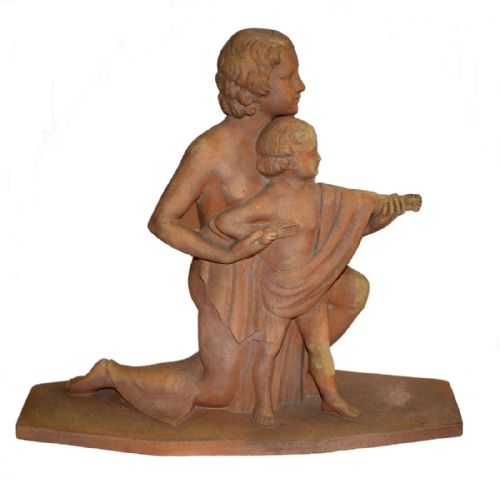
Vintage Bisque Figurines
These vintage bisque figurines are unglazed ceramic pieces capturing human and figurative forms, sought after for their matte texture and fine detail.
Vintage Bisque Figurines
Vintage bisque figurines encompass unglazed ceramic and porcelain sculptures spanning the Victorian era, the nineteenth century, and the early decades of the twentieth century. When browsing these items, buyers encounter representations of young boys, ladies, gentlemen, water carriers, and piano babies, alongside sculptural groups depicting fathers and children.
How they were made
Makers produced these figurines from bisque porcelain and ceramic bodies left unglazed to showcase a smooth, matte surface texture. Artisans frequently enhanced the unglazed white clay by applying hand-painted details, enamel, gilt highlights, and gold leaf accents to clothing and decorative elements.
Certain pieces combine glazed and unglazed porcelain sections, contrasting the chalky bisque body with glossy surfaces. Sculptors modelled these statues with intricate attention to drapery, facial expressions, and naturalistic postures before firing.
Seated naked ladies and lounging piano babies prove that Victorian porcelain could maintain both strict decorum and absolute whimsy.
What varies in quality
Scale and ambition also differentiate the range, moving from modest single figures to large pairs and complex multi-figure groups. Works bearing factory marks or artist signatures demonstrate higher attribution value within the hierarchy of these ceramics.
Royal Dux Bohemia·B Rezl
The Vintage Bisque Figurines Glossary
- Bisque
- Unglazed porcelain or ceramic fired once to vitrify the body while retaining a matte, porous texture. It is also known as biscuit porcelain.
- Piano baby
- A decorative bisque figurine placed on the front of a piano during the Victorian era. These figures often depict children in reclining or crawling poses.
- Gilt
- A thin layer of gold applied to the surface of the ceramic to highlight ornamentation. Gold leaf is utilised in a similar decorative manner.
- Enamel
- Opaque glass-based paint fused to the surface during firing. It provides vibrant colour details on clothing and accessories.
- Neoclassical
- A style drawing inspiration from classical antiquity. It influences the drapery and balanced composition of certain figures.
Vintage Bisque Figurines: Frequently Asked Questions
What are piano babies?
Piano babies are decorative porcelain figures popular in the Victorian home, traditionally placed on the draped covers of upright pianos. They typically depict infants or young children in relaxed or playful reclining positions.
These pieces were produced in unglazed bisque to highlight the soft modelling of the skin and garments. Collectors appreciate them for their charming depiction of childhood domestic life.
How do I identify a Royal Dux piece?
Royal Dux pieces are distinguished by their sculptural ambition, often depicting water carriers, ladies, and allegorical subjects in large formats. They frequently combine naturalistic forms with tinted bisque and applied gilt.
Many examples from this Bohemian pottery carry characteristic factory identification in the ceramic body. The modelling shows a high degree of nineteenth-century academic training.
Why is the surface unglazed?
Leaving the porcelain unglazed, or in the bisque state, allows the material to absorb light differently than glossy ceramics. This matte finish reveals the subtle contours of the sculptor's modelling without glare.
Biscuit porcelain mimics the appearance of carved marble, a quality favoured by nineteenth-century manufacturers seeking a classical aesthetic. It also accepts fine hand-painted enamel and gilt decoration directly onto the porous body.
How should I display vintage bisque?
Display these delicate figures away from high-traffic areas where accidental knocks might chip the matte porcelain. Enclosed cabinets protect the porous unglazed surfaces from accumulating household dust over time.
Adequate directional lighting enhances the subtle textures and hand-painted gilt details without washing out the pale ceramic tones.