





Antique Birch Bureau
An antique birch bureau offers a writing surface and concealed drawers in pale timber, bringing functional elegance to a study.
Antique Birch Bureau
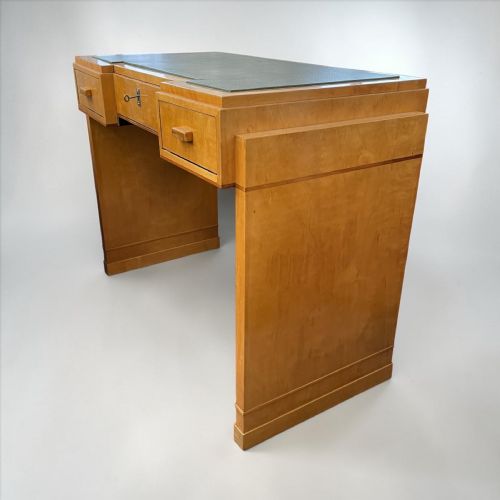
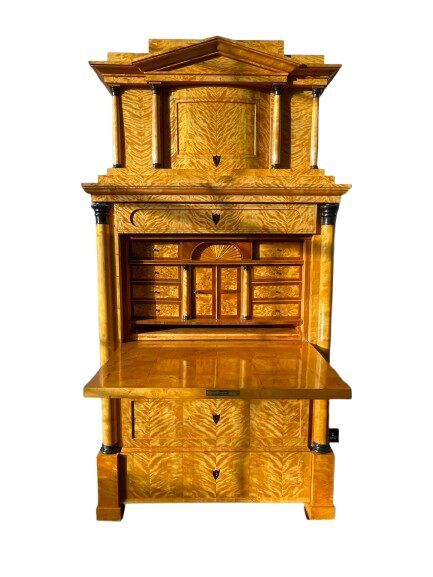
An antique birch bureau is a fitted desk designed for correspondence and storage, frequently incorporating a fall-front writing flap that conceals smaller drawers and pigeonholes inside. The pieces found here span the nineteenth century and the Art Deco period of nineteen thirty, drawing heavily upon Scandinavian Biedermeier, Victorian, and Swedish Empire Revival traditions.
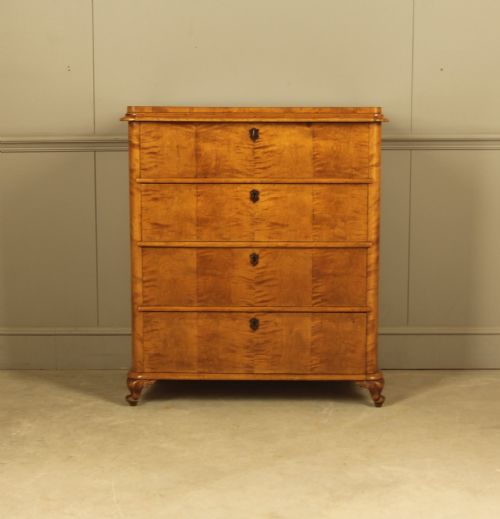
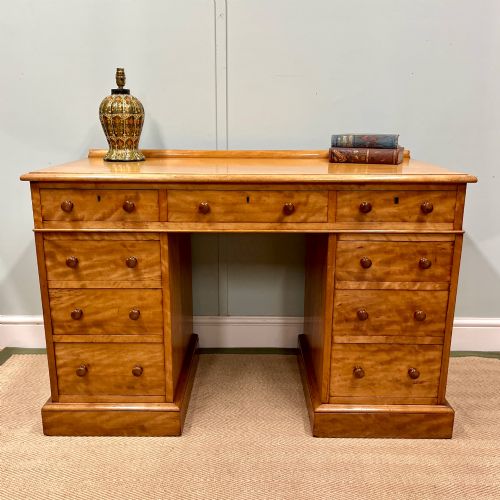
Buyers encountering this selection will frequently find forms categorised as secretaires, escritoires, and desks alongside related case pieces like chests of drawers and dressing tables in matching timber. These items reflect the clean lines and striking grain patterns favoured by makers working in birch, satin birch, masur birch, and tiger birch across Sweden and Britain.
Materials and Construction Methods
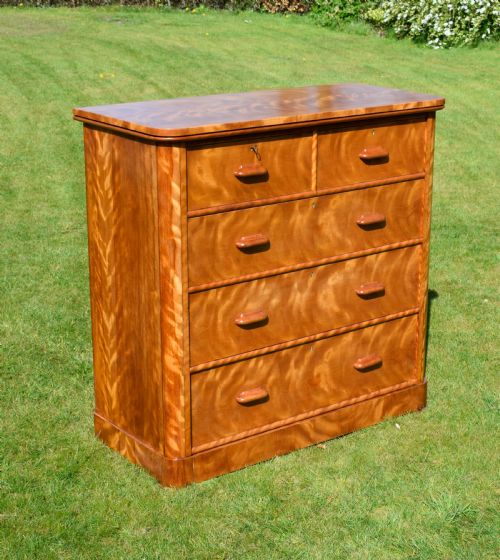
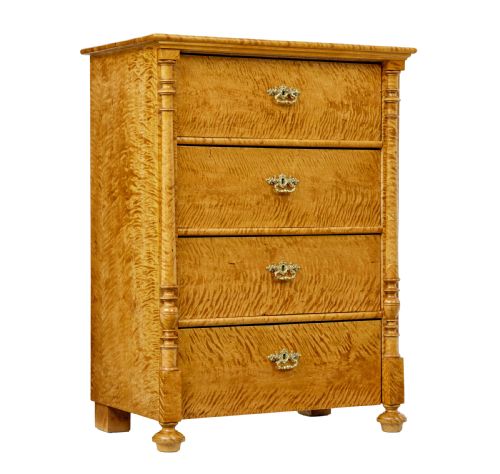
Makers utilised solid birch and birch veneer over secondary woods like pine, selecting figured timbers such as masur, tiger, and flame birch to create bold visual movement across flat drawer fronts and fall-front panels. Ebonised wood details often provided stark contrast to the pale golden tones of the primary timber, framing the main structural sections with dark geometric lines.
Hardware typically consisted of brass handles, escutcheons, and hinges that secured the drop-down writing flaps and drawers. Construction relied on traditional joinery methods, ensuring that large case pieces remained stable while displaying the intricate grain patterns characteristic of Scandinavian and Victorian cabinet making.
Secret compartments inside these desks often waited behind sliding panels to store private letters and family fortunes.
Distinctions in Execution and Material Selection
Quality in these desks rests primarily upon the choice and arrangement of timber veneers, where book-matched flame or masur birch creates a symmetrical, highly decorative surface pattern across the fall-front. Finer examples display meticulous attention to the internal arrangement of the writing compartment, featuring finely proportioned small drawers and secret compartments executed in matching woods.
The precision of the cabinet work and the integration of contrasting elements, such as ebonised mouldings or finely cast brass mounts, distinguish superior pieces from simpler utilitarian items. The integrity of the original polish and the preservation of the timber's natural lustre further separate exceptional desks from those with compromised surfaces.
Heal and Son
The Antique Birch Bureau Glossary
- Masur birch
- A decorative form of birch timber characterised by intricate, swirling grain patterns and dark brown inclusions resembling small knots. This wood was frequently utilised on the primary facades of Biedermeier secretaires.
- Secretaire
- A piece of furniture containing a built-in writing drawer or a fall-front flap that opens to reveal a fitted desk interior. It combines the storage capacity of a chest with the workspace of a desk.
- Biedermeier
- A dominant style in Central European furniture design during the nineteenth century, emphasising utilitarian comfort and clean architectural lines. Pieces from this movement often highlight the natural beauty of blonde woods without excessive ornamentation.
- Satin birch
- A timber variant with a fine, reflective grain that produces a smooth, lustrous finish when polished. It appears widely in nineteenth-century British and Scandinavian desks and dressing tables.
- Escritoire
- A small writing cabinet featuring a slanted or vertical fall-front flap covering a compartment for stationery. These forms were favored for domestic correspondence in formal rooms.
Antique Birch Bureau: Frequently Asked Questions
What is an antique birch bureau?
An antique birch bureau is a traditional writing desk constructed from birch or satin birch timber, featuring a hinged writing flap that opens to reveal inner compartments and drawers.
These pieces typically date from the nineteenth century, with many originating from Swedish Biedermeier workshops where pale, figured woods were prized for domestic furniture.
How do I identify Biedermeier style?
Biedermeier furniture is defined by restrained neoclassical forms, smooth surfaces, and a focus on the natural grain of woods like birch rather than heavy carving.
Such pieces rely on architectural symmetry, subtle ebonised accents, and minimal hardware to achieve a clean, elegant aesthetic.
What is masur birch?
Masur birch is a specialised wood mutation featuring dense, swirling grain patterns interspersed with dark flecks and knot formations.
Cabinet makers used veneers of this timber on prominent surfaces like drawer fronts and fall-front desks to create striking decorative effects.
Where were these bureaux made?
The pieces available in this selection originate primarily from Sweden and Britain, reflecting distinct regional tastes in nineteenth-century cabinet making.
Scandinavian makers frequently employed native birch and flame birch veneers, while British firms like Heal and Son produced satin birch furniture for domestic interiors.