


Antique Berry Spoons
Antique berry spoons are decorative serving implements typically featuring embossed and chased fruit motifs upon the bowl, prized for formal dining.
Antique Berry Spoons
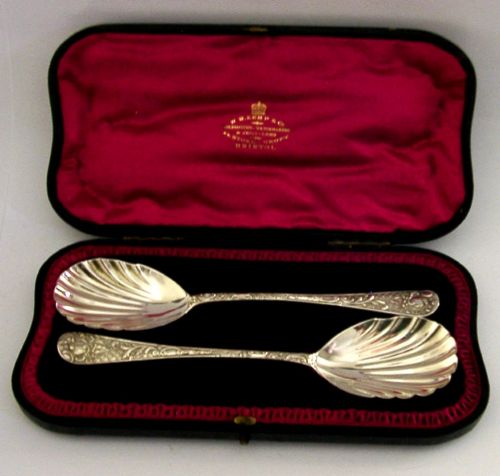
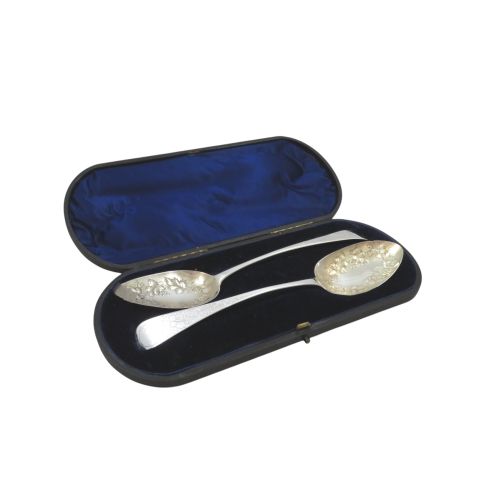
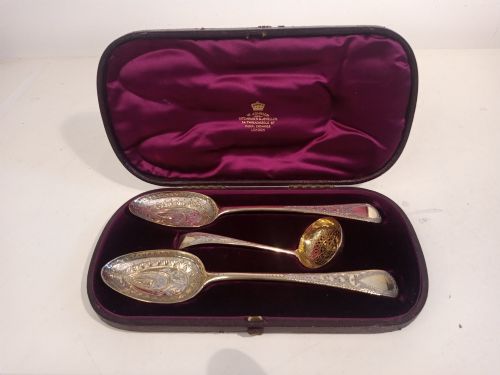
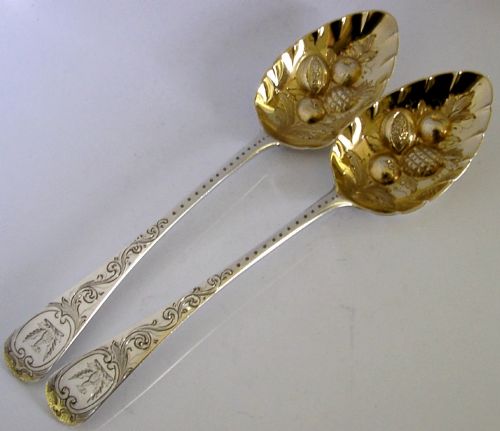
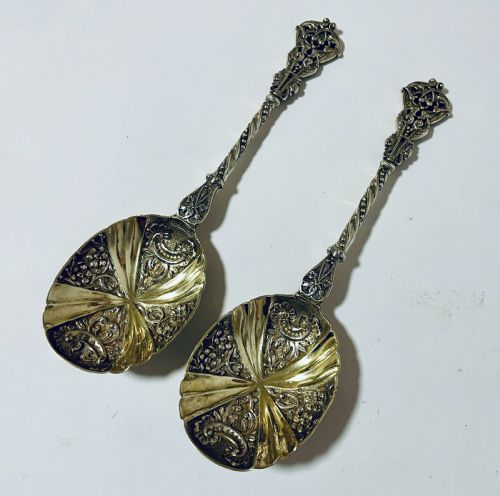
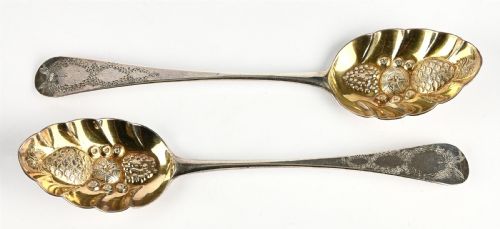
Antique berry spoons represent a specialised form of serving cutlery created to portion soft fruits during formal dining occasions. Many examples found on this page originate from the Georgian and Victorian periods, often appearing as matched pairs within fitted presentation cases lined with velvet or satin.
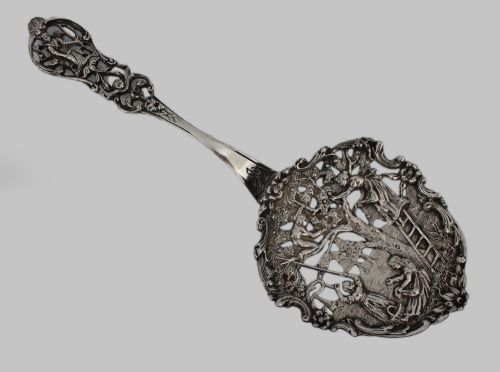
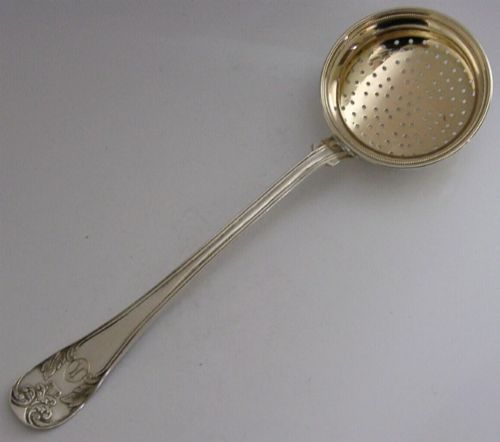
Makers frequently adapted existing dinner or dessert spoons by adding elaborate chased fruit designs and repoussé work to the bowls at a later date. Alongside traditional serving spoons, the selection includes related pieces such as sugar sifters, strainer ladles, and fruit serving sets complete with nutcrackers and grape scissors.
How they were made
Silversmiths utilised sterling silver or silver-gilt, hammering and shaping the metal into slender handles featuring feather edges, Onslow patterns, or naturalistic leaf motifs. The distinct bowl decoration was achieved through repoussé hammering from the reverse and chasing from the front to delineate berries, leaves, and fruit clusters.
Makers often applied a thin layer of gold wash, known as silver gilt, over the sterling silver bowl to contrast with the bright polished highlights of the fruit ornamentation. Fitted presentation cases incorporated wooden frames covered in leather or textured cloth, lined internally with silk or velvet to protect the polished metal surface.
Several pieces feature intricately chased currants and strawberries sharing bowl space with surprisingly solemn Victorian family crests.
What varies in quality
The standard of craftsmanship depends largely on the depth and crispness of the chased fruit decoration pressed into the bowl. Finer examples display sharp, detailed botanical relief work without thinning the underlying silver walls.
The integrity of the original hallmarks stamped into the metal indicates the origin and workshop standard of the base spoon. Complete matching sets housed in their original fitted presentation cases demonstrate higher retention of historical condition.
peter & Anne Bateman·William Chawner II·Sebastian Crespell·Hukin & Heath·R Hennell·Whiting Co.·Walker & Hall
The Antique Berry Spoons Glossary
- Repoussé
- A metalworking technique where the artisan hammers the design from the reverse side to create a raised relief on the front. This method forms the prominent fruit and leaf shapes inside the bowl.
- Silver-gilt
- Sterling silver that has been coated with a thin layer of gold. This treatment provides a rich two-tone appearance particularly common on dessert and fruit flatware.
- Sifter spoon
- A specialised serving spoon featuring a pierced or perforated bowl designed to strain liquid away from berries or caster sugar. These utensils frequently accompany larger serving sets in fitted presentation boxes.
- Onslow pattern
- A distinctive 18th-century flatware handle design terminating in a tightly scrolled volute. This style appears on early serving pieces predating heavy Victorian ornamentation.
- Hallmark
- A series of official stamps applied to precious metal indicating the maker, assay office, standard of purity, and year of manufacture. These marks verify the authentic period of the piece.
Antique Berry Spoons: Frequently Asked Questions
What were berry spoons used for?
These utensils were designed specifically for serving soft fruits like strawberries, raspberries, and blackberries at the dining table. The large bowl accommodated generous portions while preventing fruit damage.
During the Georgian and Victorian eras, dessert courses involved specialised flatware to handle seasonal produce. Berry spoons allowed hosts to distribute fruit efficiently from communal bowls onto individual dessert plates.
How can I date my berry spoon?
Dating relies primarily on the official hallmarks stamped into the reverse of the handle or stem. These marks typically include a date letter, a town mark for the assay office, and a maker's mark.
Stylistic indicators also help determine the era, such as the flat, engraved handles of the Georgian period versus the naturalistic leaf forms and heavy embossing common in later Victorian examples.
Why do some spoons come in cases?
Fitted presentation boxes were utilised to protect delicate serving cutlery from tarnish and physical damage when not in use. These cases typically feature rigid wooden structures lined with velvet or satin.
Boxes often indicate a retailer or original presentation purpose, frequently housing matched pairs or larger sets complete with sifter spoons and fruit knives.