


Antique Bedroom Set Suite
An antique bedroom set suite brings matched grandeur to domestic spaces through period craftsmanship in walnut, mahogany, and oak.
Antique Bedroom Set Suite
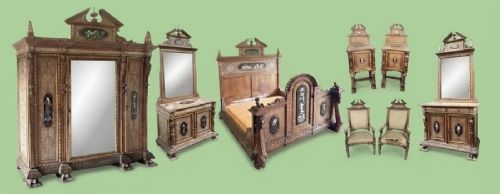
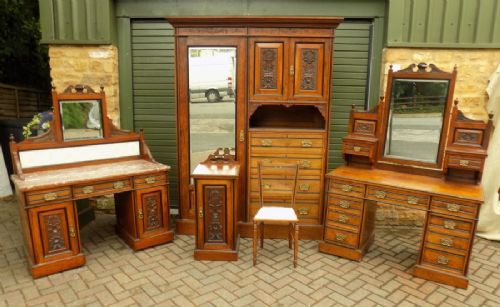
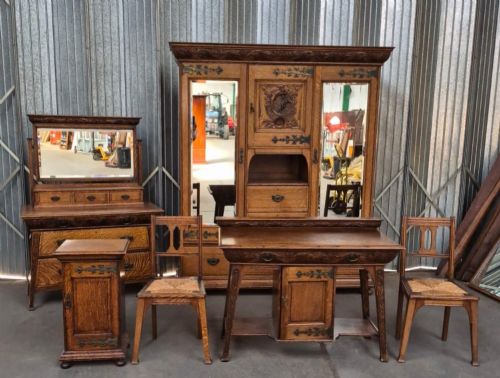
An antique bedroom set suite comprises coordinated furniture pieces designed to furnish a sleeping chamber with unified style and proportion. Buyers seeking an antique bedroom set suite encounter configurations ranging from large multi-piece wardrobe and bed combinations to smaller groupings with bedside cabinets and dressing tables.
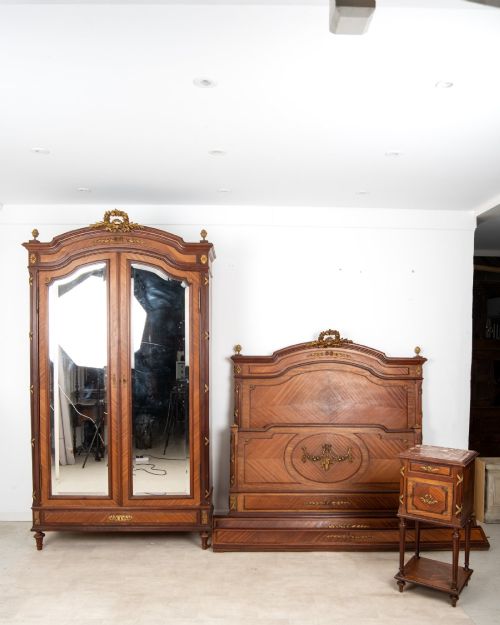
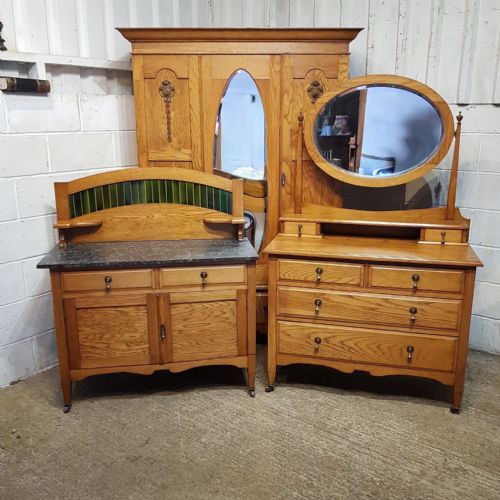
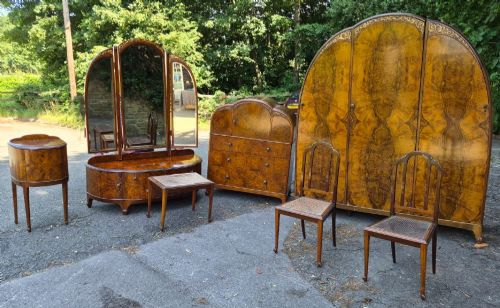
The selections span periods from the Victorian era and the Edwardian period through to Art Deco designs of the 1920s and 1930s. French stylistic revivals, including Louis XVI and Louis XV forms alongside Arts and Crafts designs, dominate the available options on this page.
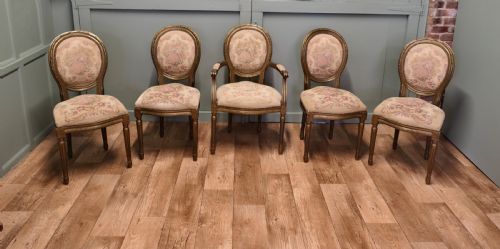
Complete suites often include wardrobes, bed frames, and matching nightstands, while related salon and boudoir groupings provide seating and occasional tables. These coordinated ensembles reflect the nineteenth and early twentieth century preference for unified interior design schemes.
Materials and construction methods
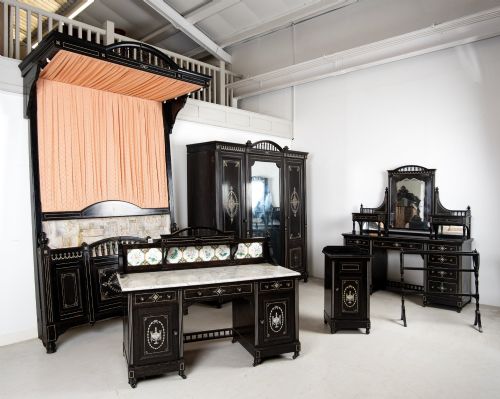
Cabinet makers utilised fine timbers such as walnut, burr walnut, mahogany, and oak as the structural foundation for these substantial sleeping chambers. Marquetry inlay, ebonisation, and string inlay often enrich the primary wood surfaces, while specific pieces incorporate marble tops on bedside cabinets and glass elements.
Structural elements frequently combine solid hardwoods with matched veneers to achieve decorative grain patterns across large wardrobe doors and headboards. Skilled joinery methods secure the structural integrity of multi-piece suites designed for daily domestic use over generations.
One Art Deco suite even reaches upward with a skyscraper maple bed featuring built-in bedside cabinets.
Distinctions in quality and execution
Quality separates standard commercial production from exceptional cabinet work through the precision of timber selection and decorative execution. The depth of hand-carved ornamentation, the symmetry of burr walnut or marquetry veneers, and the integration of matching auxiliary pieces define the upper tiers.
Cohesion across every element in a multi-piece suite indicates superior original commissioning. Suites retaining their original marble tops, matching hardware, and uncompromised surface finishes represent the highest standard of surviving examples.
Waring & Gillows·Frank Taylor & Co.·Lamb of Manchester·Heals·Rowley Gallery·B Cohen & Sons
The Antique Bedroom Set Suite Glossary
- Compactum
- A large multi-compartment wardrobe combining hanging space, drawers, and shelving within a single unified cabinet. This form maximised storage efficiency in Edwardian and Victorian chambers.
- Marquetry
- Decorative patterns formed by fitting together thin slices of wood veneer on a solid substrate. Artisans employed this technique to create intricate geometric or floral designs across drawer fronts and headboards.
- Bombe
- A swelling, outward-curving profile found on case furniture and bedside cabinets. This curvaceous silhouette is particularly characteristic of continental European pieces.
- Ebonised
- Timber treated with a chemical finish or stain to imitate solid ebony. Victorian cabinet makers favoured this dark surface treatment to highlight inlaid details.
- String inlay
- Thin contrasting lines of wood inlaid flush into the surface of a primary timber. This linear embellishment outlines panels on Edwardian and Victorian mahogany furniture.
Antique Bedroom Set Suite: Frequently Asked Questions
What pieces comprise a complete bedroom suite?
A complete suite typically incorporates a large wardrobe, a bed frame, and one or two matching bedside cabinets. Many configurations also integrate dressing tables, washstands, or seating.
Larger ensembles expand to include multiple wardrobes and extensive drawer chests designed for substantial homes.
How do I identify Art Deco bedroom furniture?
Art Deco suites display clean geometric lines, symmetrical forms, and streamlined profiles characteristic of the 1920s and 1930s. Designers utilised figured burr walnut, maple, and contrasting veneers rather than heavy carved ornamentation.
Integral cabinets and skyscraper silhouettes further distinguish this modern stylistic movement from earlier Victorian and Edwardian pieces.
Are French suites different from British ones?
French suites frequently showcase lighter fruitwoods, caned bed panels, and Louis-style revivals with cabriole legs and elaborate carved cresting. British suites of the same periods tend toward straighter architectural lines, notably in Arts and Crafts and Edwardian designs.
Continental pieces also frequently pair beds with matching marble-topped nightstands.