




Antique Barometer Dial
These antique barometer dial pieces are precision instruments and fitted housings that measure atmospheric pressure, sought after for their domestic utility and fine craftsmanship.
Antique Barometer Dial
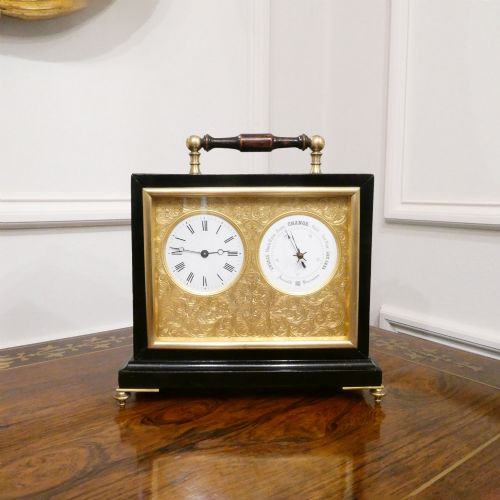
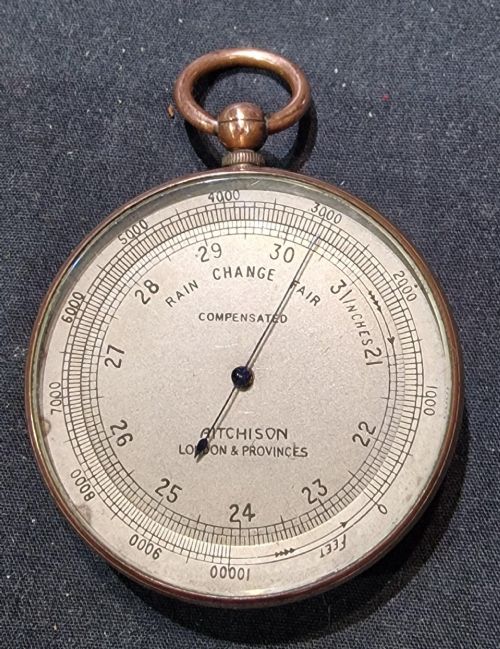
When you search for an antique barometer dial, you find instruments and fitted faces originating from the Georgian, Victorian, Edwardian, and Art Deco periods. These objects range from freestanding wall instruments and stick barometers to pocket forecasters and compendiums.
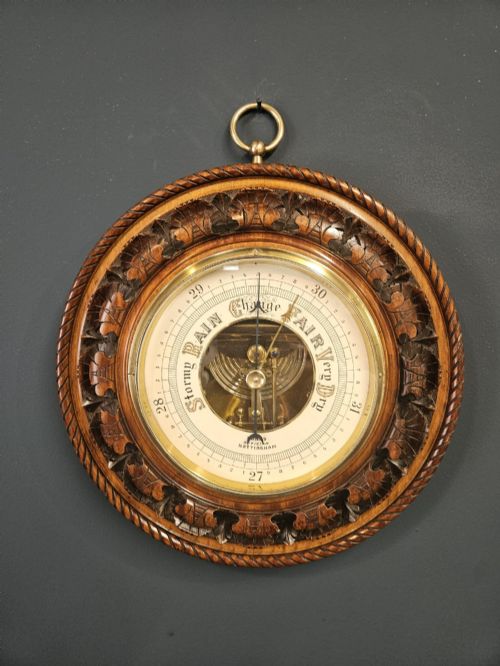
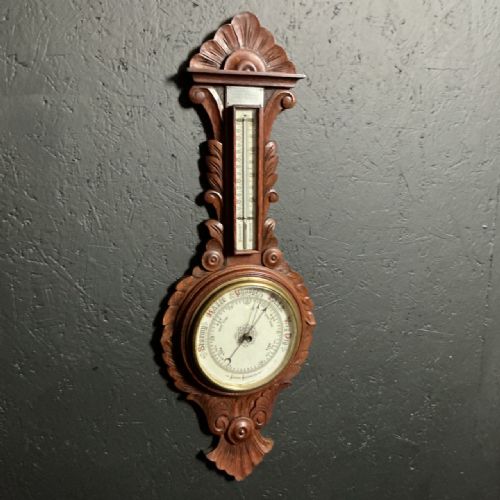
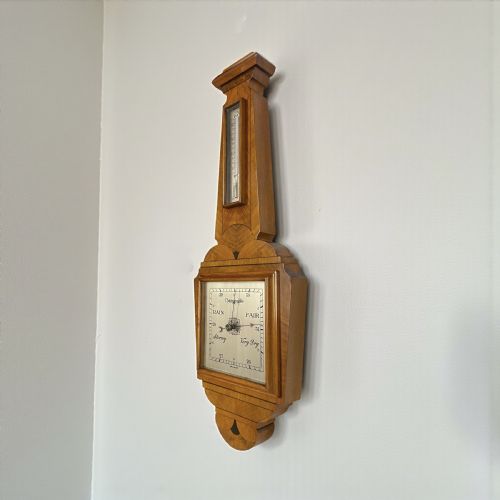
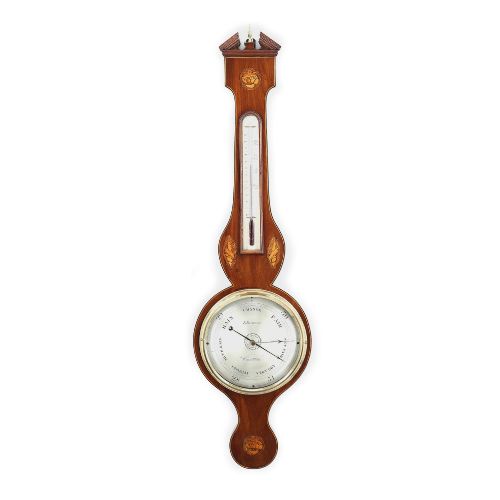
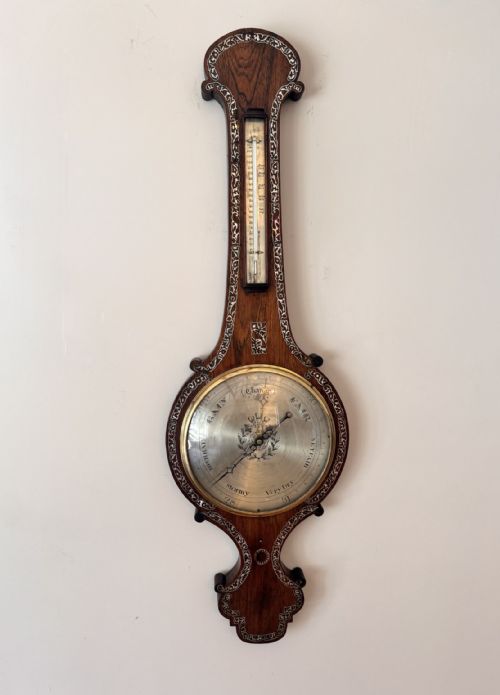
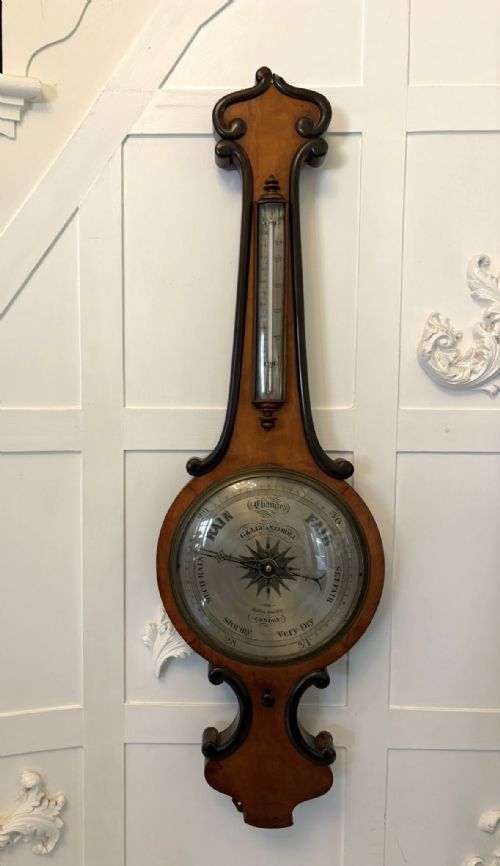
The version you are most likely to meet on this page is the wheel or banjo barometer housed in mahogany, oak, or walnut cases. Many examples incorporate subsidiary dials, thermometers, or engraved porcelain and silvered metal faces.
How they were made
Maker workshops constructed the outer housings using timbers such as mahogany, oak, walnut, rosewood, and occasional Chinoiserie lacquered finishes. Glazed bezels protected the fragile internal mechanisms and engraved faces.
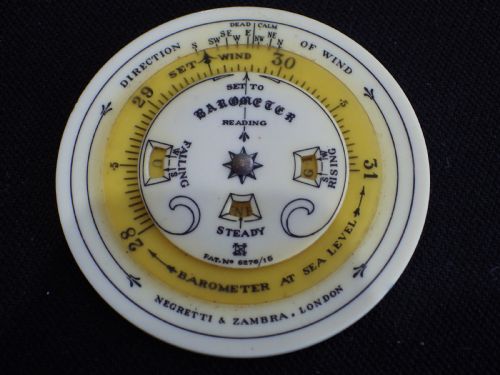
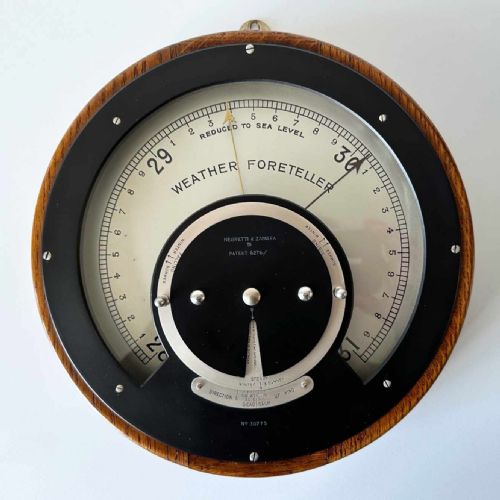
Dial faces were typically fashioned from silvered metal, brass, or porcelain, carrying finely etched graduations and maker signatures. Mercurial and aneroid systems were calibrated carefully within these heavy timber and glass enclosures.
Periods represented span from the 18th century through the Georgian, Victorian, Edwardian, and Art Deco eras.
What varies in quality
The standard of an antique barometer dial depends heavily on the crispness of the dial engraving and the fidelity of the maker's signature. Well-executed brass work, clean silvered surfaces, and undamaged porcelain distinguish finer items from simpler utilitarian instruments.
Cabinetry also dictates worth, as carved oak, inlaid rosewood, and figured mahogany cases demonstrate superior regional or metropolitan craftsmanship. The complexity of the movement, whether mercurial stick or aneroid wheel, influences the overall sophistication.
P. Caminada·George Adams London·Short and Mason·Negretti and Zambra·Bramwell and Harbron·Ganthony of London·JB Bergna·Fagioli of Clerkenwell·Jenkins Of Old Swindon·C. Realini
The Antique Barometer Dial Glossary
- Silvered metal
- A brass or copper dial treated with silver to create a matte white finish for engraved markings. This surface catches the light gently through protective glass.
- Aneroid barometer
- An instrument measuring atmospheric pressure without liquid, utilising a flexible metal box. It expands or contracts as pressure shifts, moving a pointer across the dial.
- Stick barometer
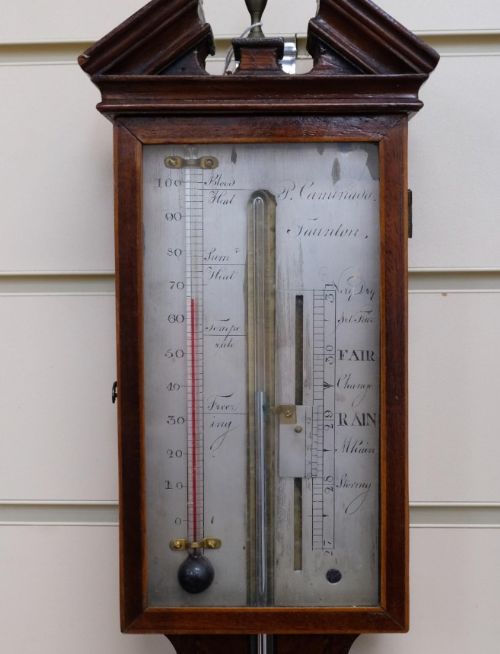
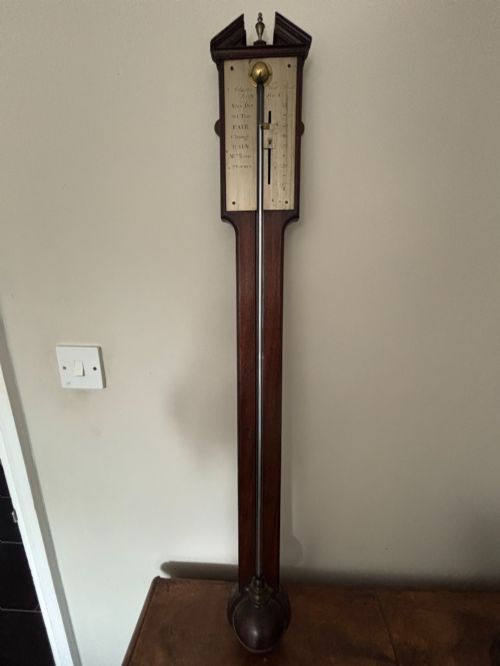
- A tall, slender wall instrument enclosing a mercurial tube to show barometric changes. These forms emerged prominently during the Georgian period in timber cases.
- Barograph
- A self-recording meteorological instrument that draws pressure readings onto a revolving drum. Many incorporate a prominent barometer dial alongside the mechanical recording apparatus.
- Banjo barometer
- A wheel barometer housed within a distinctive curved timber case resembling a stringed instrument. They frequently feature hygrometers and spirit levels set into the trunk.
Antique Barometer Dial: Frequently Asked Questions
How do aneroid barometers work?
Aneroid instruments rely on a sealed corrugated metal capsule that contracts or expands with shifting air pressure. This movement transfers through levers to the dial pointer.
Such mechanical designs allowed barometers to be built into compact desk compendiums and portable pocket cases.
What is a stick barometer?
A stick barometer is a tall, narrow wall instrument that houses an open column of mercury. The column rises and falls in direct response to atmospheric pressure changes.
These pieces represent some of the earliest domestic scientific instruments surviving from the Georgian era.
How do I date an antique barometer?
Dating relies on the casework style, timber choice, and the execution of the dial lettering. Georgian examples often feature understated mahogany stick cases, while Victorian pieces favour heavier carved oak or walnut frames.
Signatures inscribed upon the dial or backplate also help identify the active period of the maker.
Where were barometers placed at home?
Barometers were traditionally hung in hallways or libraries where occupants could check the weather before venturing outside. Larger banjo and wheel models served as both functional instruments and prominent decorative furnishings.
Smaller pocket versions and desk compendiums were kept close at hand for personal travel or study use.