

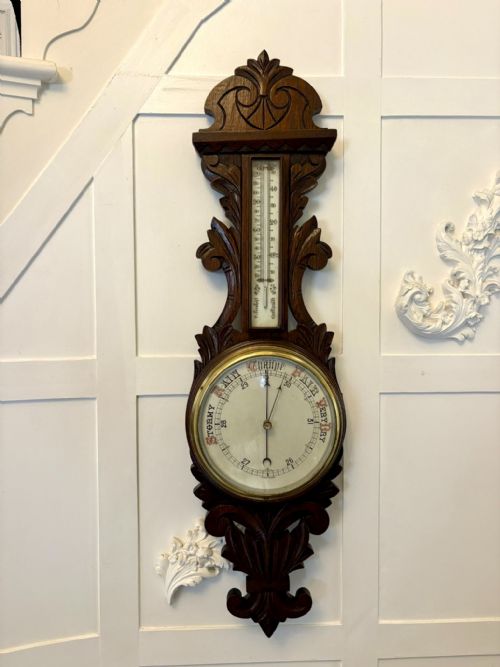


Traditional Weather Glass
Traditional weather glass instruments measure atmospheric pressure changes using glass vessels and dials, offering both practical meteorological records and handsome period decoration for the home.
Traditional Weather Glass
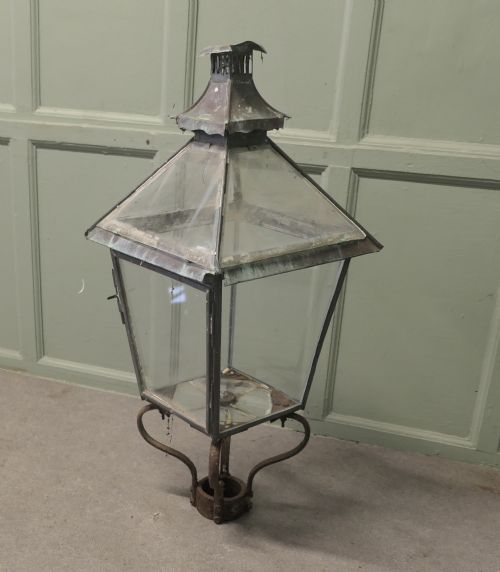
Traditional weather glass instruments encompass a variety of barometers, barographs, and stick barometers originating from Georgian, Victorian, and Edwardian periods. Buyers searching for a traditional weather glass will encounter banjo formats, wheel designs, and wall-mounted cased instruments constructed during the nineteenth and early twentieth centuries.
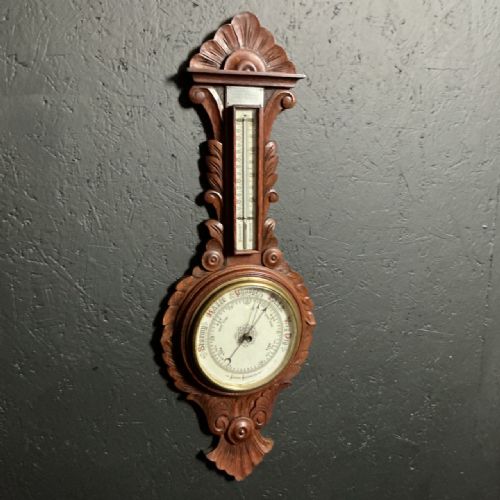
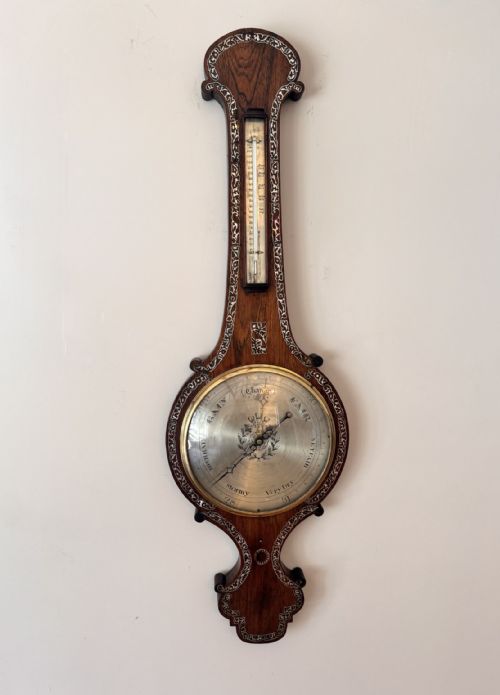
The selections span simple domestic stick barometers to elaborate carved oak, walnut, and mahogany banjo barometers fitted with thermometers and hygrometers. Makers often housed these mechanisms in decorative wooden frames utilising rosewood, brass, and bone inlay.
While the search phrase suggests a sealed glass vessel containing chemical solutions, the physical evidence shows makers applied the term broadly to mercury and aneroid barometers housed within glass-fronted cases. These domestic instruments reflect the scientific curiosity and interior aesthetic of the nineteenth century.
Materials and construction
Craftsmen built the housings using dense timbers such as mahogany, oak, walnut, and rosewood, frequently shaping them through carving and surface inlay. Dial faces incorporated brass bezels, bevelled glass plates, and delicate bone scales to display atmospheric readings.
Internal mechanisms relied upon mercury columns in stick barometers or expansion metal bellows in aneroid models, paired with finely calibrated mechanical gears. Cabinet makers collaborated with instrument makers to house these sensitive scientific components within decorative domestic furniture.
Admiral Fitzroy lent his name to sturdy oak barometers designed to help Victorian fishermen predict coastal gales before heading out.
Distinctions in craftsmanship
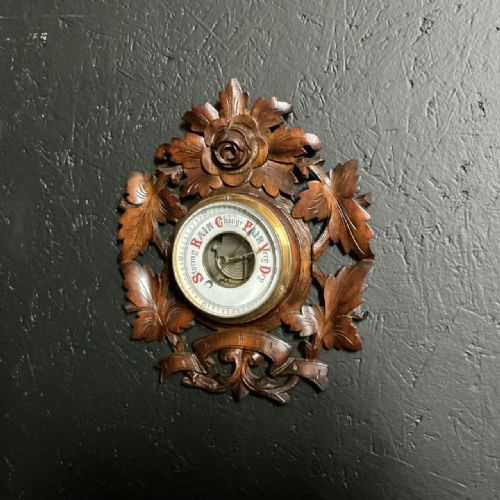
Quality rests in the crispness of the wood carving, the depth of the timber grain, and the legibility of the engraved dial scales. Pieces featuring intricate mother of pearl inlay, carved Black Forest motifs, or signed dials by known makers stand apart from utilitarian domestic models.
The integrity of the original case, the presence of matching mercury tubes or intact aneroid movements, and unpolished cabinet surfaces dictate the desirability of an instrument. Superior examples combine precision scientific apparatus with refined furniture design.
GAUPP & CO HONGKONG & SINGAPORE·Negretti & Zambra·Admiral Fitzroy·Jenkins Of Old Swindon·Vecchio & Co of Shaftsbury·A. RIVOLTA
The Traditional Weather Glass Glossary
- Aneroid barometer
- An instrument that measures atmospheric pressure without liquids, using an expanding metal capsule connected to an indicating needle. This dry mechanism allowed barometers to be built into compact wall hanging cases.
- Stick barometer
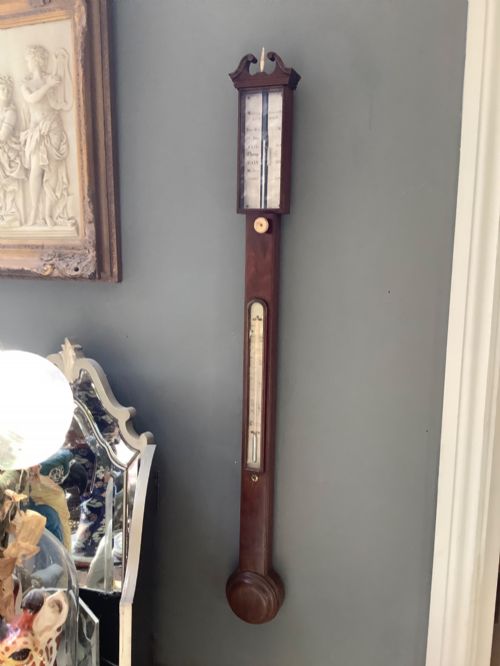
- A tall, slender wall instrument containing a vertical mercury-filled glass tube to show barometric fluctuations directly. They represent the earlier, more scientifically purist approach to pressure measurement.
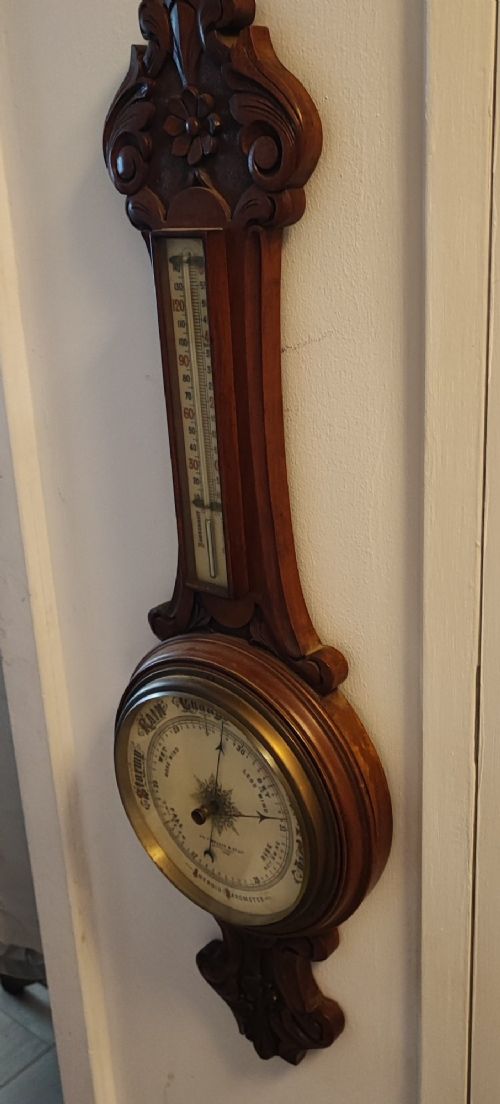
- Banjo barometer
- A domestic wall barometer shaped like a banjo, featuring a circular dial at the base and a long trunk holding a thermometer or hygrometer. These became popular decorative items during the Georgian and Victorian eras.
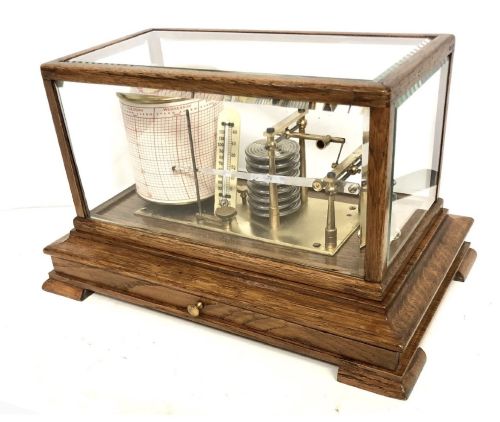
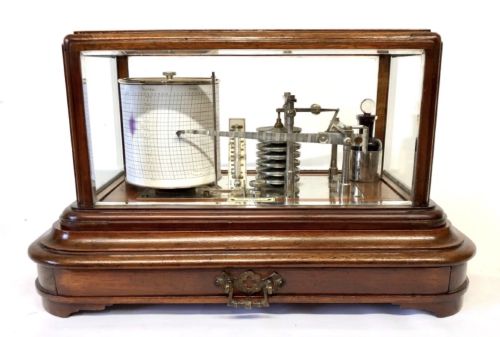
- Barograph
- A mechanical weather recording apparatus that plots barometric pressure onto a rotating paper chart over a weekly cycle. They are typically housed in heavy oak or mahogany cases with bevelled glass panels.
Traditional Weather Glass: Frequently Asked Questions
How do I read a stick barometer?
A stick barometer displays air pressure through the height of a mercury column viewed via a vertical glass scale. Rising mercury typically indicates improving weather, whilst falling levels warn of approaching rain or storms.
Most instruments feature a sliding vernier scale operated by a small brass knob, allowing precise measurement of pressure changes. Comparing current readings against previous positions provides the forecast.
Where should I hang a wall barometer?
Hang your barometer on an internal wall away from direct sunlight, central heating radiators, and draughty doors. Sudden temperature fluctuations affect the internal mechanism and can skew pressure readings.
Ensure the wall provides a secure fixing, particularly for heavy oak, rosewood, or walnut cased instruments. Positioning the dial at eye level makes daily observation straightforward.
Are these barometers still accurate?
Antique barometers generally retain good functional accuracy if their internal mechanical linkages and glass tubes remain undisturbed. Aneroid models can often be calibrated against local weather reports using a small adjustment screw on the back.
Mercury stick barometers display absolute atmospheric pressure directly through physics, meaning they rarely lose calibration unless air enters the vacuum tube. Professional restoration can rectify minor mechanical sluggishness.
How do I identify the period?
Dating relies upon cabinet styles, timber choices, and dial typography. Georgian examples favour clean mahogany veneers and simple stick frames, whereas Victorian pieces often showcase heavy carved oak, walnut, or Black Forest decoration.
Signatures on the dial or paper trade labels pasted inside the case offer definitive maker and date clues. The evolution from plain wood cases to elaborate inlaid banjo formats mirrors broader shifts in interior design.