




Antique Bamboo Chairs
Antique bamboo chairs bring organic texture and historic charm to a room, ranging from genuine Regency painted frames to Victorian faux bamboo designs.
Antique Bamboo Chairs
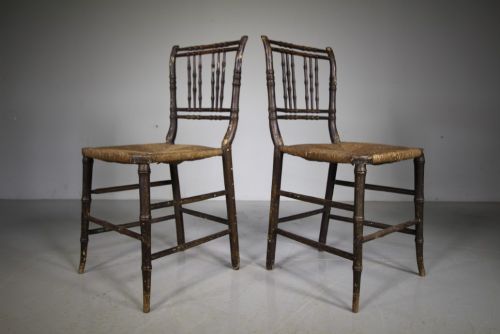
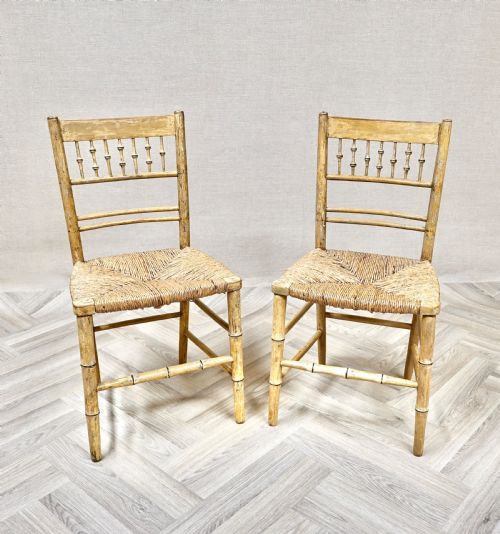
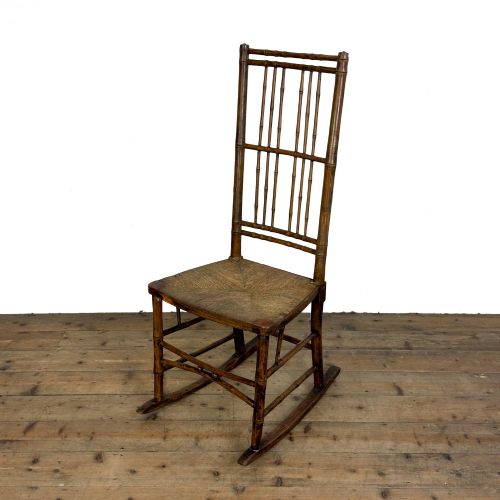
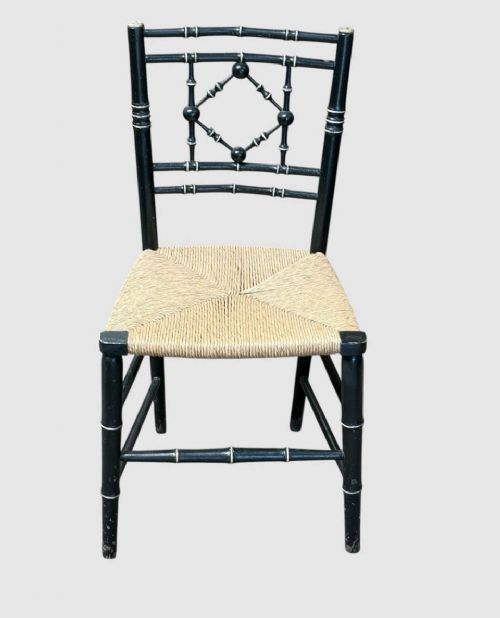
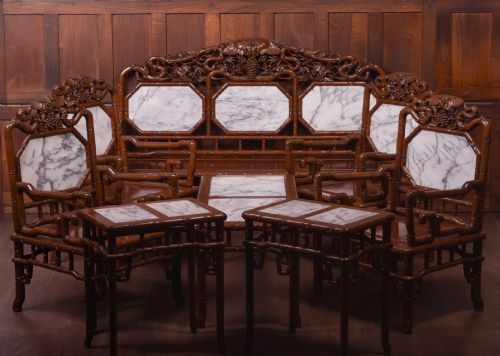
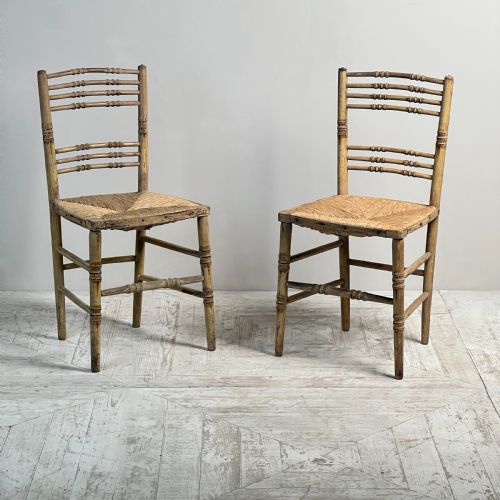
The most common examples on this page are Regency painted pieces and nineteenth-century faux bamboo designs. These forms range from simple side chairs with rush or cane seats to elaborate Chinese export models and French seating.
Makers produced these chairs for various domestic settings, from formal drawing rooms to light-filled conservatories. You will find occasional larger pieces such as hall benches and chaise longues alongside standard dining and parlour seating.
How they were made
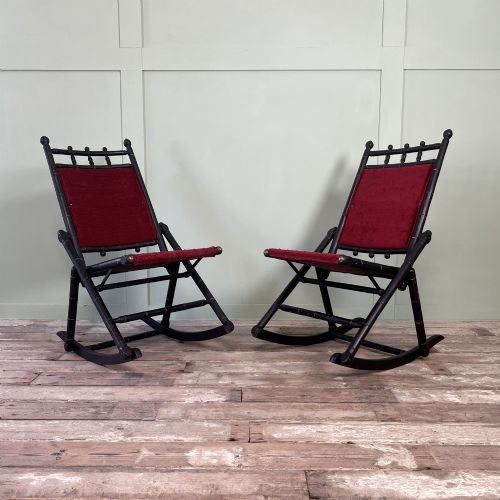
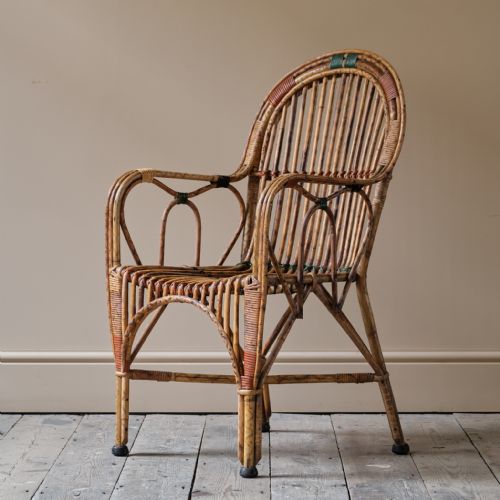
Cabinetmakers constructed these pieces using natural bamboo, rattan, and cane alongside solid timbers such as beech, pine, and ebonised wood. Workers often turned beech and other hardwoods on a lathe to replicate the knotted segments of real bamboo, creating simulated or faux bamboo frames.
Surfaces frequently received layers of paint, original decoration, or ebonisation to mimic exotic imports or suit changing aesthetic tastes. Seats utilised woven cane, rush, or padded fabric upholstery secured directly to the wooden or bamboo framework.
Listings feature periods from Regency and Victorian eras through to nineteen-forties designs, constructed in paint, cane, wood, rush, and bamboo.
What varies in quality
Quality rests upon the crispness of the turning in simulated frames and the structural integrity of the natural cane work. Superior examples retain their original painted decoration and show careful joinery that supports the weight of daily use without excessive wobble.
The refinement of the carving and the coherence of the design differentiate standard utilitarian seating from high-style parlour suites and Regency exhibition pieces. Earlier Regency items generally display sharper proportion and finer detail than later mass-produced Victorian equivalents.
The Antique Bamboo Chairs Glossary
- Faux bamboo
- Simulated bamboo. Wood such as beech turned on a lathe to resemble the jointed stems of the natural plant.
- Canework
- Woven material. Plant fibres or split rattan woven into open patterns to form resilient chair seats and backs.
- Ebonised
- Blackened finish. Wood treated with stain or paint to imitate expensive ebony wood.
- Rush
- Woven marsh grass. Dried stems twisted into cords and hand-plaited to create traditional chair seating.
Antique Bamboo Chairs: Frequently Asked Questions
How do I date an antique bamboo chair?
Dating relies on stylistic markers, construction methods, and the materials used in the frame. Regency pieces often exhibit classical proportions and delicate hand-painted decoration.
Later Victorian and Aesthetic Movement examples frequently utilise ebonised finishes or turned faux bamboo timbers. Comparing the joinery and seat weaving techniques helps place the piece within its historical period.
Are faux bamboo chairs strong?
Simulated bamboo chairs made from turned beech or hardwood are generally robust and suited for regular seating. Their durability depends on the stability of the original glue joints and the strength of the turned timber.
Natural bamboo and rattan pieces require a gentler touch to prevent splitting or joint loosening over time.
Where should I place these chairs in my home?
These chairs suit studies, bedrooms, and reception rooms where their distinctive silhouettes add texture to a scheme. Armchairs and side chairs function well as occasional seating rather than heavy-use dining chairs.
Keeping them away from direct heat sources protects the natural cane and painted finishes from drying out.