




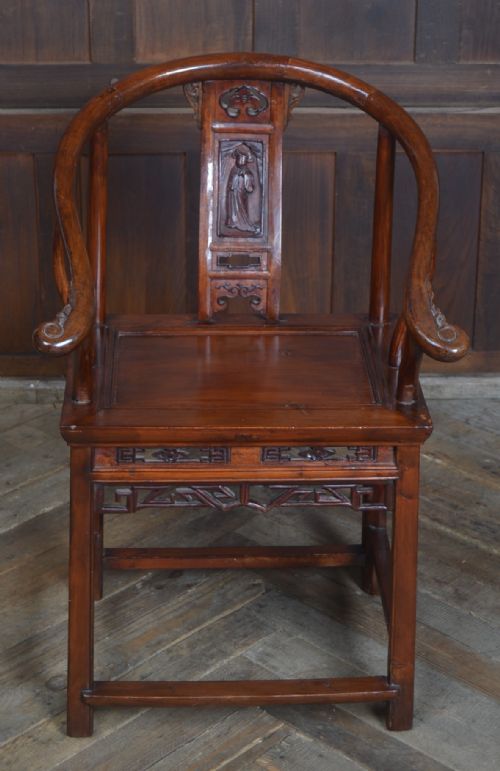

Chinese Horseshoe Back Chair
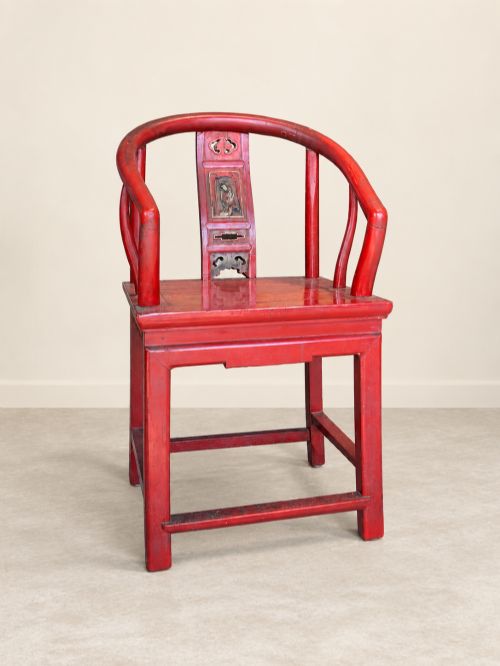
A chinese horseshoe back chair brings sweeping curved timber and balanced form into a room.
Chinese Horseshoe Back Chair
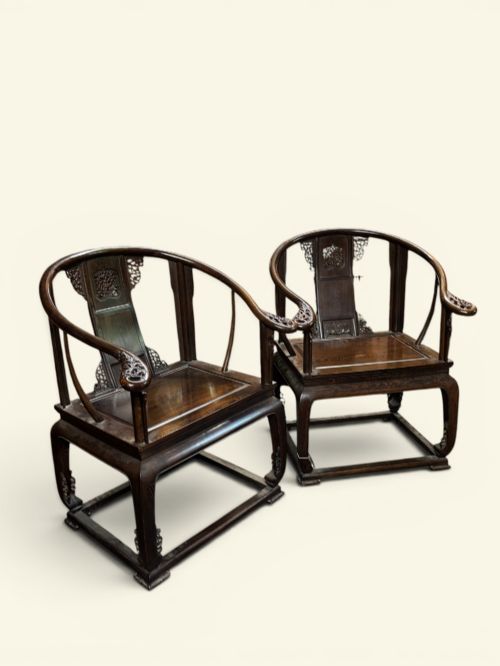
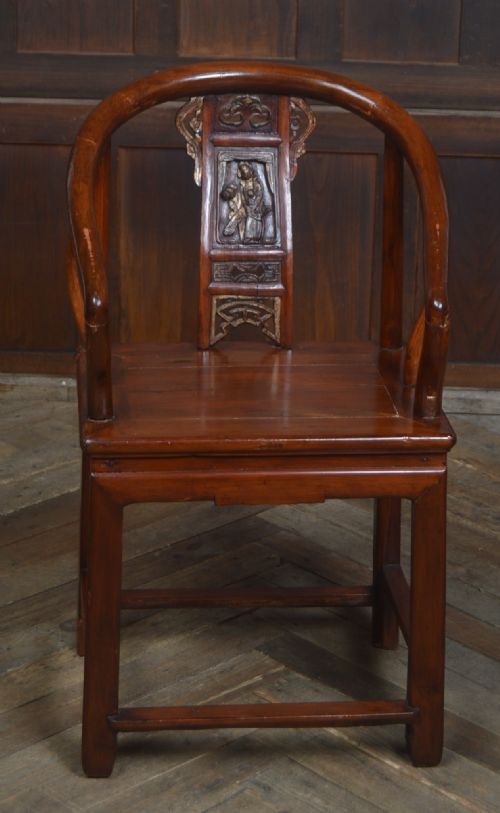
A chinese horseshoe back chair presents a distinctive continuous rail that curves upward and outward to form the arms, offering a supportive embrace for the sitter. These seating pieces appear across several distinct eras, including the eighteenth century, nineteenth century, and the Edwardian period, alongside items dated around 1900 and 1920.
Provincial interpretations in elm sit alongside dark hardwood items and lacquered wood surfaces. Details such as brass inlay, painted finishes, bamboo construction, and canework appear among the current and past listings.
Materials and Construction
Makers utilised native timbers including elm and dark hardwood, shaping structural components to withstand tension along the sweeping backrail. Selected examples incorporate bamboo and canework to provide lighter support panels within the frame.
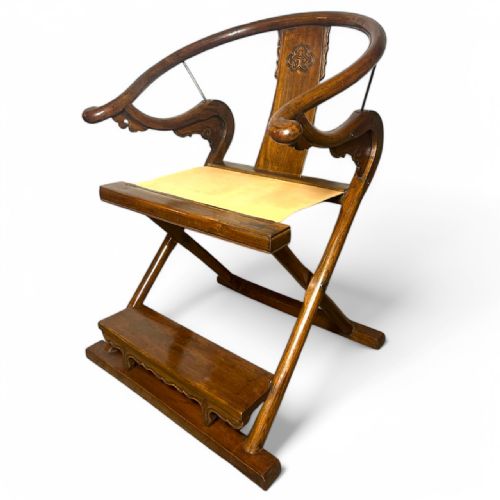
Surface treatments range from clear lacquered wood to painted finishes and intricate brass inlay work. Artisans joined sections using traditional joinery methods suited to folding mechanisms and rigid armchair frames alike.
Some folding models pack flat for travel, proving that ancient transit solutions were surprisingly portable.
Assessing Quality
Quality rests upon the fluidity of the curved crest rail and the precise execution of the joinery where the arms meet the vertical supports. Pieces exhibiting crisp carving and well-preserved lacquer or polished hardwood demonstrate superior craftsmanship.
The integration of decorative elements like brass inlay distinguishes more elaborate examples from plain provincial elm versions. Proportions and balance across folding mechanisms and rigid frames determine the overall presence of the seating.
The Chinese Horseshoe Back Chair Glossary
- Horseshoe back
- A continuous curved arm and crest rail resembling the shape of a horseshoe. This design distributes weight evenly and supports the arms comfortably.
- Elm
- A durable domestic timber utilised widely in provincial furniture construction. It accepts traditional joinery well and shows a distinct grain pattern.
- Lacquered wood
- Timber coated with successive layers of protective resin to create a smooth, glossy surface. This finish often protects against moisture and wear.
- Qing Dynasty
- The final imperial dynasty of China, spanning from the seventeenth to the early twentieth century. Furniture from this era displays varied regional and courtly styles.
Chinese Horseshoe Back Chair: Frequently Asked Questions
How do I date a Chinese horseshoe back chair?
Dating relies on examining the timber species, joinery construction, and surface treatments visible across the frame. Nineteenth-century examples often display denser hardwoods and specific patination compared to later pieces.
Period markers also appear in stylistic details such as brass inlay, painted decoration, or folding mechanisms. Comparing construction traits with documented pieces helps narrow the era of origin.
Are these chairs comfortable for daily use?
The continuous curved rail provides natural armrests and back support designed for upright sitting postures. Many versions accommodate modern living spaces as occasional seating or desk chairs.
Matching a chair to its intended setting involves considering seat height and overall dimensions. Adding a custom squab cushion can adjust the seating height for personal comfort.
What is the difference between Ming and Qing styles?
Ming style forms generally emphasise clean lines, restrained decoration, and structural purity. The timber grain remains a primary visual feature.
Qing style pieces frequently incorporate more elaborate carvings, painted finishes, or brass inlay work. Formality and decorative richness increase during this later period.
How should I care for lacquered wood furniture?
Lacquered surfaces require protection from direct sunlight and excessive humidity changes to prevent cracking. Dusting with a soft, dry cloth maintains the finish without abrasive cleaners.
Applying wax is unnecessary for lacquered items. Maintaining a stable indoor climate preserves both the protective coating and the underlying timber.