


Bamboo Accent Chairs
Bamboo accent chairs bring a light, exotic silhouette to a room, offering clever joinery and historic charm.
Bamboo Accent Chairs
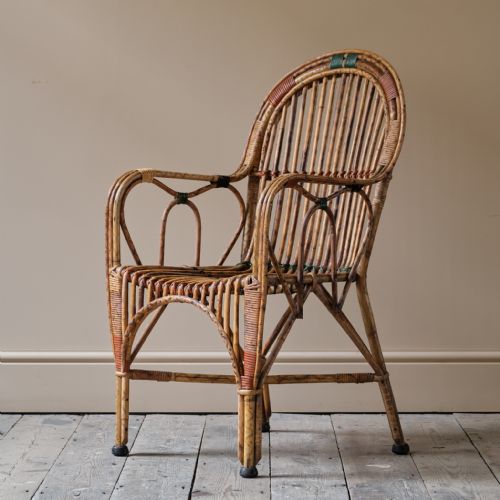
Bamboo accent chairs are seating pieces defined by their use of bamboo or simulated bamboo frames, shaped to bring decorative character into a room. When searching for bamboo accent chairs, buyers encounter forms ranging from armchairs to side chairs, suited for various corners of the home.
Stylistic influences vary across the selection, taking in Chinoiserie, Aesthetic Movement, and French Napoleon III designs. These diverse origins reflect how makers adapted natural and simulated cane aesthetics to suit changing domestic tastes over two centuries.
How they were made
Construction relies heavily on natural bamboo, rattan, and wood, often shaped through steaming and bending to form structural frames. Artisans combined these flexible materials with cane, rush, and fabric for seats, creating lightweight yet resilient seating.
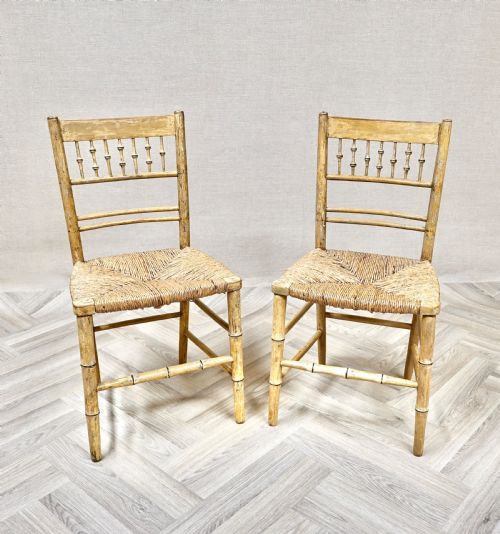
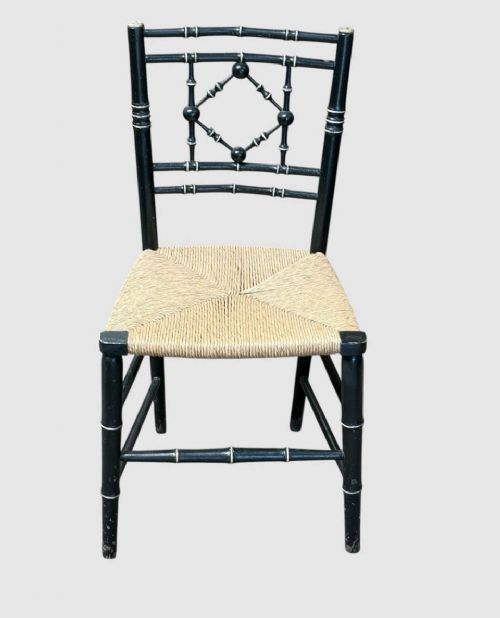
Surface treatment plays a major role in the finish, utilising paint, decoration, and ebonisation to alter the appearance of the timber or cane. Many pieces feature simulated bamboo carved from solid wood, finished with later paint or original decorative schemes.
Makers once turned solid timber into convincing bamboo complete with painted knots, proving that imitation remains the sincerest form of flattery.
What varies in quality
Quality rests in the precision of the frame's joinery and the integrity of the natural cane or rush work. Superior examples display careful carving on simulated bamboo timbers and well-preserved original painted decoration rather than hurried later restorations.
The sophistication of the design lineage also distinguishes the range, with Aesthetic Movement and Regency interpretations often showing greater refinement in proportion and detail than later mid-century rustic iterations.
The Bamboo Accent Chairs Glossary
- Bamboo
- A woody grass utilised for structural frames and decorative elements in furniture making. It provides a lightweight alternative to traditional hardwoods.
- Canework
- Woven rattan material used to form seats and backs on chairs. This technique offers flexibility and ventilation.
- Chinoiserie
- A decorative style reflecting European interpretations of Chinese artistic traditions. It frequently appears on painted and lacquered seating.
- Ebonised wood
- Timber treated with a dark finish to resemble ebony. This process was particularly favoured during the nineteenth century.
- Regency
- An English design period spanning the early nineteenth century. Pieces from this era often feature classical lines and painted decoration.
- Rush
- A marsh plant material twisted into cords for traditional chair seating. It creates a durable, textured surface.
Bamboo Accent Chairs: Frequently Asked Questions
Where should I place these chairs?
These chairs suit hallways, bedrooms, and drawing rooms where their distinctive frames can be appreciated without overcrowding the floor space. Their lightweight construction makes them easy to move as seating needs shift.
Pairing a single armchair or a matching pair with contrasting furniture adds textural variety to a room scheme. They function effectively as occasional seating rather than heavy lounge chairs.
How do I care for cane seats?
Cane work benefits from gentle dusting and occasional light moisture to keep the material supple and prevent it from becoming brittle. Keeping them away from direct heat sources protects the natural fibres.
Avoid placing heavy loads on delicate or aged canework to maintain the integrity of the weave. Professional re-caning restores structural support if the original material breaks down.
Are painted finishes original?
Many nineteenth-century and Regency pieces retain original painted or decorated surfaces, while others show later layers of paint applied during subsequent refurbishments. Examining the wear patterns helps determine the age of the finish.
Original decorative schemes often exhibit craquelure and gentle fading consistent with age. Later paint can be attractive in its own right, refreshing the chair for contemporary interiors.
What is simulated bamboo?
Simulated bamboo refers to solid wood, such as beech or birch, carved and painted to resemble natural bamboo joints and nodes. This technique allowed makers to achieve an exotic look using sturdy domestic timbers.
These pieces were particularly popular during the nineteenth century and the French Napoleon III period. They offer the visual lightness of bamboo combined with the durability of carved hardwood.