




Pair of Bamboo Chairs
A pair of bamboo chairs brings instant character to a room, offering lightweight seating with distinctive turned frames.
Pair of Bamboo Chairs
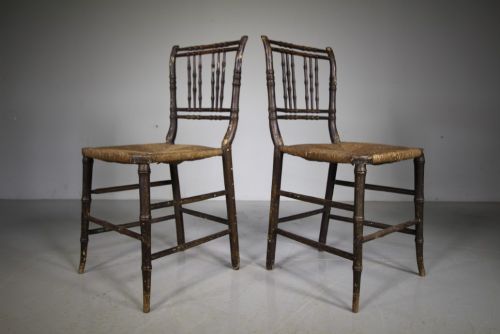
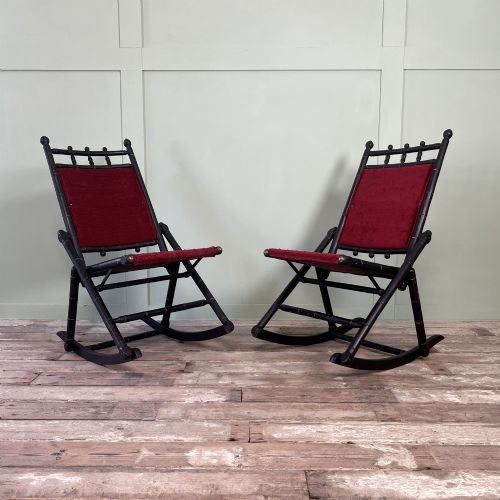
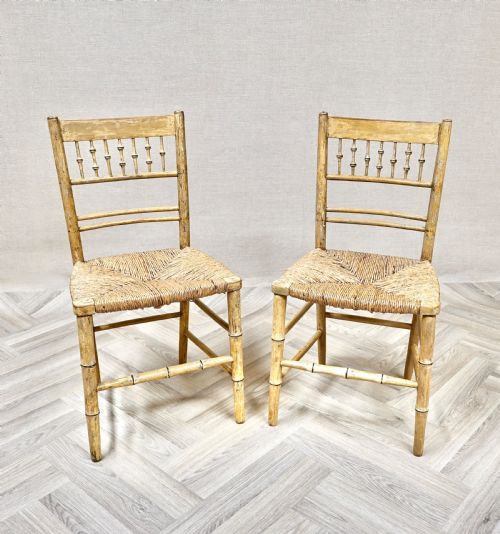
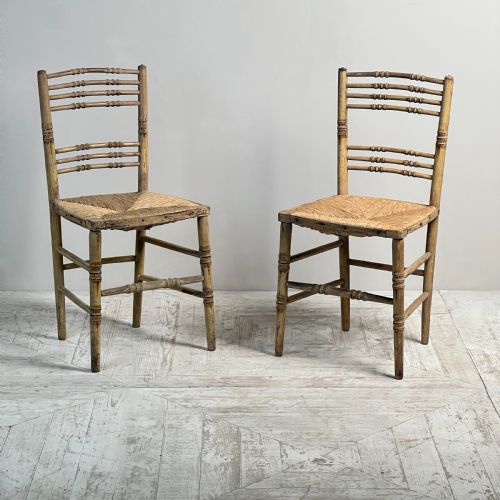
A pair of bamboo chairs encompasses seating built from actual bamboo or shaped from wood to imitate its characteristic joints and rings. These seats appear in forms ranging from side chairs and armchairs to folding rocking chairs and high chairs.
The pieces listed on this page draw heavily from the Regency period and the nineteenth century, alongside later examples from around nineteen hundred and the nineteen-twenties. Buyers frequently encounter side chairs and armchairs featuring rush or cane seats.
Origins span English Regency workshops, French salons influenced by the Aesthetic Movement, and Chinese export traditions. Many examples exhibit painted finishes or ebonised surfaces rather than natural cane tones.
Materials and construction
Craftsmen utilised natural bamboo for lighter conservatory and garden seating, bending the hollow stems with heat to form structural curves. Solid woods such as pine and beech were laboriously turned and carved by hand to simulate bamboo knots for more formal household furniture.
Surfaces were frequently finished with paint, ebonising, or lacquer to achieve decorative effects like Victorian Chinoiserie and French Napoleon III designs. Seats were woven from natural materials including rush and cane, or upholstered in fabric.
The listings show materials spanning paint, rush, wood, ebonised wood, bamboo, cane, fabric, and pine across multiple centuries.
Distinctions in quality
Quality rests upon the fidelity of the simulation in turned wood pieces and the structural integrity of the natural stems in genuine bamboo examples. Superior items maintain rigid joints without excessive wobble and retain original painted or ebonised surfaces.
The refinement of the turning work and the tightness of the rush or cane weaving dictate the overall execution. Pieces displaying intact hand-woven seating and original decorative paintwork sit at the upper end of the scale.
The Pair of Bamboo Chairs Glossary
- Faux bamboo
- Wood that has been turned, carved, or painted to imitate the jointed stems of natural bamboo. This technique was particularly popular during the Regency period and the nineteenth century.
- Simulated bamboo
- An alternative term for turned or painted wood mimicking bamboo stalks. It appears frequently in English and French seating from the Regency era onwards.
- Rush seating
- Woven seat construction utilising dried marsh grasses twisted into cords. It provides a durable, flexible surface found on many traditional side chairs.
- Canework
- Woven rattan split into thin strips to form openwork panels for chair seats and backs. This technique creates a lightweight and breathable surface.
- Ebonised wood
- Timber treated with a dark finish to resemble ebony. This process was widely used during the nineteenth century to create high-contrast decorative furniture.
Pair of Bamboo Chairs: Frequently Asked Questions
Are bamboo chairs sturdy enough for daily use?
Most solid wood examples utilising simulated bamboo offer robust construction suitable for regular seating at a dining table or desk. Natural bamboo versions require slightly more care regarding weight distribution and dry environments.
Checking the joints under the seat helps confirm whether a pair remains stable for everyday living.
How do I identify Regency bamboo chairs?
Regency pieces typically feature slender proportions, painted pine or simulated bamboo frames, and traditional rush or cane seating. The turning on these chairs mirrors the neoclassical styling popular in the early nineteenth century.
Archive records and listings frequently attribute these balanced, lighter forms to English country workshops and urban cabinet makers.
What is the difference between bamboo and faux bamboo?
True bamboo chairs utilise the actual hollow, segmented stalks of the plant, often bent with heat into structural shapes. Faux bamboo chairs are carved from dense hardwoods like beech or pine, with rings turned into the wood to replicate plant nodes.
Both materials achieve a similar exotic aesthetic, though simulated versions usually provide greater weight and load-bearing capacity.
Where do French bamboo chairs differ from English ones?
French examples from periods such as Napoleon III often lean towards decorative finishes, including elaborate lacquer work or styles inspired by Chinoiserie. English Regency pieces tend to focus on restrained painted surfaces and simpler simulated wood framing.
Both national traditions embraced lightweight seating for parlours, conservatories, and bedrooms throughout the nineteenth century.
Can I reupholster a rush seat chair?
Original rush seating can be repaired or replaced by traditional basketry techniques when the natural cord material wears thin. Many antique chairs retain their initial seating structure, while others allow drop-in pads to be recovered in modern fabric.
Consulting a specialist restorer ensures the structural integrity of the frame remains undisturbed during any seating updates.