


Victorian Bamboo Chair
A victorian bamboo chair brings lightweight exoticism and turn-of-the-century craftsmanship straight into a modern interior.
Victorian Bamboo Chair
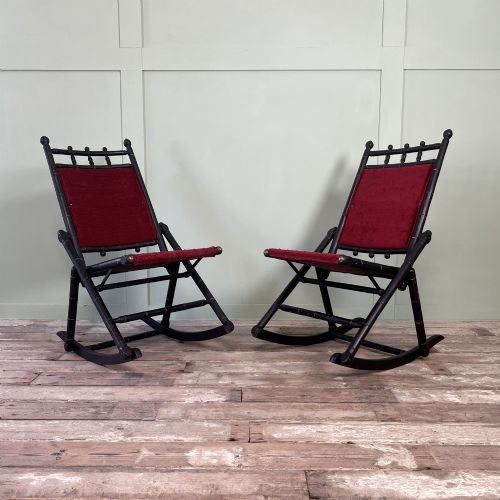
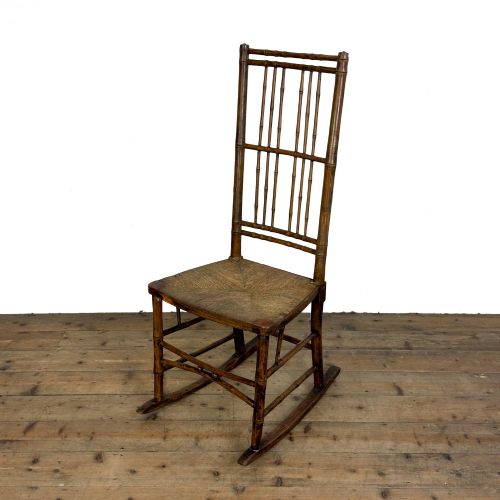
A victorian bamboo chair encompasses various forms designed during the nineteenth and early twentieth centuries, drawing heavily from the Aesthetic Movement and Chinoiserie styles. These pieces range from simple side chairs and folding rocking chairs to armchairs, hall benches, and children's highchairs.
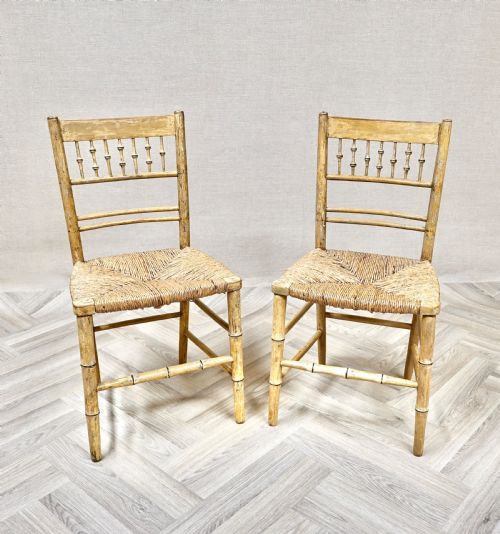
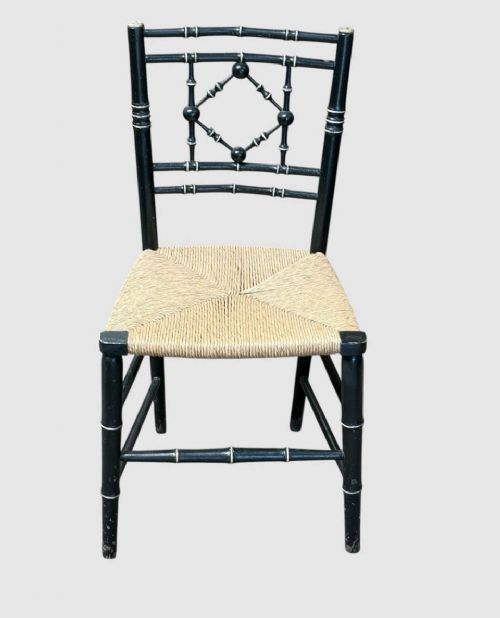
The version most commonly encountered on this page is the faux bamboo chair, rendered in painted or ebonised wood rather than natural cane, reflecting the period's fascination with imported aesthetics and domestic ingenuity.
Makers of the era utilised natural bamboo alongside turned wood shaped to imitate the segmented stalks, pairing them with cane seats, rush, velvet, and occasionally brass details to create functional seating with a distinct decorative presence.
How they were made
Craftsmen built these chairs using natural bamboo or by turning solid wood, such as beech, on a lathe to mimic the characteristic rings and nodes of genuine bamboo stalks. These turned wooden frames frequently received coats of paint or ebonising to achieve a sleek, polished finish.
Seats were woven from natural materials like cane and rush, providing a sturdy yet flexible base that complemented the lighter frames. Some armchairs and rockers incorporated upholstery elements such as velvet and deep buttoning.
Construction techniques often involved simple joinery suited to lightweight materials, occasionally reinforced with brass fixtures or folding mechanisms for versatility in domestic spaces.
Materials recorded across the inventory include natural bamboo, ebonised wood, cane, rush, velvet, paint, and brass.
What varies in quality
The distinction between standard examples and finer pieces lies in the precision of the turning and the integrity of the underlying frame materials. Solid wood turned to imitate bamboo generally offers greater structural longevity than fragile natural cane frames.
Surface treatments play a significant role in value, with original painted or ebonised finishes holding more integrity than later decorative overpainting. The complexity of the form, such as rocking mechanisms, carved wooden elements, or accompanying pairs and sets, elevates the standing of a piece.
The Victorian Bamboo Chair Glossary
- Faux bamboo
- Wood turned and painted on a lathe to imitate the jointed stalks of natural bamboo. This technique allowed Victorian makers to produce sturdier seating frames.
- Aesthetic movement
- A late nineteenth-century design style that emphasised decorative beauty over moral or narrative purpose. It drew heavy inspiration from Japanese art and nature.
- Chinoiserie
- European artistic style reflecting Chinese motifs and techniques. It heavily influenced Victorian decorative arts through painted scenes and exotic forms.
- Ebonised wood
- Timber treated with a dark stain or finish to resemble ebony. This process gave Victorian furniture a dramatic, polished surface.
- Cane
- Strips of rattan woven to create breathable, patterned seats and panels. It provides a lightweight yet durable surface for antique seating.
Victorian Bamboo Chair: Frequently Asked Questions
Are these chairs sturdy enough for daily use?
Many Victorian bamboo and faux bamboo chairs were built as light occasional furniture rather than heavy daily seating. Their slender frames require mindful use to prevent strain on the joints.
Rocking chairs and armchairs offer slightly heavier construction, but all antique cane and bamboo benefits from gentle treatment in modern homes.
What is the difference between real and faux bamboo?
Real bamboo furniture uses actual natural stalks steamed and bent into shape. It tends to be extremely lightweight and occasionally susceptible to splitting over time.
Faux bamboo utilises hard timbers like beech that are lathe-turned to mimic bamboo nodes. This wood construction usually provides heavier weight and greater structural durability.
How do I identify Aesthetic Movement pieces?
Aesthetic Movement pieces often feature clean lines, Japanese-inspired motifs, and ebonised or painted finishes. They reject heavy Victorian upholstery in favour of lighter, more artistic forms.
Look for symmetrical turning, bamboo accents, and subtle decorative painting that reflect the late nineteenth-century pursuit of art for art's sake.