


Antique Baluster Candlesticks
Antique baluster candlesticks bring weight and turned proportion to a table, shaped by centuries of domestic illumination.
Antique Baluster Candlesticks
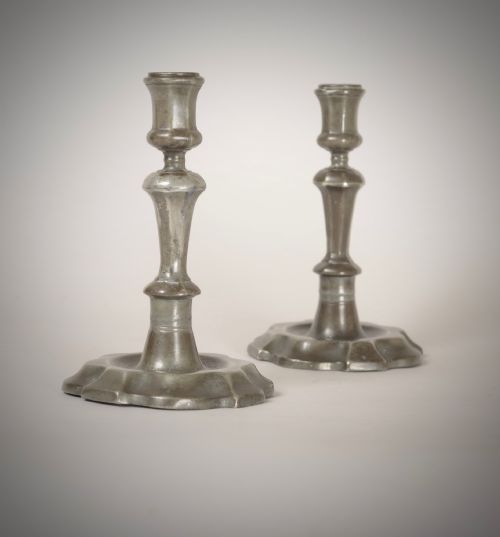
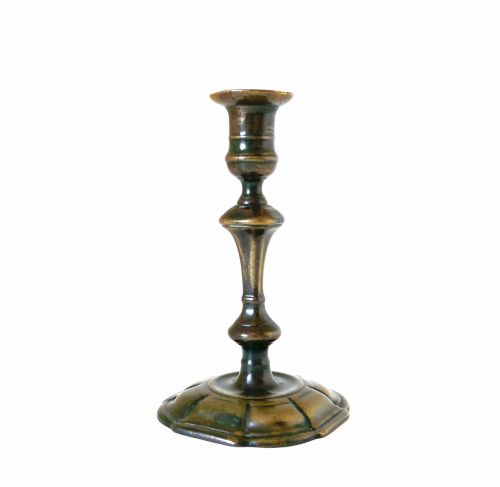
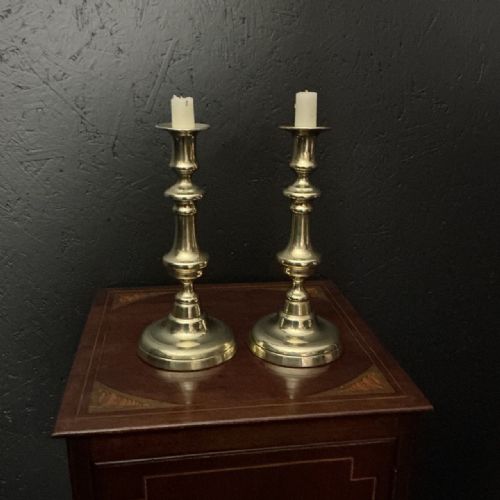
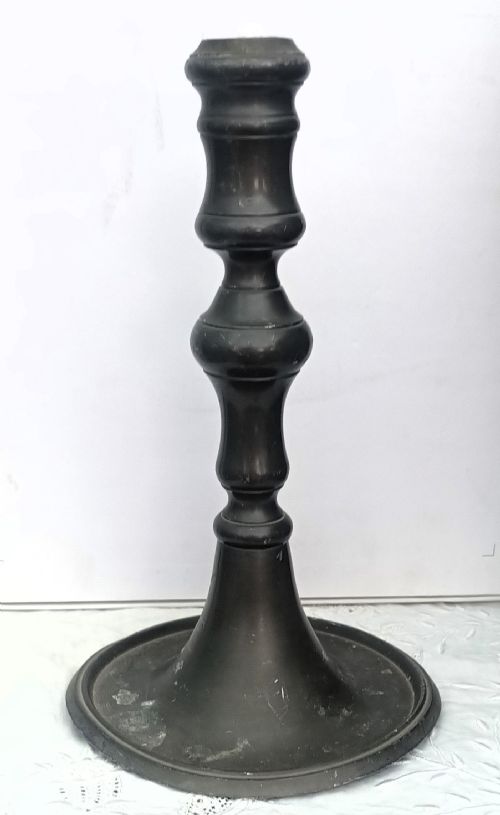
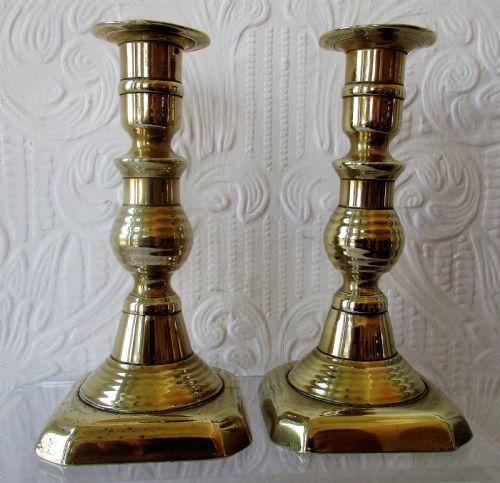
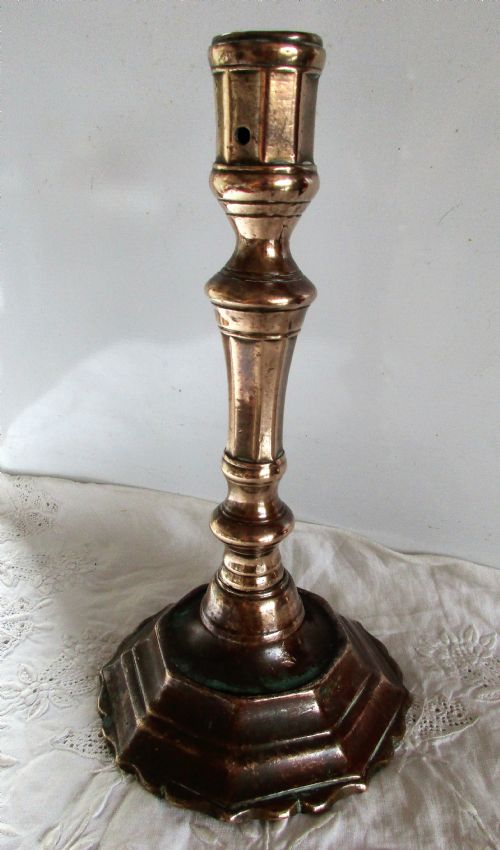
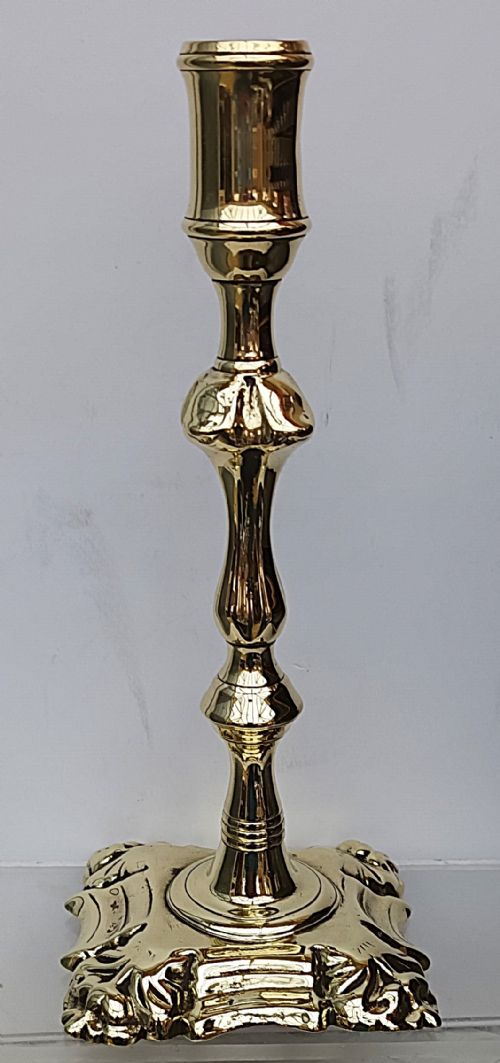
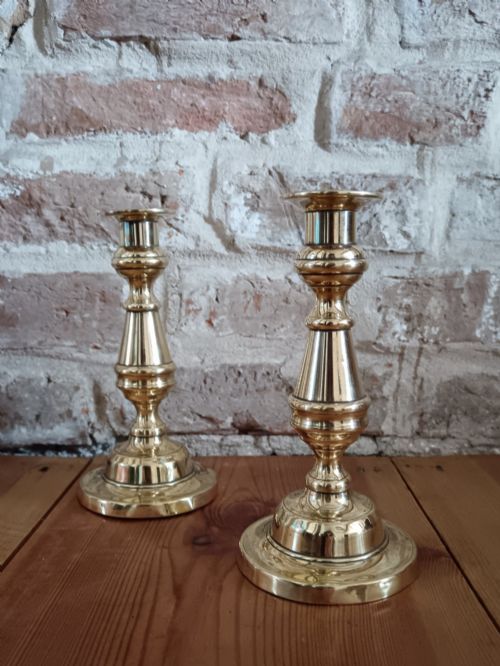
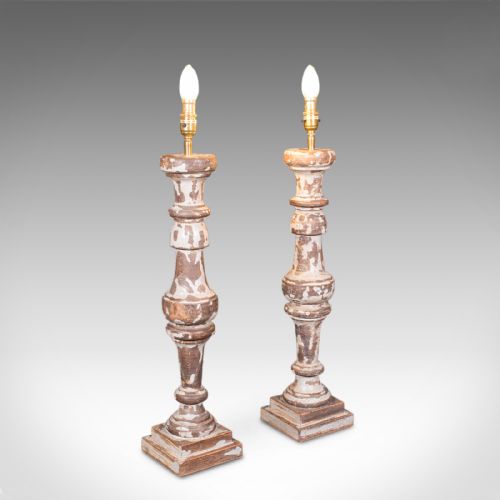
These antique baluster candlesticks are table lights defined by their swelling, turned stems, originating mostly from the seventeenth, eighteenth, and nineteenth centuries. A buyer meets brass examples most frequently on this page, alongside pewter, bronze, silver plate, and various woods.
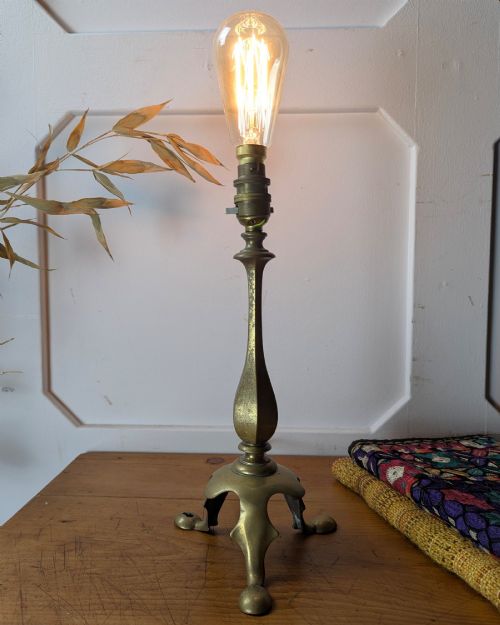
The forms range from single pieces to pairs, stretching from early seventeenth-century Stuart types and Queen Anne designs through Georgian and Victorian periods up to early twentieth-century adaptations. Alongside standard candlesticks, the selection includes candelabra, table lamp bases, and wall lamps sharing the same characteristic turned profile.
Origins span English, Dutch, and French workshops, utilising the weighted stability inherent in the baluster form. Collectors encounter straightforward domestic lighting alongside heavier church pieces and converted lamp bases.
Materials and construction
Brass dominates the construction, shaped through casting and turning on a lathe to create the characteristic swollen shafts and wide drip pans. Pewter and bronze appear frequently, utilising similar metalworking traditions where components are cast in sections and joined.
Wooden pieces in the selection include dense lignum vitae treen alongside painted pine table lamp bases.
Judging quality in turned lighting
Quality rests in the crispness of the turning and the harmony of the proportions between the base, stem, and socket. Heavier metal castings retain sharper detail in the moulded rings and facets, whereas worn examples lose definition through repeated polishing.
The integrity of the construction matters greatly, particularly how securely the components fit together without excessive wobble or replaced parts. Surface preservation also dictates standing, with undisturbed patination and honest wear holding more appeal than over-cleaned metal.
J.T. & Co
The Antique Baluster Candlesticks Glossary
- Baluster
- A vertical architectural member with a swollen, vase-shaped stem. In lighting, this shape forms the central column of the candlestick.
- Ejector
- A concealed internal mechanism operated by a thumbpiece to push the candle stub out of the socket. This mechanical addition appears on nineteenth-century brass pieces.
- Pricket
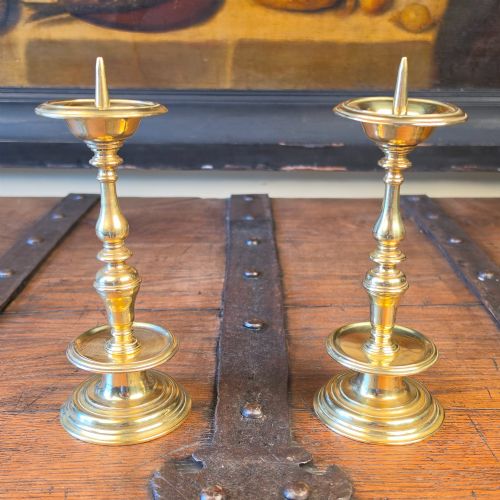
- A sharp metal spike set in the drip pan to secure a candle, commonly found on church candlesticks. This form predates socket-type holders.
- Heemskerk
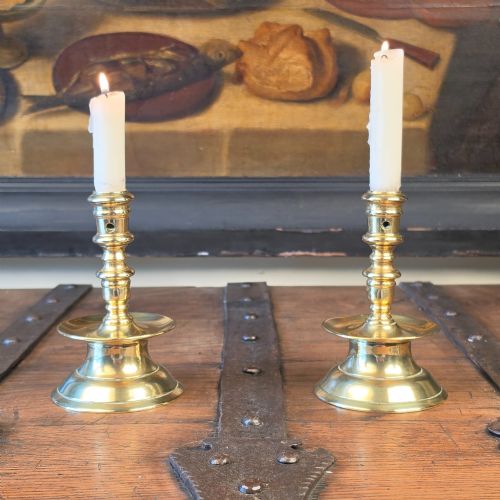
- A heavy brass candlestick type with a flared bell base and a central knop, originating in the Netherlands during the seventeenth century. These pieces display robust seventeenth-century construction.
- Treen
- Small handmade wooden household objects turned on a lathe. Examples in lignum vitae demonstrate dense hardwood construction.
Antique Baluster Candlesticks: Frequently Asked Questions
How do I date an old candlestick?
Dating relies on manufacturing techniques, base shapes, and the assembly of the stem components. Earlier pieces from the seventeenth and early eighteenth centuries often feature multi-part cast construction with broad drip pans and heavy bases.
Later nineteenth-century examples introduce smoother lines, ejection mechanisms, or different metal alloys like silver plate. Comparing the patination and wear patterns against known period styles helps confirm the age.
Are these candlesticks safe to use with modern candles?
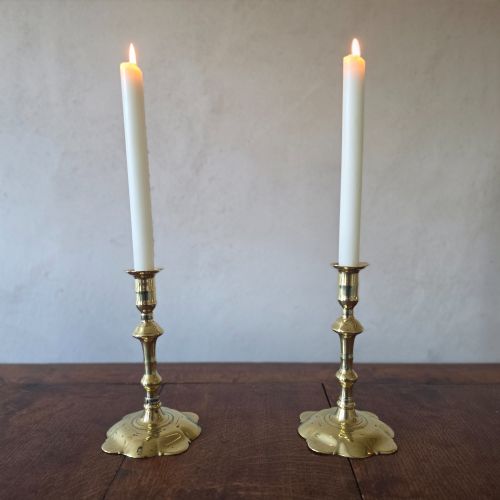
Most antique sockets accommodate standard modern taper candles, though slight variations in diameter occur across different periods. Checking the cup size before lighting ensures the candle sits securely without tilting.
Using dripless candles or inserting a small adapter helps protect the metal from hot wax accumulation. Regular monitoring prevents wax from hardening in deep mouldings or ejector mechanisms.
What is the difference between brass and bronze candlesticks?
Brass is an alloy of copper and zinc, yielding a bright golden tone when polished and darkening to a warm mustard patination over time. Bronze contains copper and tin, resulting in a heavier, darker metal with a distinctly reddish or chocolate hue.
Both materials were cast and turned using comparable methods, but bronze pieces often possess greater weight and durability.
How should I clean antique metal candlesticks?
Cleaning should be minimal to preserve the historic surface and darker patination built up over centuries. Warm water and mild soap remove surface dust safely without stripping the underlying oxidation.
Harsh metal polishes and abrasive cloths should be avoided because they wear away crisp cast details and remove desirable age marks.