




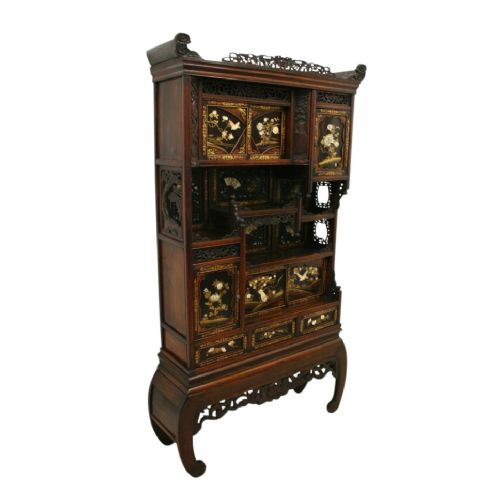
Antique Asian Display Unit
An antique asian display unit brings intricate craftsmanship and structured storage into a room, offering compartments designed specifically for treasures.
Antique Asian Display Unit
When you search for an antique asian display unit, you are looking at cabinets and shelves originating from China and Japan during the nineteenth and early twentieth centuries. The pieces on this page span the Meiji period, Taisho period, and Qing dynasty, capturing distinct regional aesthetic traditions.
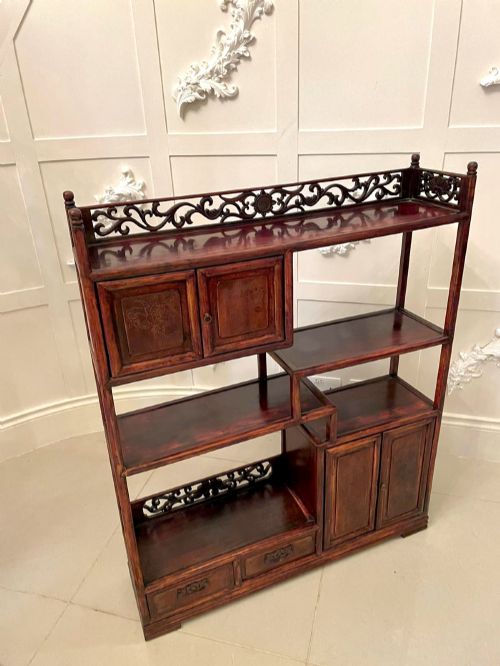
You are most likely to meet the shodana form from Japan or carved hardwood cabinets from China, both built with asymmetrical shelving for ornaments. These units serve as focal points in a room, combining open display spaces with enclosed cupboards.
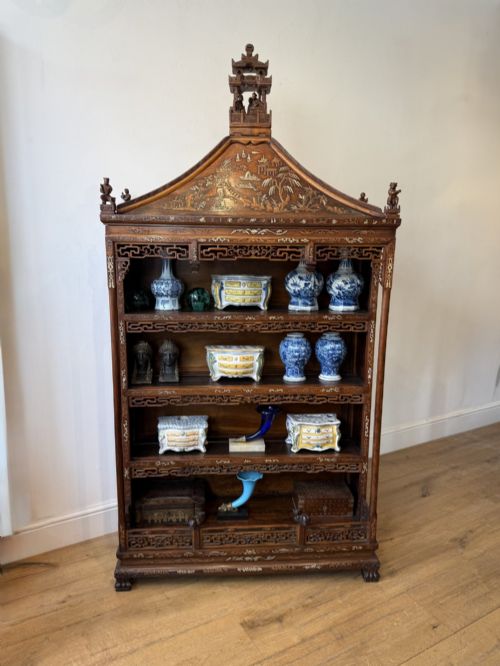
The objects listed range from dwarf side-cabinets to large standing cabinets, each demonstrating the traditional forms developed for exhibiting ceramics, bronzes, and scholarly items.
Materials and construction methods
The makers of these pieces utilised dense hardwoods, elm, and ebonised timber to build sturdy carcases capable of supporting intricate ornamentation. Wood selection dictated the structural integrity and the depth of carving achievable across panels and friezes.
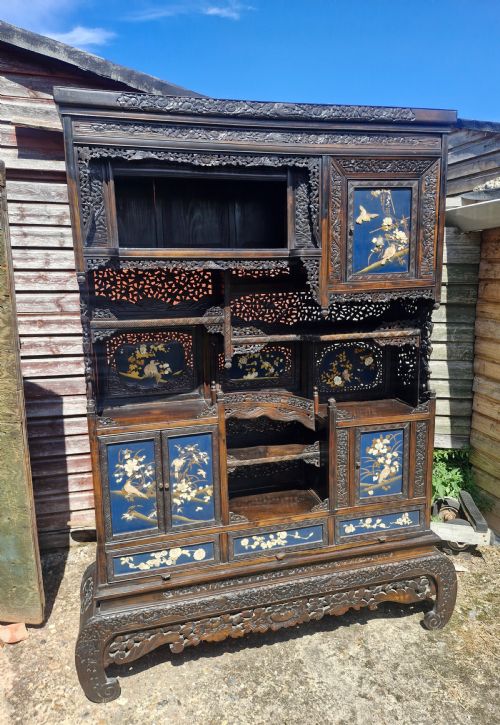
Surface decoration involved applied materials including mother of pearl, bone inlay, brass hardware, and lacquer finishes. Artisans carved motifs directly into the hardwood or assembled multi-tiered stands with joinery that accommodated both open display sections and panelled doors.
Listings feature items from the nineteenth century through the early twentieth century, spanning the Meiji, Taisho, and Qing periods in hardwood, lacquer, and elm.
Assessing quality and execution
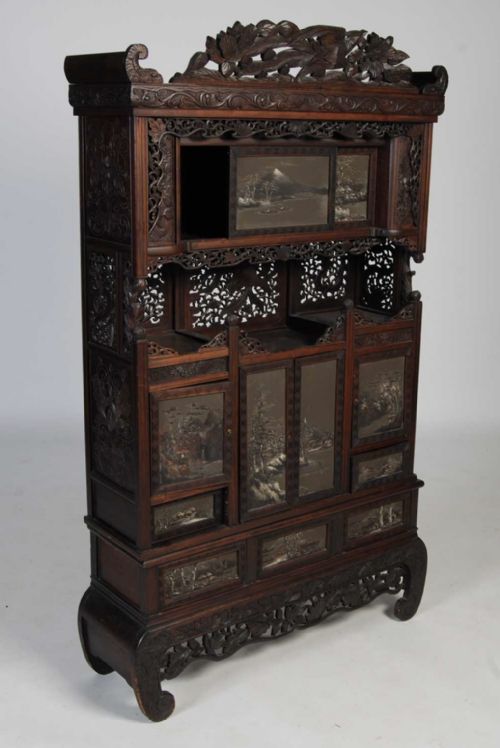
Quality in these cabinets rests upon the depth and crispness of the carving, alongside the precision of the joinery in complex shelving arrangements. Profusely carved surfaces demonstrate superior hand skill compared to simpler, plain timber constructions.
The integration of decorative inlays such as mother of pearl and bone defines the upper tier of the range, requiring meticulous fitting into the wood substrate. Structural stability on cabinets featuring stands or complex tiering further separates standard utility pieces from masterwork examples.
The Antique Asian Display Unit Glossary
- Shodana
- A Japanese multi-shelf display cabinet featuring asymmetrical compartments for ornaments. These pieces typically incorporate small cupboards and sliding doors alongside open display areas.
- Meiji Period
- The era in Japanese history spanning from 1868 to 1912, known for ornate decorative arts and craftsmanship. Cabinets from this time often display intricate carvings and refined lacquer work.
- Qing Dynasty
- The last imperial dynasty of China, ruling from 1644 to 1912, celebrated for rich hardwood furniture production. Pieces from this period frequently utilise rosewood or heavy carved timber.
- Chinoiserie
- European interpretation and imitation of Chinese and East Asian artistic traditions, reflected in decorative motifs applied to furniture and interiors. This style often appears alongside genuine imported forms.
- Taisho Period
- The period in Japanese history following the Meiji era, lasting from 1912 to 1926. Furniture from this time continues traditional carving techniques while adapting to early twentieth-century interiors.
Antique Asian Display Unit: Frequently Asked Questions
What is an antique asian display unit used for?
These cabinets were originally designed to exhibit scholarly objects, ceramics, and small artistic treasures within traditional interiors.
Today, collectors utilise them to display small collections while adding distinct period character to a modern room.
How do I distinguish between Chinese and Japanese cabinets?
Chinese examples often feature heavy hardwood construction with deep relief carvings of natural motifs and symmetrical or balanced door arrangements.
Japanese shodana cabinets typically showcase asymmetrical shelving tiers, delicate fretwork, and inlaid materials like bone or mother of pearl.
What materials are typical for these display units?
The listings show a prevalence of dense hardwoods, elm, and ebonised timber forming the primary structure of the cabinets.
Surface enrichment is frequently achieved through brass hardware, bone inlay, mother-of-pearl details, and traditional lacquer.
How do I date an antique asian display unit?
Dating relies on stylistic markers associated with specific eras such as the Meiji or Taisho periods in Japan and the Qing dynasty in China.
Construction traits, such as integrated stands and the complexity of the internal shelving, also provide clues to the period of origin.