


Asian Hardwood Display Bookcase
An asian hardwood display bookcase brings intricate carving and functional shelving together, offering a striking centrepiece for displaying treasured collections.
Asian Hardwood Display Bookcase
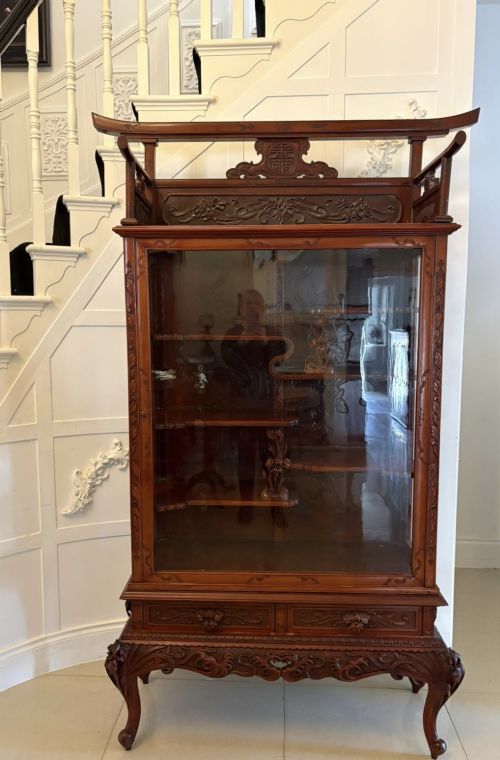
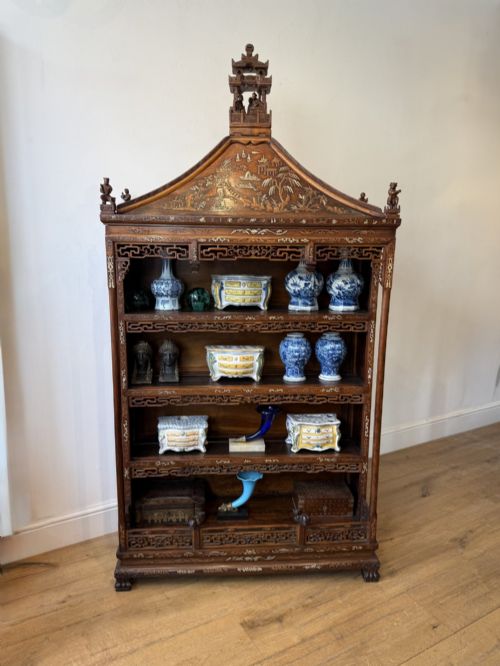
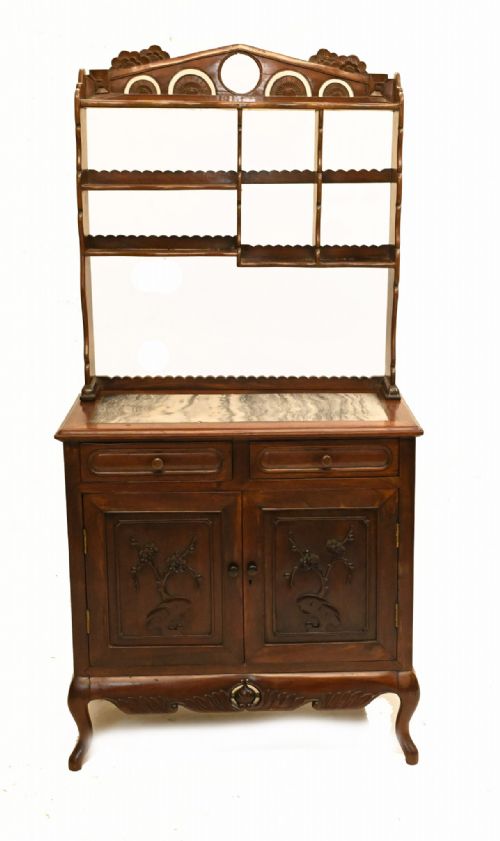
When buyers search for an asian hardwood display bookcase, they encounter pieces originating from the nineteenth and early twentieth centuries, spanning periods such as the Chinese Qing Dynasty and the Japanese Meiji period. These items typically manifest as display cabinets, dressers, display shelves, and whatnot units designed to showcase objects of interest.
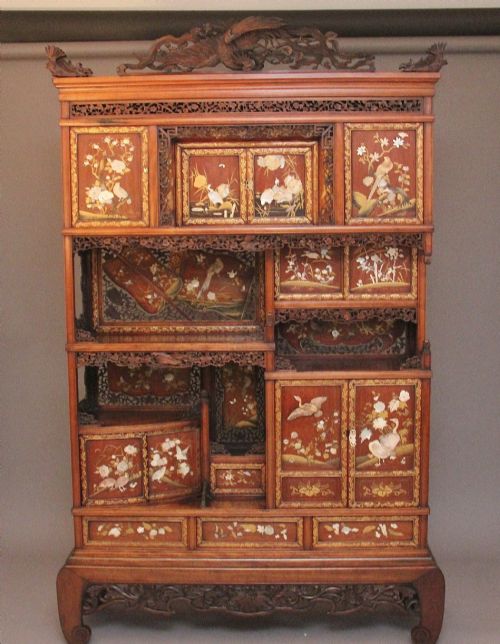
The most common examples on this page are nineteenth-century Chinese carved hardwood glazed display cabinets and smaller side-cabinets like the shodana. These forms combine open shelving with enclosed storage or glazed compartments, reflecting both export production and traditional domestic furniture.
Originating from workshops in China and Japan, these pieces utilise dense timbers and elaborate carving to create vertical display spaces. They serve collectors seeking authentic nineteenth-century craftsmanship and distinct regional styles for modern interiors.
Materials and construction
Cabinet makers utilised dense hardwoods, occasionally identified as rosewood, providing a heavy and durable carcase capable of supporting deep, intricate carving. These structural timbers formed the robust framework for shelves, glazed doors, and lower cupboards.
Decorative surfaces frequently incorporated bone inlay, mother-of-pearl, and brass fittings, which added tonal contrast and metallic detail to the dark wood. Glazing was integrated into doors to protect contents while maintaining visibility across multiple tiers of shelving.
Listings feature pieces spanning the nineteenth century, including specific dates from eighteen fifty to nineteen ten.
Assessing quality and craftsmanship
Quality in these pieces is dictated by the depth and precision of the carving across the hardwood surfaces. Profuse, crisp relief carving indicates superior workshop output compared to softer, shallower decorative work.
The integration of delicate materials like mother-of-pearl and bone inlay distinguishes finer items, requiring precise fitting into the timber substrate. Structural integrity in glazed doors and tiered shelving also determines the standing of a piece within the range.
The Asian Hardwood Display Bookcase Glossary
- Shodana
- A Japanese tiered display cabinet featuring staggered shelves and small cupboards, popular during the Meiji period. These pieces were designed for displaying small ornaments and curiosities.
- Chinoiserie
- European interpretation and imitation of Chinese artistic traditions and motifs, applied to furniture and decorative arts. It often appears in pieces created for export markets.
- Qing Dynasty
- The final imperial dynasty of China, lasting from sixteen forty-four until nineteen twelve, known for prolific furniture production and intricate carving styles. Pieces from this era often feature symbolic iconography.
- Meiji Period
- The era in Japanese history spanning from eighteen sixty-eight to nineteen twelve, marked by the opening of trade and the export of elaborate decorative arts. Craftsmanship from this time frequently combines traditional techniques with new forms for Western buyers.
- Whatnot
- A piece of furniture consisting of a set of open shelves for displaying articles, standing one above the other. This form became particularly popular during the nineteenth century.
Asian Hardwood Display Bookcase: Frequently Asked Questions
What is an asian hardwood display bookcase?
An asian hardwood display bookcase is a nineteenth or early twentieth-century cabinet or shelving unit created in China or Japan. These pieces combine functional storage with tiered display space for showing ceramics and ornaments.
They utilise dense hardwoods, often featuring deep carving, glazed panels, and contrasting inlays of bone or mother-of-pearl. Such furniture reflects both traditional domestic forms and items produced specifically for export.
How were these cabinets used?
These cabinets served primarily to display prized possessions, porcelain, and scholarly objects within the home. The enclosed glazed sections protected delicate items from dust while allowing full visibility.
Open shelves and staggered tiers on shodanas provided designated spots for smaller decorative pieces. Lower cupboards offered concealed storage for larger household items.
How do I date a Chinese display cabinet?
Dating relies on stylistic markers associated with specific periods, such as the Qing Dynasty or Meiji period, alongside construction methods visible in the timber and joinery. Nineteenth-century examples often exhibit hand-carved relief work and traditional joinery without modern fasteners.
Specific dates or reign markers noted in titles help anchor pieces to decades like the eighteen fifties or eighteen eighties. Examining the wear on the hardwood and the application of inlay provides further chronological context.
Where should I place one at home?
These cabinets suit principal reception rooms or studies where their carved details and display capabilities can be appreciated. They function effectively against neutral walls that highlight the dark tones of the hardwood and intricate surface decoration.
Placement should avoid direct sunlight and rapid temperature fluctuations to protect the timber and delicate inlays. Ensuring adequate floor support is sensible given the heavy nature of dense Asian hardwoods.