







Antique Asian Coffer Trunk
These antique asian coffer trunk pieces bring robust timber construction and distinctive regional craftsmanship into contemporary interiors for practical storage.
Antique Asian Coffer Trunk
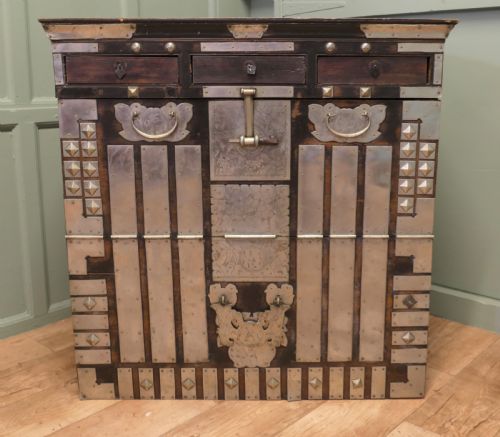
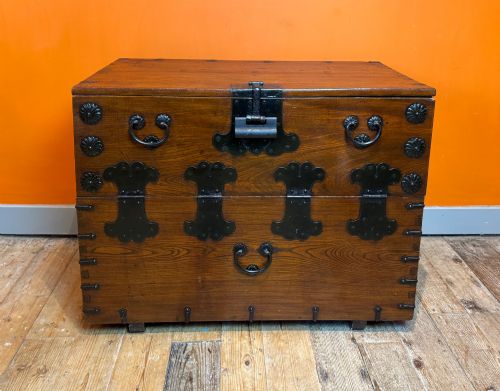
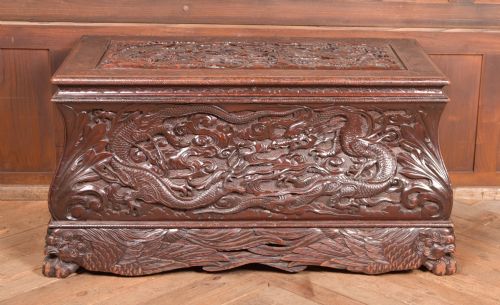
An antique asian coffer trunk serves as a capacious storage vessel, encompassing blanket boxes, travel chests, and dowry coffers originating from China, Japan, Korea, Tibet, and India. The selection spans robust camphor wood storage boxes, lacquered trunks, and iron-mounted bandjani chests.
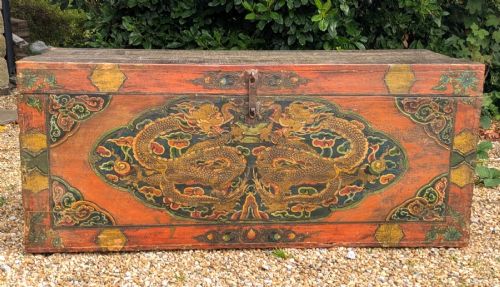
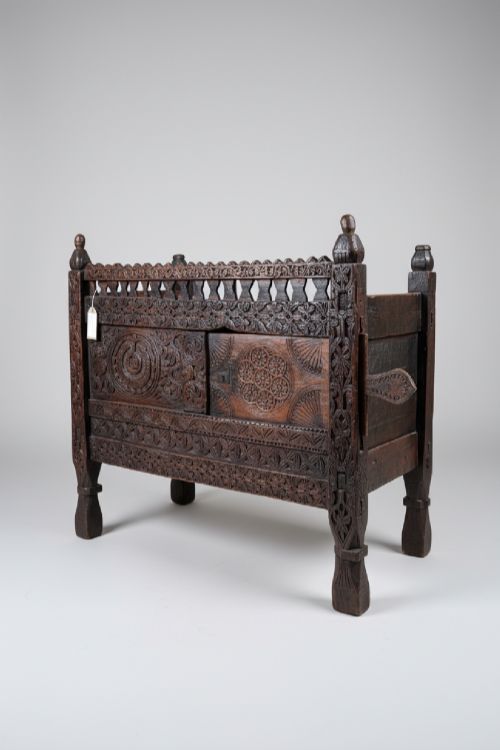
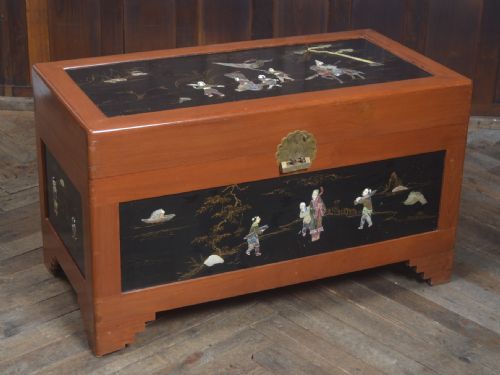
The pieces on this page lean heavily towards Chinese camphor wood blanket boxes and Japanese tansu or kuruma-dansu chests. You will also encounter Tibetan painted chests and Swat Valley dowry pieces dating from the eighteenth century through to the early twentieth century.
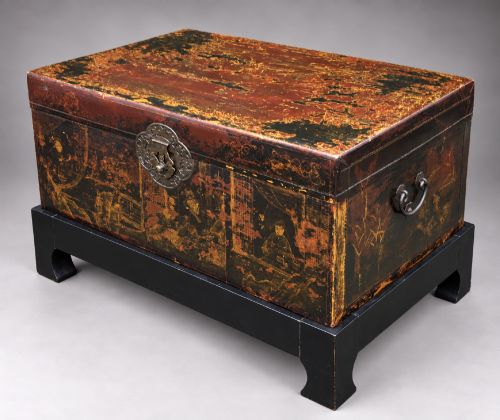
Forms range from simple travel boxes and heavy coffer chests to elaborate lacquered trunks on stands. Each regional variety displays distinct hardware and structural proportions peculiar to its domestic or mercantile origin.
Materials and construction methods
Makers utilised resilient timbers such as camphor wood, elm, and various hardwoods selected for their durability and aromatic qualities. Camphor wood naturally repels insects, making it the preferred medium for blanket boxes and luggage chests.
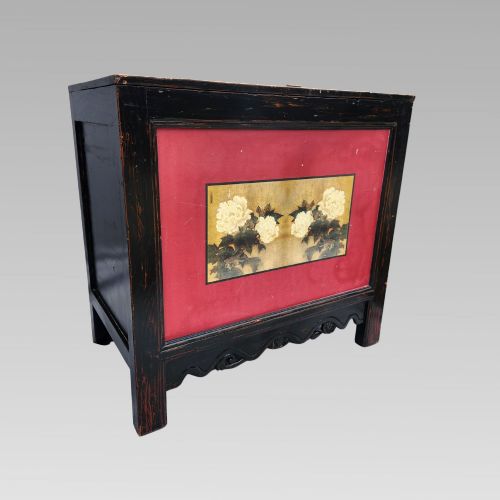
Surface finishes involve traditional applications of black or coloured lacquer, intricate hand-carving in relief, and pictorial painted scenes. Structural integrity is reinforced with heavy brass, iron, or pig skin coverings that protect corners and edges during transit.
Antique Asian Coffer Trunk Retail Price Guide 2026
Typical asking prices for asian coffer trunk among the pieces listed under this phrase on Sellingantiques today, from the lower quarter to the upper quarter. They describe what is for sale here now, not the wider market.
Listings feature camphor wood, elm, and hardwood timbers alongside brass, iron, and pig skin hardware elements spanning the eighteenth to early twentieth centuries.
Distinguishing quality across pieces
The calibre of an antique asian coffer trunk rests upon the depth and precision of its hand-carved ornamentation and the integrity of its joinery. Superior examples exhibit tightly fitted panels and robust internal construction that withstand centuries of use.
Hardware execution dictates much of the visual merit, with hand-forged iron mounts or chased brass fittings demonstrating superior smithing skill. The preservation of original lacquer and painted surfaces further separates standard utility trunks from exceptional artisan works.
The Antique Asian Coffer Trunk Glossary
- Coffer
- A heavy chest or box used for storing valuables, linens, or documents. These sturdy receptacles typically feature hinged lids and reinforced corners.
- Camphor wood
- An aromatic timber native to Asia, prized for its distinct scent and natural resistance to pests. It is frequently employed in storage chests and blanket boxes.
- Chinoiserie
- European artistic interpretation of Chinese and East Asian decorative motifs, visible on lacquered furniture and painted boxes. This style gained popularity across decorative arts.
- Bandjani chest
- A traditional Korean storage chest characterised by prominent iron strapwork and mounts. The metalwork reinforces the timber frame while adding decorative contrast.
Antique Asian Coffer Trunk: Frequently Asked Questions
What were these trunks used for?
These trunks served diverse domestic and commercial functions, ranging from household blanket storage to secure luggage for travellers. Dowry chests held textiles and valuables for brides, while merchant boxes transported precious goods.
Over time, many adapted to daily domestic storage within homes, protecting garments and linens from dampness and insects through natural wood properties.
How do I clean a lacquered chest?
Dust lacquered surfaces gently with a soft, dry microfibre cloth to prevent scratching the delicate finish. Avoid liquid polishes, abrasive cleaners, or direct sunlight.
Maintain stable indoor humidity levels to prevent the lacquer from cracking or lifting away from the timber substrate over time.
Where were camphor wood trunks made?
Camphor wood trunks originated primarily across southern China and wider Asian trade ports where the aromatic timber grew abundantly. Workshops produced them for both domestic markets and international export.
Carpenters utilised the wood's natural insect-repellent qualities to safeguard textiles during long maritime voyages and seasonal storage.
How do I identify a Japanese tansu?
Japanese tansu chests feature modular configurations of internal drawers and sliding doors designed for specific domestic storage needs. They often incorporate iron handles and corner brackets for transport.
Unlike standard European chests, tansu are frequently built in sections or fitted with wheels, such as the kuruma-dansu variant, for mobility.