



Iron Mounted Wood Chest
An iron mounted wood chest combines rugged metalwork with sturdy timber, offering secure storage and a distinct historical presence for the home.
Iron Mounted Wood Chest
When you search for an iron mounted wood chest, you encounter sturdy storage containers reinforced with metal straps, hinges, and locks. These objects range from compact caskets and deed boxes to larger coffers, step chests, and campaign furniture designed for travel or secure household storage.
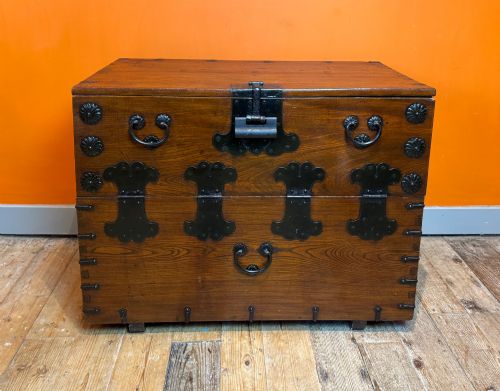
The pieces appearing on this page span several centuries and geographic origins, including Korean bandjani chests, Japanese tansu cabinets, and European coffers. Examples from the seventeenth century onward demonstrate how different cultures utilised iron hardware to strengthen timber bodies.
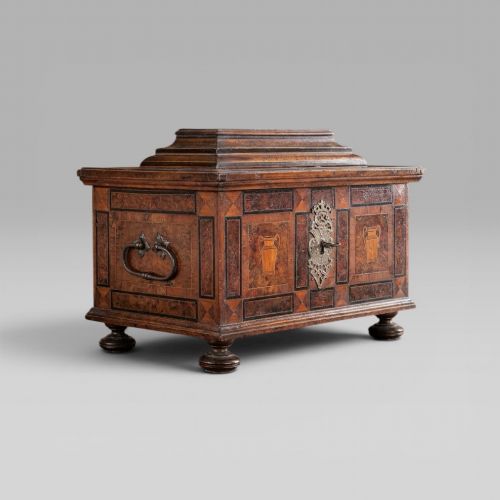
You are most likely to meet nineteenth-century Japanese cedar and elm tansu chests alongside seventeenth-century continental burr wood caskets and Spanish walnut boxes. This mix reflects both Asian joinery traditions and European cabinet-making practices.
How they were made
Craftsmen built these containers using dense timbers such as walnut, cedar, teak, elm, and chestnut, often selecting woods that resisted splitting and warping. Joinery techniques varied by region, combining traditional woodworking joints with structural timber panels.
Wrought iron and brass mounts, brackets, and carrying handles were hand-forged and secured to the wood to reinforce corners, lids, and seams. These metal elements served both a structural purpose to protect against impacts and a decorative function to enhance the appearance of the cabinet.
Iron Mounted Wood Chest Retail Price Guide 2026
Typical asking prices for iron mounted wood chest among the pieces listed under this phrase on Sellingantiques today, from the lower quarter to the upper quarter. They describe what is for sale here now, not the wider market.
Materials recorded across the selection include cedar, teak, elm, walnut, chestnut, wrought iron, and brass.
What varies in quality
The standard of an iron mounted wood chest depends largely on the harmony between the timber construction and the execution of the metalwork. Finer examples display carefully fitted joints and hand-hammered iron mounts that integrate cleanly with the wood surface.
Preservation of original hardware and surface patination significantly influences the character of each piece. Items retaining their initial locks, hinges, and handles without modern replacements offer a more complete historical record.
The Iron Mounted Wood Chest Glossary
- Tansu
- A traditional Japanese mobile storage cabinet or chest built for household organisation and travel. These pieces frequently incorporate sliding doors, small drawers, and iron plates.
- Coffre Fort
- A French term for a strong box or heavy chest reinforced for secure storage of valuables. Such containers often feature complex internal locking mechanisms.
- Campaign Secretaire
- A piece of military furniture designed to dismantle or fold for transport during army campaigns. These items typically feature recessed brass or iron carrying handles.
- Bandjani Chest
- A traditional Korean storage chest characterised by prominent iron strapwork and decorative metal mounts. The hardware secures the wooden panels while creating geometric patterns across the front.
- Burr Wood
- Timber harvested from tree growths that produce swirling, highly figured grain patterns. Cabinet-makers sliced this wood into veneers to ornament the exterior surfaces of high-status boxes and caskets.
Iron Mounted Wood Chest: Frequently Asked Questions
What is an iron mounted wood chest?
An iron mounted wood chest is a storage container built from timber and reinforced with metal bands, brackets, and locks. These pieces were made to protect contents during transport or to secure valuables within a home.
Examples range from small European deed boxes to large Japanese tansu cabinets and Spanish walnut coffers. The metalwork provides both structural strength and visual definition to the wooden body.
How were these chests used historically?
These containers served varied purposes depending on their size and origin, from storing garments and household documents to securing currency and precious items. Campaign pieces travelled with officers, while stationary chests remained in homes and offices.
Many incorporated robust locks and heavy carrying handles to facilitate movement and deter theft. Step chests additionally functioned as architectural room elements or staircases containing hidden storage compartments.
Where do these chests originate?
The pieces listed originate from diverse regions including Europe, East Asia, and the Middle East. European examples often feature walnut, chestnut, or burr wood with baroque or gothic stylistic influences.
Asian pieces predominantly showcase Japanese cedar, kiri wood, or elm in the form of tansu and step chests. Korean workshops contributed bandjani chests featuring distinct iron strapwork.
How do I live with an iron mounted wood chest?
These chests function well as coffee tables, end tables, or statement storage furniture in modern interiors. Their robust construction allows them to hold everyday items while adding texture and history to a room.
Position them away from direct heat sources and strong sunlight to protect the timber and natural finishes. Regular dusting and occasional mild conditioning help maintain the condition of both the wood and the iron mounts.
How do I tell different periods apart?
Differentiating periods relies on observing construction methods, timber choices, and stylistic details such as carving and hardware design. Seventeenth-century European pieces often display heavy timber frames, dark walnut, and baroque or gothic motifs.
Nineteenth-century items frequently encompass Japanese tansu work in cedar and elm, or campaign furniture featuring brass and iron campaign hardware. Examining the joinery and metal forging techniques helps clarify the era of manufacture.