

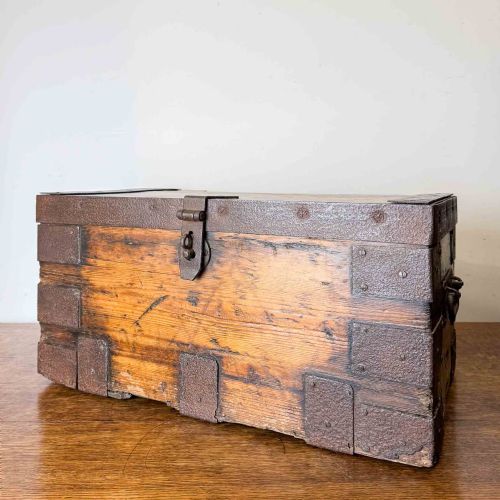


Brown Elm Storage Trunk
A brown elm storage trunk brings honest vernacular grain and enduring utility into a room, offering robust storage built from timber with deep character.
Brown Elm Storage Trunk
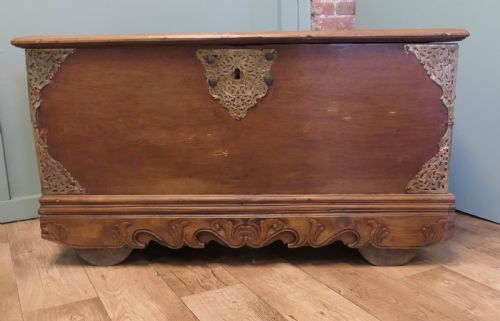
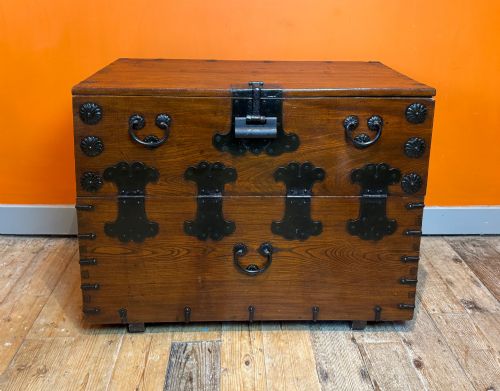
A brown elm storage trunk comprises domestic receptacles designed for linen, blankets, and personal possessions, spanning periods from the eighteenth century through to the nineteenth century. These objects arrive in forms such as blanket boxes, coffers, mule chests, and strongboxes, reflecting both British country workshops and international traditions like Qing Dynasty and Korean Joseon pieces.
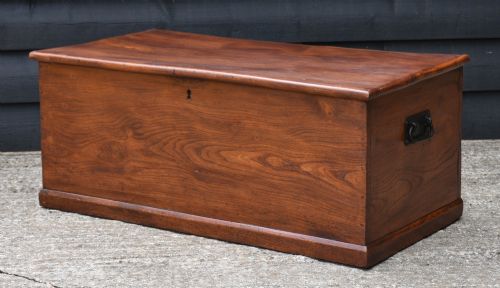
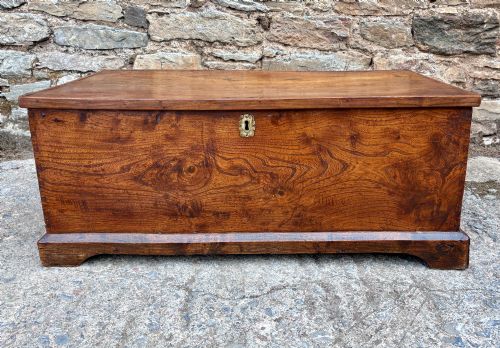
The version most commonly met on this page is the nineteenth-century elm blanket chest or coffer, often showing simple plank construction or regional vernacular styling. Alongside these, buyers encounter specialised formats like polished travelling chests with brass mounts and heavy iron-bound strongboxes.
Originating from diverse regions including France, China, Korea, and Britain, these trunks showcase how elm served as a primary timber for functional furniture. Their forms range from rustic country blanket chests to refined gentleman's travelling containers.
How they were made
Construction relies heavily on solid elm boards, frequently paired with secondary timbers such as pine, utilising simple jointing techniques like the six-plank method. Makers shaped these domestic chests to withstand heavy daily use through sturdy timber selection and straightforward joinery.
Metalwork forms an integral part of the fabrication, utilising iron hasps, carrying hoops, and wrought iron bands alongside polished brass mounts to reinforce corners and lids. These hardware elements serve both structural fortification and decorative closure.
Brown Elm Storage Trunk Retail Price Guide 2026
Typical asking prices for brown elm storage trunk among the pieces listed under this phrase on Sellingantiques today, from the lower quarter to the upper quarter. They describe what is for sale here now, not the wider market.
Cannonball boxes originally stored heavy ammunition rather than bedding, adding an unexpected military edge to domestic elm furniture.
What varies in quality
The refinement of the timber preparation and surface finish dictates the tier of a piece, moving from rustic country work with visible grain variation to polished gentleman's chests with careful finishing. Original metal hardware, including functional brass mountings and robust iron hasps, elevates the sophistication of the construction.
Proportion and structural integrity distinguish simpler utilitarian boxes from more ambitious forms such as mule chests with drawers or securely bound strongboxes. The presence of period-appropriate regional characteristics marks the distinction between standard vernacular items and more accomplished examples.
The Brown Elm Storage Trunk Glossary
- Coffer
- A heavy wooden chest traditionally used for storing valuables or dry goods. These sturdy containers often feature simple plank construction and hinged lids.
- Mule chest
- A traditional storage chest featuring one or more drawers beneath the main compartment. This form bridges the gap between the simple blanket box and the chest of drawers.
- Strongbox
- A heavily reinforced chest designed for security, typically bound with iron bands or straps. They house documents and high-value items.
- Bandaji
- A traditional Korean storage chest with a hinged drop-front panel for accessing internal compartments. These pieces display distinct regional joinery and metal reinforcement.
- Six-plank
- A basic construction method utilising six individual boards joined at the edges to form a rectangular box. It represents an early and direct approach to cabinet making.
Brown Elm Storage Trunk: Frequently Asked Questions
What is a brown elm storage trunk?
A brown elm storage trunk is a domestic container fashioned from elm timber, used historically for keeping blankets, linens, and personal belongings secure and dry.
These pieces range from plain nineteenth-century country blanket chests to polished gentleman's travelling trunks fitted with brass mounts.
How were elm chests used?
Elm chests served primarily as heavy-duty receptacles for household textiles, garments, and valuables in domestic settings across various cultures and periods.
Certain specialised variants, such as strongboxes and travelling chests, functioned to transport and protect goods during journeys.
Where do these trunks originate?
The pieces originate from diverse geographic traditions, including British vernacular workshops, French country makers, and Asian traditions such as Qing Dynasty China and Joseon Korea.
Each region applied local joinery methods and hardware styles to the elm timber available.
How do I identify a Georgian elm chest?
Georgian elm chests typically display the proportions and stylistic restraint characteristic of late eighteenth-century furniture design, often taking the form of mule chests or blanket boxes.
They combine the distinctive interlocking grain of elm with period-specific construction details.
How do I care for antique elm furniture?
Maintaining antique elm involves keeping the timber away from direct heat sources and sudden humidity changes to prevent warping or splitting.
Gentle dusting and occasional application of appropriate wax help preserve the polished or natural surface finish.