

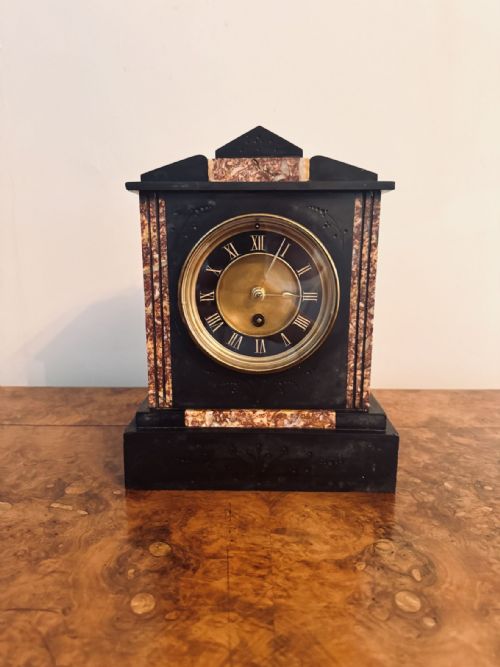


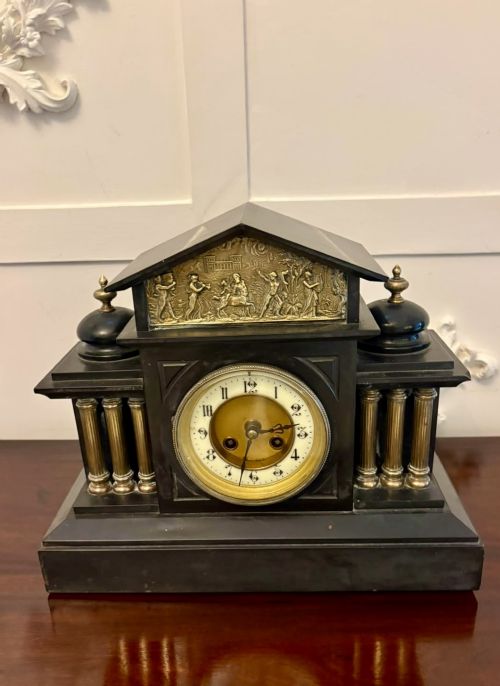

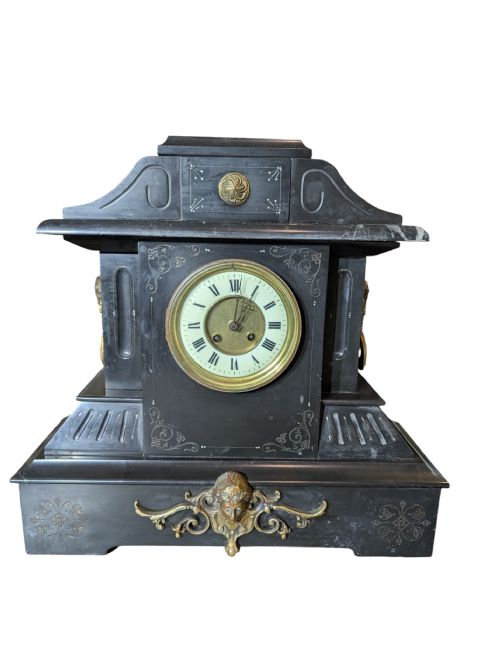


Antique Architectural Shelf Clock
An antique architectural shelf clock brings monumental classical forms down to domestic scale, offering heavy stone cases and precise mechanical timekeeping.
Antique Architectural Shelf Clock
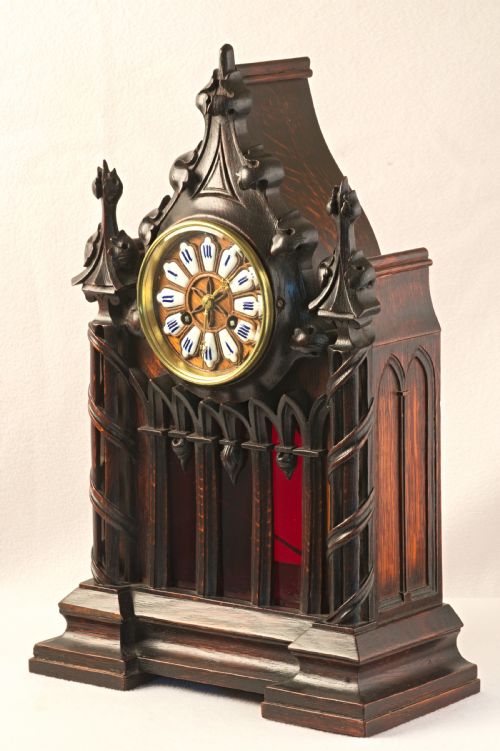
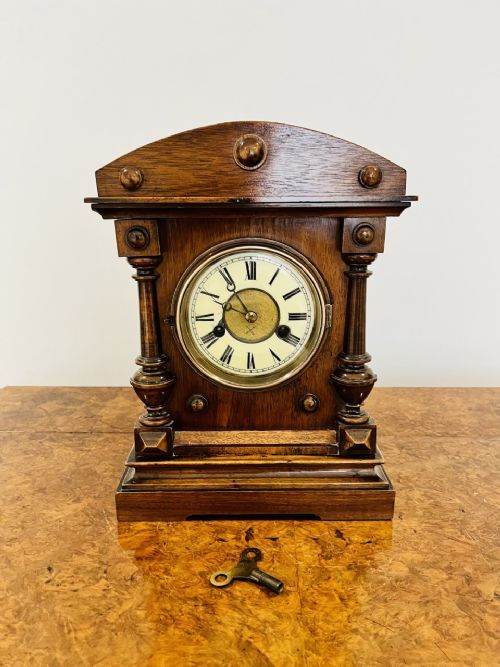
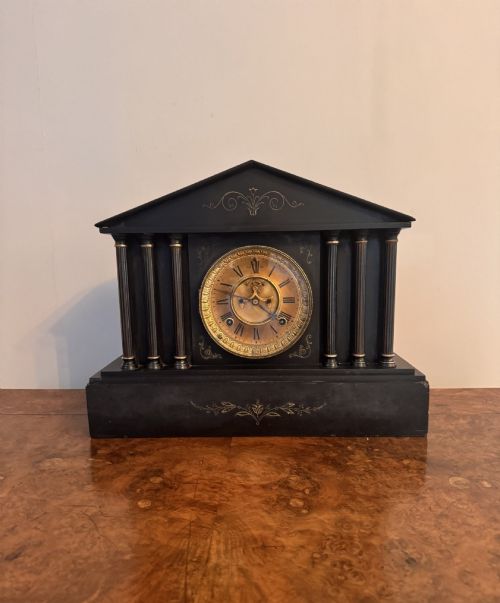
When someone searches for an antique architectural shelf clock, they are looking at heavy timepieces designed to resemble miniature classical buildings, temple facades or grand monuments. These pieces sit firmly on mantels, brackets and shelves, commanding attention through their substantial mass and striking geometry. The version most commonly met on this page is the Victorian marble or slate mantel clock, often drawing heavily on classical, Gothic or Egyptian revival design.
The materials used in these constructions give them immense weight and presence, frequently featuring black slate, rouge marble, walnut and gilt bronze mounts. Dial faces are protected behind glass panels, sometimes framed by brass bezels and porcelain enamel chapters that record the passing hours. Originating largely from British, French and German workshops, these clocks mirror the architectural ambitions of the nineteenth century in domestic spaces.
How they were made
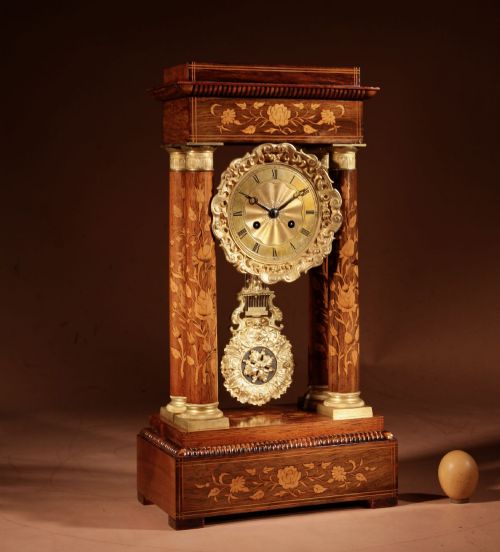
The heavy cases of an antique architectural shelf clock rely on precise stone masonry, using black slate, marble and occasionally faux marble finishes shaped into columns, pediments and architraves. Workshops paired these substantial stone housings with walnut or rosewood cabinetry where timber formed the primary structure. Marquetry inlays of lemon wood and intricate gilt bronze mounts provided decorative contrast against the dark polished stone.
Movements inside these cases were mechanical, driven by springs or twin fusee mechanisms requiring careful hand assembly by skilled horologists. Enamel dials were fired and painted with numerals, then fitted behind glass doors alongside cast brass bezels. Metal components were frequently gilded to accentuate architectural details like pilasters, cornices and pediments.
Antique Architectural Shelf Clock Retail Price Guide 2026
Typical asking prices for architectural shelf clock among the pieces listed under this phrase on Sellingantiques today, from the lower quarter to the upper quarter. They describe what is for sale here now, not the wider market.
Some nineteenth-century desk and shelf clocks were built so heavily that moving them required two people and a very sturdy mantel.
What varies in quality
Quality in these timepieces rests largely on the ambition of the stone masonry and the fidelity of the architectural detailing. A superior example employs solid marbles with precise geometric inlays and crisp bronze mounts, whereas lesser pieces rely on painted slate simulating marble or simplified wooden boxes. The weight and finish of the case columns, pediments and bezels separate standard production pieces from exceptional works.
The mechanical movement inside dictates the underlying standard of manufacture, where heavy brass plates and signed maker movements indicate higher craftsmanship. Simpler eight-day or fourteen-day movements found in standard domestic clocks contrast with twin fusee or complicated striking trains built by notable makers. The integration of the movement into the architectural housing requires precise engineering to ensure stability and reliable timekeeping.
Philippes Paris·Baby and Jannings·D. Munsey of Cambridge·Benson
The Antique Architectural Shelf Clock Glossary
- Portico clock
- A timepiece featuring a distinct architectural frame supported by columns, resembling a classical porch or temple entrance. This style gained popularity during the nineteenth century.
- Fusee movement
- A conical pulley mechanism designed to equalise the declining pull of the mainspring as it unwinds. This system ensures consistent power delivery to the gear train for accurate timekeeping.
- Gilt bronze
- Copper alloy coated with a thin layer of gold, frequently used for decorative mounts, bezels and architectural ornaments on nineteenth-century clock cases. It provides a bright metallic contrast against dark marble.
- Slate
- A fine-grained metamorphic rock used extensively for Victorian clock cases, often polished black or painted to imitate costlier marbles. Its density provides a stable housing for heavy mechanical movements.
- Bracket clock
- A portable timekeeper originally designed to sit on a wall bracket or table, though the term later encompassed large mantel clocks. They typically feature heavy wooden or bronze cases with carrying handles.
Antique Architectural Shelf Clock: Frequently Asked Questions
What is an architectural shelf clock?
An architectural shelf clock is a heavy mantel timepiece designed to mimic classical buildings, complete with columns, cornices and pediments. These objects translate monumental stone architecture into domestic decorative pieces.
Built primarily during the nineteenth century, they utilise materials like marble, slate and bronze to create imposing visual anchors for a mantelpiece or shelf.
How do I wind an antique mantel clock?
Winding requires a dedicated key inserted into the winding holes on the enamel dial face, turned gently until resistance increases. Care must be taken not to overwind the mainspring.
Most mechanical movements on this page run for eight or fourteen days, meaning weekly or bi-weekly winding keeps the clock functioning accurately.
Where should I place a heavy marble clock?
These pieces require a sturdy surface capable of supporting considerable weight, such as a deep fireplace mantel or a heavy sideboard. Placing them on stable furniture prevents accidental tipping.
Level placement ensures the mechanical pendulum swings evenly, which is essential for maintaining consistent timekeeping in shelf clocks.
How can I tell the Victorian period pieces apart?
Victorian pieces often display distinct revival styles, ranging from heavy black slate classical forms to Gothic bronze designs and aesthetic movement ebonised timber. Examining the case materials and decorative motifs reveals the specific design vocabulary used.
Maker signatures on dials or backplates, alongside movement types like twin fusee or simple striking trains, help date individual examples more precisely.