


Antique Architectural Illustration
These antique architectural illustration pieces capture historic buildings, classical orders, and grand monuments through detailed hand-drawn and printed works.
Antique Architectural Illustration
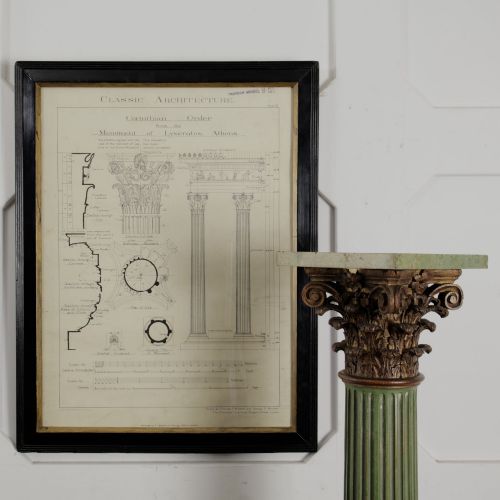
An antique architectural illustration represents the built environment, ranging from detailed elevations of cathedrals and country houses to classical column plates and foreign monuments. When you search for antique architectural illustration, you encounter works produced across several centuries, capturing both real structures and imaginative designs.
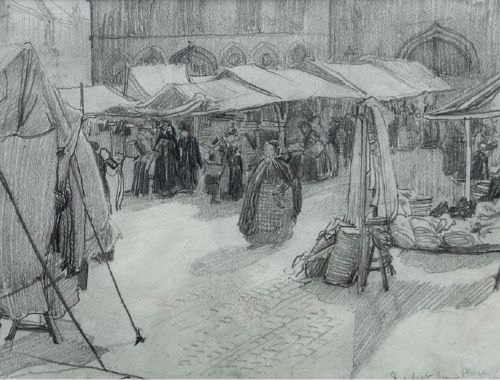
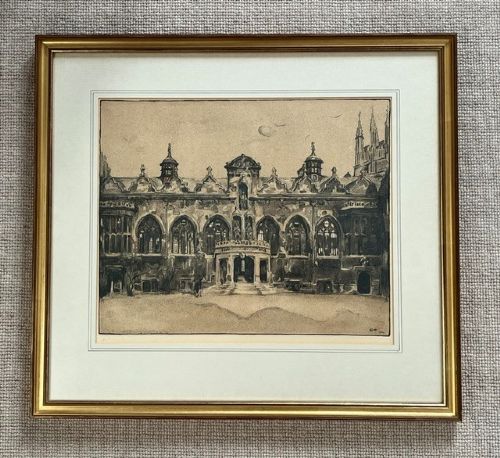
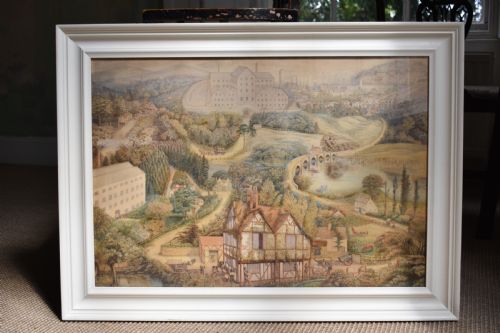
The most common examples on this page include nineteenth-century monochrome ink and watercolour drawings, eighteenth-century copper engravings of historic facades, and early twentieth-century lithographic prints. These pieces often document specific colleges, town halls, or temples rendered with precise draughtsmanship.
How They Were Made
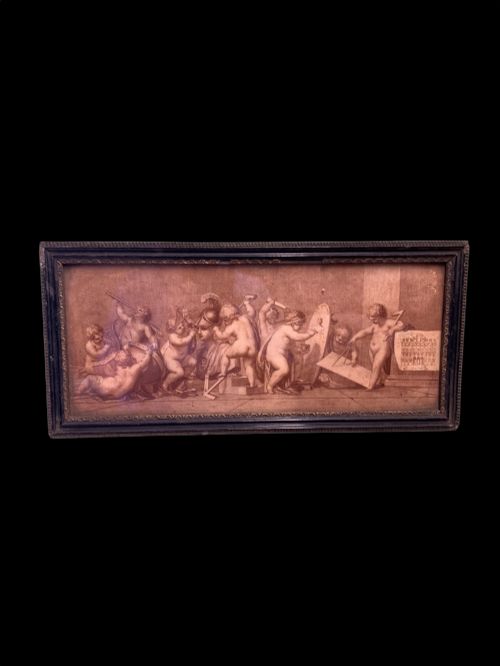
Makers produced these works using paper supports combined with ink, graphite, and watercolour washes to achieve both crisp technical lines and tonal depth. Many examples utilise copper engraving or lithography plates to transfer detailed architectural lines onto paper before hand-colouring.
Framing materials such as wood and gilt wood enclose these works under glass, protecting delicate pigments and paper from atmospheric moisture and handling.
A seventeen-year-old student named H.H. Wyatt drafted a meticulous royal palace design for the South Kensington School.
What Varies in Quality
The precision of the draughtsmanship and the crispness of the ink or engraving lines set the finest works apart from standard reproductions. Superior pieces display meticulous attention to perspective, scale, and stone texture, often signed by known artists or students of institutional schools.
The complexity of the subject matter and the preservation of the paper support influence the overall character of the piece. Clean margins, original wash application, and well-preserved framing contribute significantly to the visual strength of an illustration.
The Antique Architectural Illustration Glossary
- Copper engraving
- A printmaking technique where an artist incises an image into a copper plate with a burin. Ink is forced into the grooves and transferred to paper under pressure.
- Lithography
- A planographic printing process based on the repulsion of oil and water. Artists draw on limestone or metal plates to produce multiple sharp impressions.
- Neoclassical
- A style drawing inspiration from the classical art and architecture of ancient Greece and Rome. It emphasises symmetry, straight lines, and classical orders.
- Wash technique
- A method of diluting ink or watercolour to create smooth, semi-transparent areas of tone. It provides depth and shadow in architectural drawings.
Antique Architectural Illustration: Frequently Asked Questions
What subjects do these illustrations show?
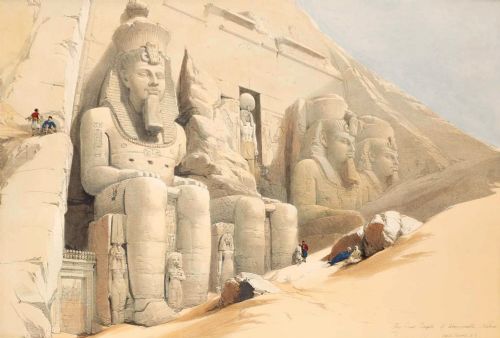
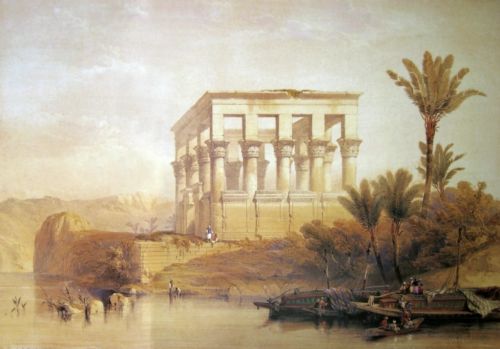
These works depict cathedrals, abbeys, civic buildings, classical columns, and foreign monuments. Artists recorded both famous structures and academic design studies.
Subjects range from English country houses and Oxford colleges to ancient Egyptian temples and continental European town halls.
How should I frame and hang them?
Protect works on paper by using acid-free mounts and glass to prevent ultraviolet light damage. Keep them away from direct sunlight and damp environments.
Select simple wood or gilt frames that complement the period of the artwork without overpowering the fine ink and watercolour details.
Are these works original drawings or prints?
The selection includes both unique hand-drawn pieces in pencil, ink, and watercolour alongside original period prints and engravings. Many bear signatures, dates, or institutional stamps from schools.
Descriptions specify whether a piece is a one-off drawing or an engraved plate from a published architectural portfolio.
What periods do these pieces date from?
The inventory spans from the eighteenth century through the Victorian era and into the early twentieth century. Georgian and Victorian examples reflect the prevalent revival styles of their time.
Later pieces extend into the nineteen-twenties and nineteen-forties, maintaining traditional draughtsmanship techniques alongside industrial lithography.