

Antique Animal Canvas Art
Antique animal canvas art brings centuries of skilled oil painting and spirited wildlife or domestic subjects directly onto your walls.
Antique Animal Canvas Art
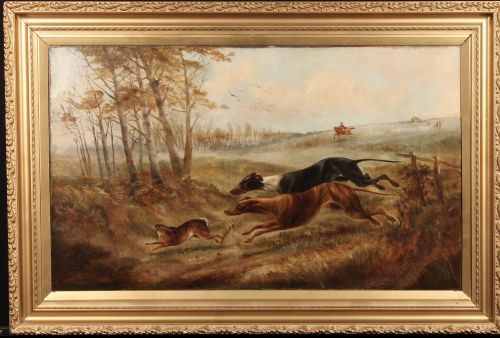
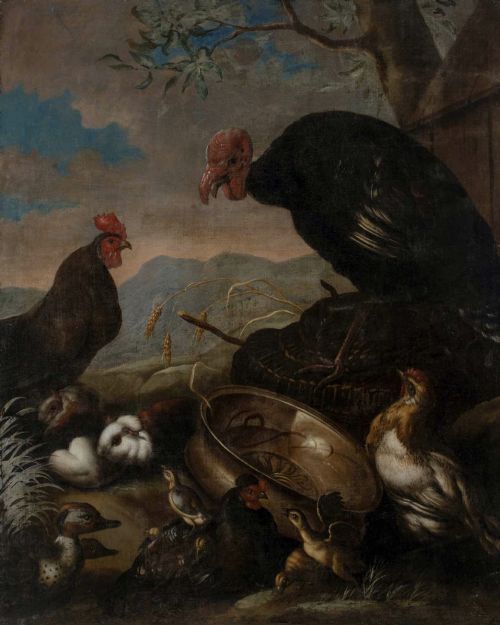
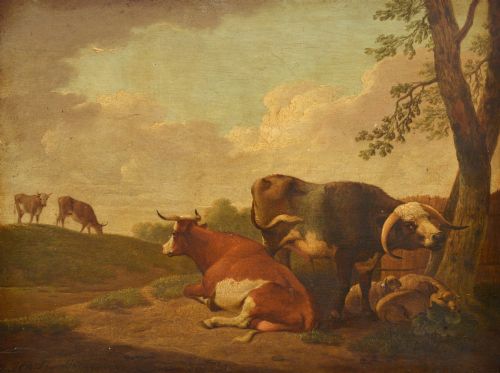
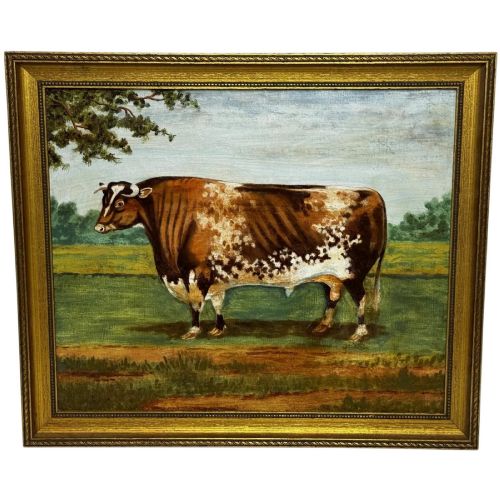
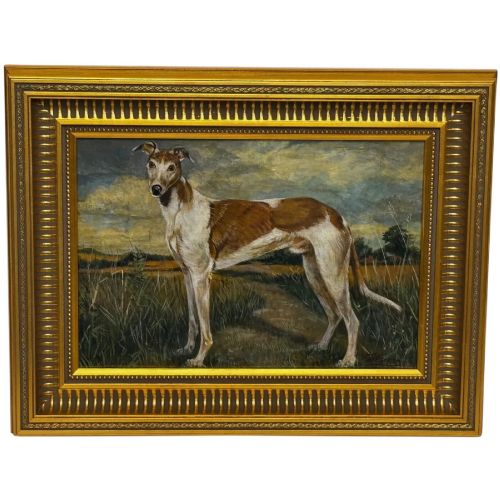
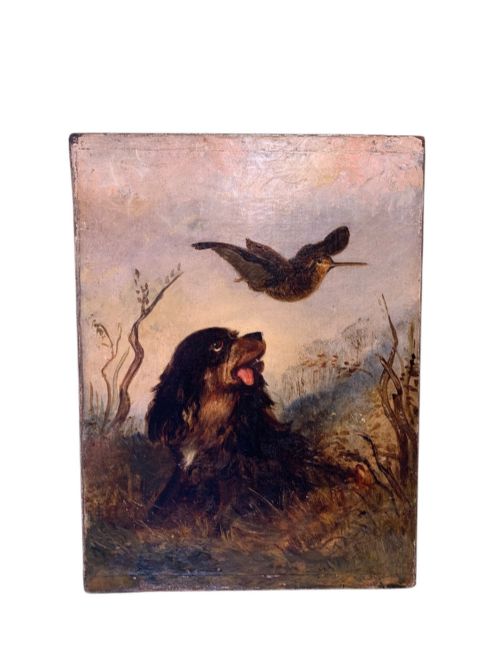
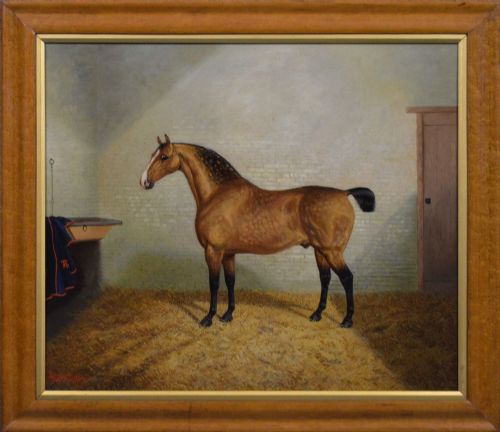
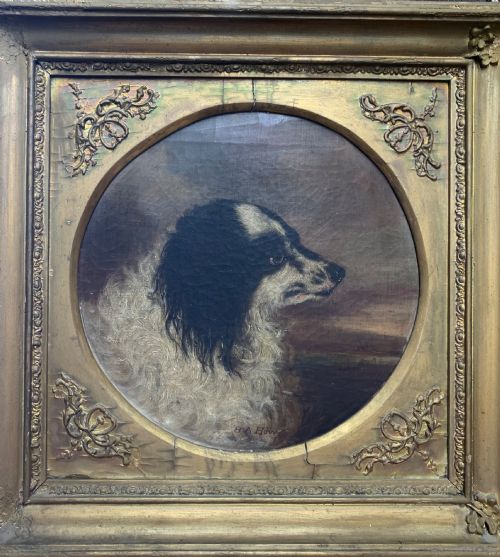
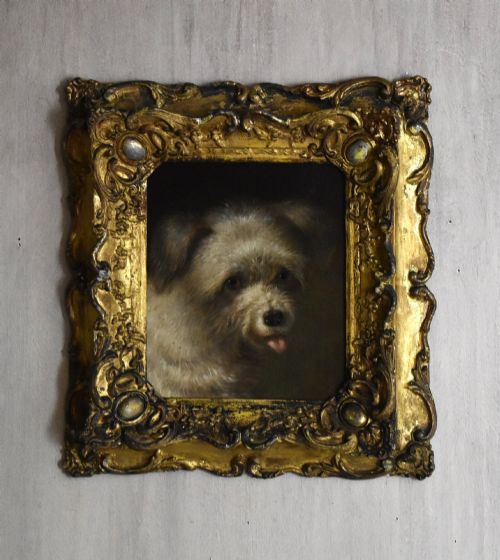
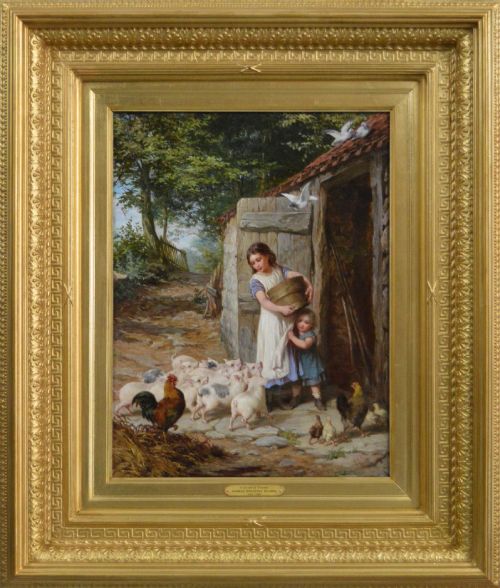
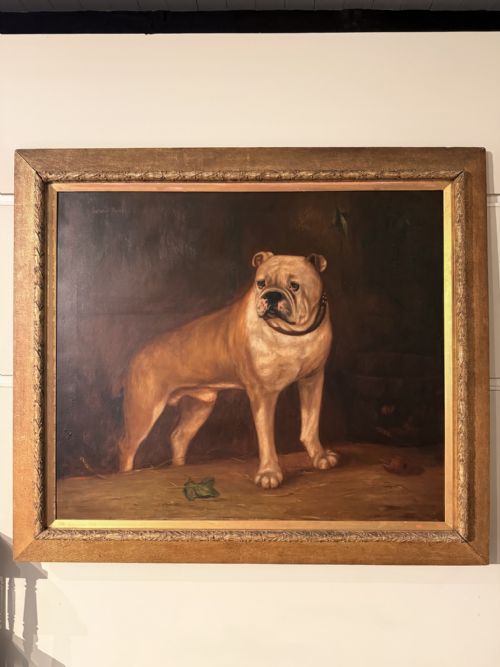
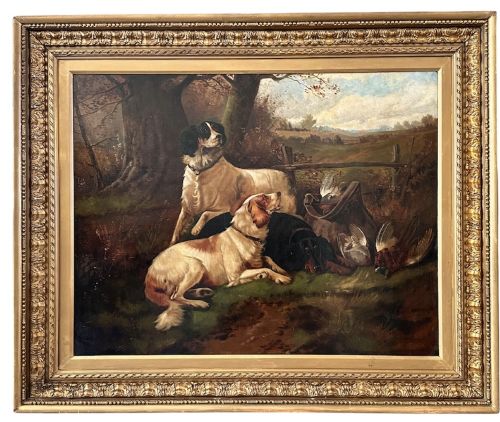
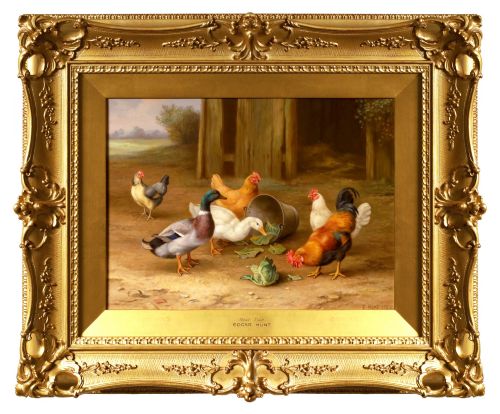
When you search for antique animal canvas art, you find oil paintings spanning from the seventeenth century to the early twentieth century. The selection ranges from grand sporting portraits of horses and dogs to pastoral scenes featuring cattle, sheep, and poultry in landscaped settings.
You are most likely to encounter nineteenth-century and Victorian works on this page, reflecting a period of intense interest in domestic animals, livestock, and hunting companions. These canvases vary from naive folk art depictions to sophisticated realist and romantic portrayals by named British, French, and Belgian artists.
Materials and construction
These works are executed primarily in oil paint applied to woven canvas supports, utilising traditional priming and layering techniques to build depth and texture. The handling of the pigment ranges from smooth, highly detailed academic brushwork to looser, more expressive strokes found in landscape and sporting compositions.
Many of these canvases remain housed within their original or period-appropriate giltwood frames, which are constructed from wood and finished with elaborate carved or moulded gilt decoration. The combination of oil on canvas within a heavy wooden gilt frame defines the physical presence of these pieces.
Listings feature works from the seventeenth, eighteenth, nineteenth, and early twentieth centuries, executed in oil on canvas.
Distinctions in quality
Quality in these oil paintings rests primarily on the anatomical accuracy and expressive vitality of the animal subject, alongside the artist's ability to render light, texture in fur or feathers, and atmospheric depth in the surrounding landscape. Masterly handling of brushwork and convincing spatial arrangement separate accomplished academic portraits from stiffer, simpler naive interpretations.
The craftsmanship of the accompanying wooden frame also contributes to the overall standard of a piece, with period giltwood frames featuring crisp carving and original gilding commanding greater appreciation than later replacements or heavily restored surrounds.
George Armfield·Eugène Verboeckhoven·Angelo Maria Crivelli·Hendrik Willem Schweickhardt·Albert Clark·Martin Theodore Ward·George Augustus Holmes·John Sargent Noble·Edgar Hunt·Robert Watson·Sir Edwin Henry Landseer·Fred Fitzpatrick·William Watson Jnr·Alfred Arthur Brunel de Neuville·Henry Schouten·Claude Cardon·John Emms·LM Webb·Henry Robinson Hall·William Henry Mander·Thomas Sidney Cooper
The Antique Animal Canvas Art Glossary
- Oil on canvas
- Pigments suspended in a drying oil medium applied to a stretched woven fabric support. This technique allowed artists to achieve rich colour saturation and subtle tonal gradations.
- Giltwood
- Wood, typically carved, that has been coated with a thin layer of gold leaf or metallic powder. It provides a traditional, reflective border that enhances the colours within the painting.
- Sporting art
- Genre of painting dedicated to depicting field sports, hunting dogs, racehorses, and game. These works often recorded prized animals and notable sporting events.
- Naive art
- Style of visual art created by a person without formal training, often characterised by a charming disregard for strict perspective and classical proportion.
- Baroque
- Artistic style originating in the seventeenth century known for dramatic lighting, deep shadows, and dynamic movement. Paintings from this era often feature rich, theatrical animal compositions.
Antique Animal Canvas Art: Frequently Asked Questions
What periods do these paintings cover?
The works span several centuries, beginning with seventeenth-century baroque canvases and extending through the eighteenth century and the Regency era.
The majority of pieces date from the nineteenth century and the Victorian period, running onward into the early decades of the twentieth century.
How were these canvas paintings framed?
Many paintings are housed in period wooden frames finished with gilt ornamentation.
These frames range from simple wooden mouldings to ornate giltwood designs that complement the artistic style of the era.
What subjects appear in these artworks?
The subjects include domestic livestock such as prizewinning bulls, sheep flocks, and Highland cattle grazing in pastoral landscapes.
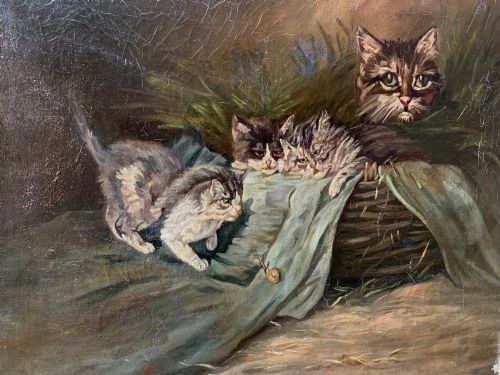
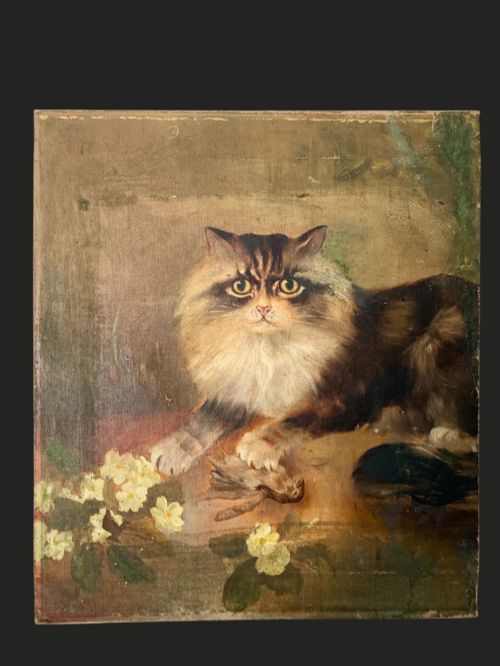
Other common subjects feature sporting dogs, horses, cats, and birds depicted either in natural environments or within structured farmyard settings.
How do I care for an antique oil painting?
Keep the canvas away from direct sunlight and steady fluctuations in temperature and humidity to prevent the paint and fabric from degrading.
Dust the surface and the surrounding frame gently with a dry, soft brush without applying pressure to the canvas.