



Antique Amboyna Desk
An antique amboyna desk brings the distinctive, dense curl of exotic timber into a room, offering a rich workspace rooted in nineteenth-century craftsmanship.
Antique Amboyna Desk
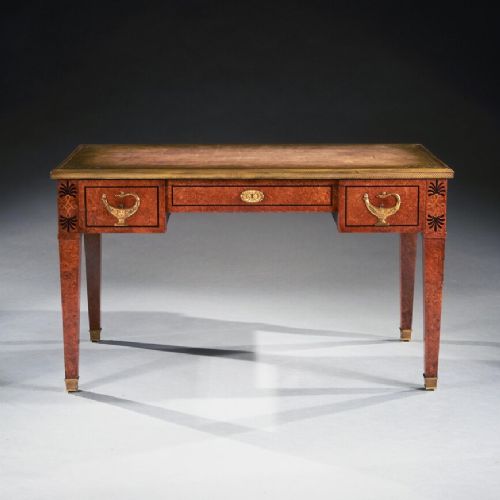
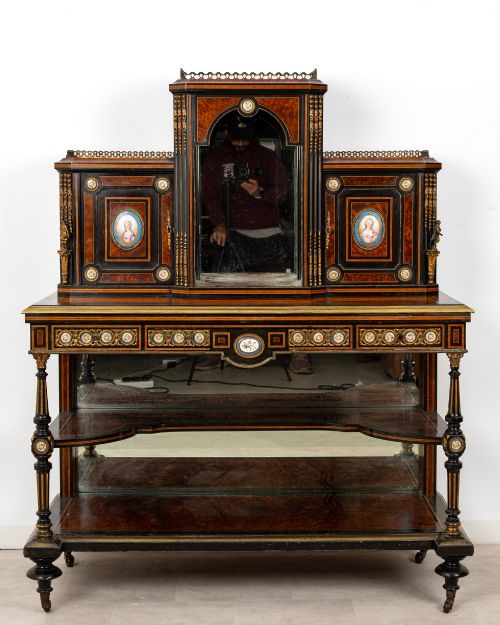
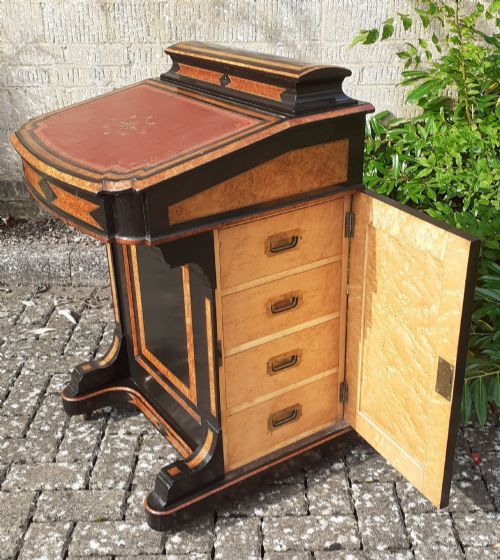
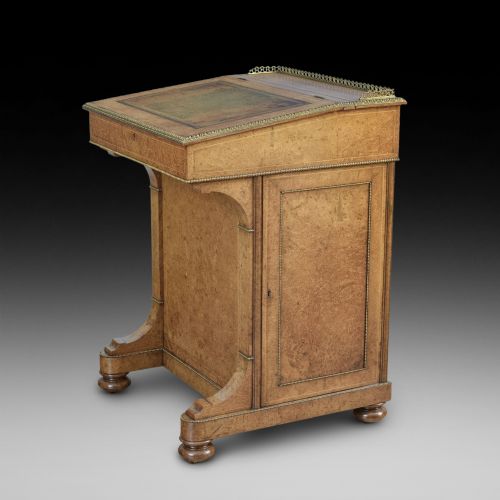
When searching for an antique amboyna desk, a buyer encounters a focused range of nineteenth-century writing furniture, spanning compact Davenport forms, refined bonheur du jour desks, and substantial library tables. These pieces emerge primarily from Victorian workshops and French revival cabinets, reflecting a period of high decorative ambition.
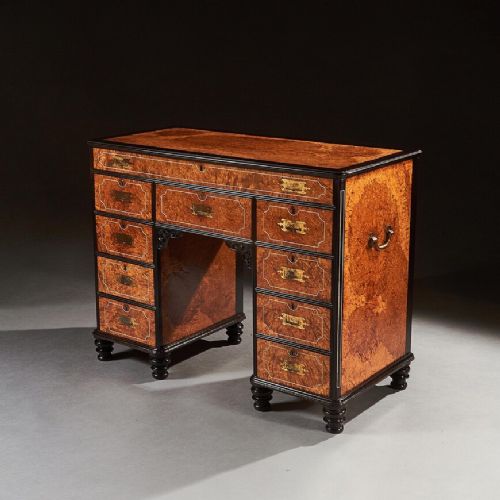
The inventory on this page demonstrates that the form often merges with related writing types, including secretaire abattants and campaign kneehole desks. Alongside traditional desks, one occasionally finds decorative boxes utilising the same timber for portable correspondence.
English and French makers dominate these examples, applying the distinctive speckled grain to forms influenced by Regency, Neoclassical, and Louis XVI styles. The resulting selection provides a heavy concentration of nineteenth-century pieces designed for elegant personal administration.
How they were made
Cabinetmakers constructed these pieces by applying figured amboyna veneer over solid secondary timbers, frequently combining the speckled orange-brown grain with contrasting ebonised wood or ebony. This technique highlights the intricate natural pattern of the timber across flat surfaces and fall-front panels.
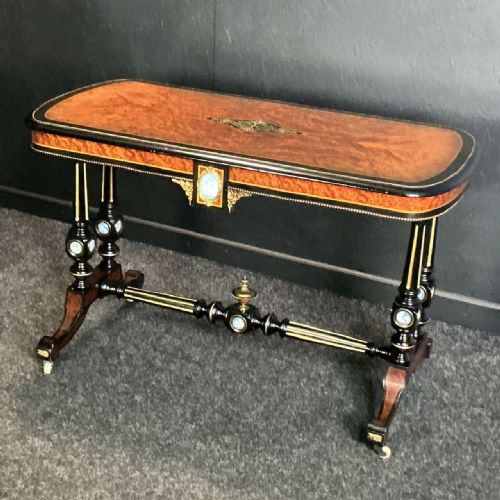
Metal mounts in brass, ormolu, and gilt bronze appear regularly to edge drawers, frame porcelain plaques, and protect corners, while interior writing slopes incorporate fitted leather surfaces. Structural elements are further detailed with marquetry inlay and brass banding.
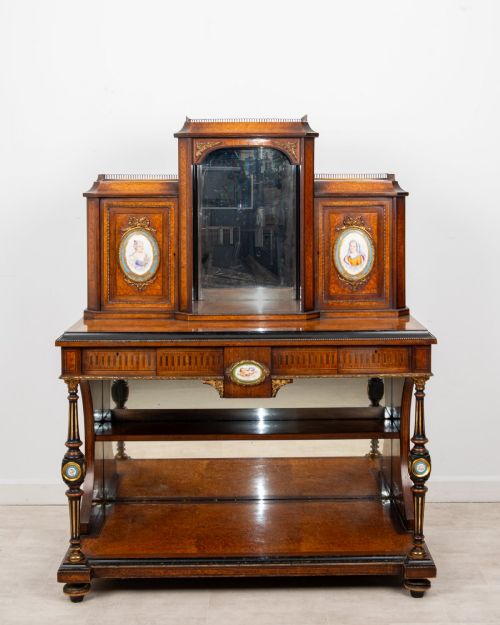
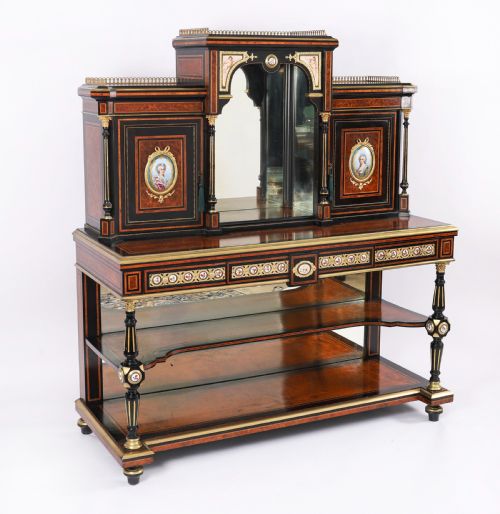
French and English workshops utilised these materials to execute complex forms such as the bonheur du jour and breakfront library desks, uniting structural cabinetry with decorative cast bronze and ceramic insertions.
Antique Amboyna Desk Retail Price Guide 2026
Typical asking prices for amboyna desk among the pieces listed under this phrase on Sellingantiques today, from the lower quarter to the upper quarter. They describe what is for sale here now, not the wider market.
Several desks manage to pack hidden stationery compartments, secret drawers, and porcelain plaques into a footprint barely larger than a dining chair.
What varies in quality
Quality rests significantly on the selection and matching of the amboyna veneer, where tighter, more even curls and unblemished surfaces distinguish the finest examples from plainer timber stocks. The precision of the contrasting ebonised stringing and the crispness of the gilt bronze mounts further separate standard production from superior work.
Execution of secondary details, such as inset porcelain plaques, hand-tooled leather writing surfaces, and well-integrated brass galleries, indicates the tier of the original workshop. Finer pieces demonstrate seamless integration between the exotic wood veneers and the structural bronze or brass hardware.
The integrity of the internal fittings, including secret drawers within a Davenport or the precise movement of a fall-front desk, marks the distinction between ordinary utility and high cabinetmaking.
Paul Sormani·Gillow
The Antique Amboyna Desk Glossary
- Amboyna
- A highly prized exotic wood harvested from the Pterocarpus indicus tree, known for its distinctive mottled, swirling burl grain. It was frequently used as a veneer on nineteenth-century luxury furniture.
- Bonheur du jour
- A light lady's writing desk featuring a small cabinet or set of tiers with drawers above the main writing surface. Originating in France, it became popular across Victorian drawing rooms.
- Davenport
- A compact writing desk featuring a sloped, hinged writing surface above a pedestal of drawers. The design originated in the early nineteenth century and often incorporates side drawers and interior compartments.
- Ormolu
- Gilt bronze ornamentation applied to furniture mounts, feet, and galleries. It provides a bright metallic contrast to dark woods and amboyna veneers.
- Secretaire abattant
- A tall, upright cabinet with a drop-front panel that conceals a fitted writing interior and small drawers. This form allows a full desk workspace to close into a tidy vertical footprint.
Antique Amboyna Desk: Frequently Asked Questions
How do I care for amboyna veneer?
Amboyna veneer requires stable indoor humidity and protection from direct sunlight to prevent the timber from drying out or fading. Cleaning should be limited to dusting with a soft, dry cloth without harsh chemical polishes.
Waxing can be applied sparingly to maintain the sheen of the wood, provided the historical finish remains intact.
What is a bonheur du jour desk?
A bonheur du jour is a small, elegant writing desk featuring a raised cabinet section with shelves or small drawers above the main writing surface. Popularised in France and adopted in Victorian England, it was designed for light correspondence rather than heavy administrative work.
These pieces frequently incorporate fine veneers like amboyna, alongside porcelain plaques and gilt bronze mounts.
How can I tell English and French desks apart?
English desks, such as Davenport and library tables from makers like Gillow, tend to emphasise solid proportion, brass banding, and practical cabinetry. French pieces frequently display Neoclassical or Louis XVI revival influences, incorporating heavy ormolu mounts, ebonised details, and inset porcelain plaques.
Maker signatures or stamps, when present, provide the clearest indication of origin.