


Antique Agricultural Picture
An antique agricultural picture captures rural life and farming scenes, offering a direct view into the fields and farmyards of the past.
Antique Agricultural Picture
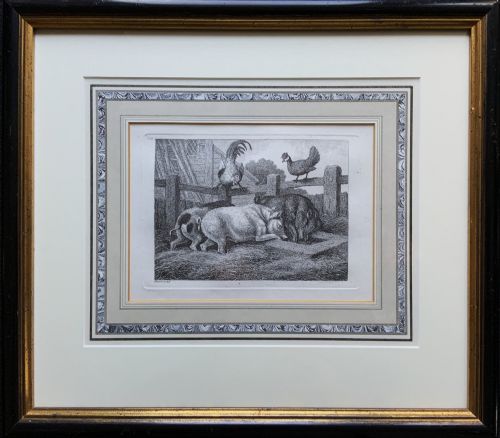
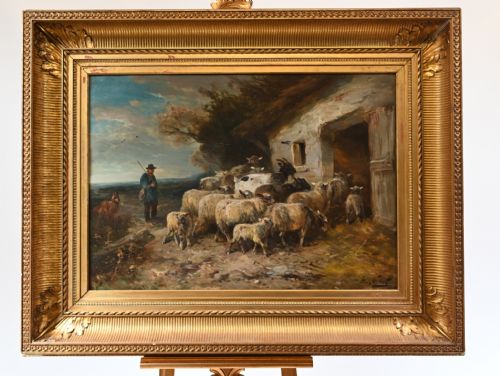
When searching for an antique agricultural picture, you encounter framed paintings and works on paper depicting rural scenes, farmhands, and livestock from the nineteenth and early twentieth centuries. These works record traditional farming practices, harvest fields, and agricultural animals before mechanisation changed the countryside.
The versions most commonly met on this page span the Victorian and Edwardian eras up to the nineteen-thirties, ranging from detailed Victorian pastoral oil paintings to atmospheric watercolours of haymaking. Artists of the period focused on rural labour, livestock, and country landscapes, capturing daily life on British and European farms.
How they were made
Artists painted these rural subjects using oil paint on canvas or wood panels, and watercolours on paper. Canvas supports allowed for rich, textured oil paintings with deep layers of pigment, while paper suited the fluid washes characteristic of landscape watercolours.
Finished works were typically mounted behind glass and set within gesso and wood frames. These frames protect the delicate surfaces of paper and canvas while completing the presentation of the wall art.
The listings combine oil paintings, watercolours, and glazed prints across periods from the Victorian era into the nineteen-thirties.
What varies in quality
Quality in these works rests upon the artist's ability to render anatomy, light, and atmosphere convincingly, particularly in the depiction of heavy horses, cattle, and human figures. Superior paintings display a sure handling of brushwork and a balanced composition that brings movement and depth to the farmyard or harvest scene.
The condition of the medium also distinguishes works, with well-preserved watercolours showing minimal fading and oil paintings retaining the integrity of their original canvas and gesso frames. Stronger pieces reveal careful attention to the textures of hay, straw, and animal coats rather than relying on formulaic backgrounds.
Henry Schouten·A M Gauci·Henry Bailey·Percival Glenfern·John Atkinson·J C Grey·James William Booth·George Soper·Arthur Charles Dodd·Vernon Stokes·Rowland Henry Hill·Joseph Kirkpatrick·J L Van Leemputten·John Percy Cooke·Arthur Claude Strachan·Walter Duncan·George Hamilton Constantine·H Strafford·William Sidney Cooper·George Graham·Louis Marie Dominique Robbe·Fred Lawson·Frederick J Haycock·J E Hood
The Antique Agricultural Picture Glossary
- Watercolour
- A paint consisting of pigment suspended in a water-based solution, traditionally applied to paper to create luminous landscapes and rural studies.
- Gesso
- A plaster-like mixture applied to wood frames or panels to provide a smooth, prepared surface for gilding or painting.
- Pastoral
- A style of art that idealises rural life, country scenes, and agricultural labour, focusing on harmony between humans, animals, and nature.
- Realism
- An artistic movement aiming to represent subject matter truthfully without artificiality, frequently seen in nineteenth-century depictions of farmhands and livestock.
Antique Agricultural Picture: Frequently Asked Questions
What subjects appear in these pictures?
These works depict traditional farming activities such as haymaking, harvesting, and farmyard scenes with horses, cattle, sheep, and poultry.
Artists focused on the daily labour of farm hands and the rural landscape during the nineteenth and early twentieth centuries.
How should I frame and hang them?
Most of these pieces arrive glazed and framed in wood or gesso, ready to be hung on a wall away from direct sunlight to protect pigments.
Keeping them in a stable environment prevents damage to the canvas, paper, and antique frames.
How do I identify the period?
Periods are often identified through clothing styles of the figures, framing techniques, and the signatures or styles of the artists.
Nineteenth-century works lean towards detailed realism and pastoral subjects, while early twentieth-century pieces adopt lighter impressionist techniques.
Are watercolours different from oil paintings?
Watercolours utilise pigments on paper and require glass protection, whereas oil paintings use oil paint on canvas or wood panels.
Oils generally offer heavier texture and deeper colour saturation compared to the translucent washes of watercolours.