


Paper Agricultural Artwork
Paper agricultural artwork captures rural labour and harvest scenes on paper through watercolours, ink, and graphite across the nineteenth and twentieth centuries.
Paper Agricultural Artwork
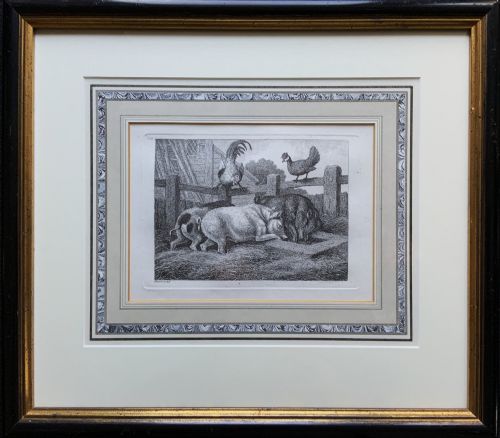
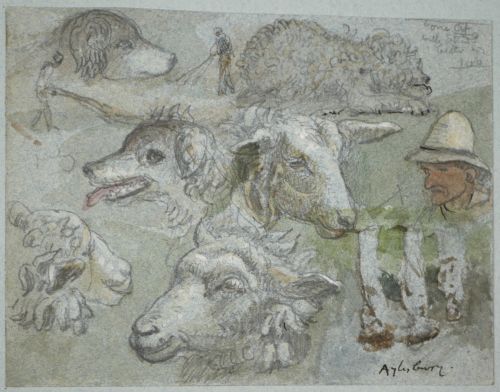
Paper agricultural artwork brings together rural scenes and farming life executed in watercolour, ink, and graphite. When you search for paper agricultural artwork, you encounter depictions of haymaking, harvest time, plough teams, and farm hands created by British artists.
The pieces on this page span from the nineteenth century through the 1950s, taking the form of original watercolour paintings and drawings. You are most likely to meet Edwardian and early twentieth-century interpretations that record traditional farming methods before mechanisation.
Makers recorded in these works include James Smetham, James William Booth, Henry Bailey, George Soper, Rowland Henry Hill, Walter Duncan, George Hamilton Constantine, Sonia Lawson R.A., George Graham, Fred Lawson, and Charles James Adams. These artists worked within British Impressionism, British Realism, and English Regional Art styles.
How these works were created
Paper agricultural artwork relies on watercolour paint, watercolour pigment, and graphite applied directly to paper sheets. Artists used fluid washes alongside precise ink lines to capture the atmospheric conditions of the Essex landscape and northern fields.
The physical support consists primarily of traditional paper stock, which absorbs watercolour pigment to create translucent effects in open-air rural scenes. Graphite underdrawing frequently remains visible beneath the pigment, showing the initial composition of harvest carts and farm hands.
Horses hauling heavy timber and hay carts dominate these fields long before diesel engines replaced them.
What separates works within this range
Paper agricultural artwork demonstrates varying degrees of draughtsmanship in the rendering of human figures and working horses. Superior examples capture the specific movement of plough teams and haymaking without relying on rigid formulas.
The preservation of the paper surface and the vibrancy of the watercolour pigment influence the visual impact of each piece. Works that retain their original tonal depth without excessive fading from light exposure present the intended atmosphere of the rural scene.
James Smetham·James William Booth·Henry Bailey·George Soper·Rowland Henry Hill·Walter Duncan·George Hamilton Constantine·Sonia Lawson·George Graham·Fred Lawson·Charles James Adams
The Paper Agricultural Artwork Glossary
- Watercolour
- A paint consisting of colour suspended in a water-soluble binder, used on paper to create translucent washes.
- Graphite
- A form of carbon used as a drawing medium for initial sketches and detailed linework beneath watercolour pigment.
- British Impressionism
- An artistic approach focusing on light and everyday subjects, visible in many early twentieth-century rural paintings.
- Provenance
- The documented history of ownership that connects a work to its creator or exhibition history.
Paper Agricultural Artwork: Frequently Asked Questions
What periods do these pieces date from?
These works date from the nineteenth century through the 1950s. They record rural life across several decades of British art.
The selection includes Victorian and Edwardian examples alongside mid-twentieth-century interpretations of agricultural shows.
What materials were used to create them?
Artists used paper as the primary support combined with watercolour paint, ink, and graphite. Pigments were applied in washes and lines.
Graphite underdrawing often supports the watercolour layers to define figures and landscape elements.
How should I care for works on paper?
Works on paper require protection from direct sunlight to prevent the fading of watercolour pigments. Framing with acid-free materials preserves the paper support.
Maintaining stable humidity levels prevents warping and deterioration of the sheet over time.
What subjects appear in these paintings?
Subjects focus on traditional farming activities such as haymaking, ploughing, and harvest time. Depictions of farm hands and timber leading are common.
Regional views from locations like Essex and Yorkshire capture specific local agricultural traditions.