

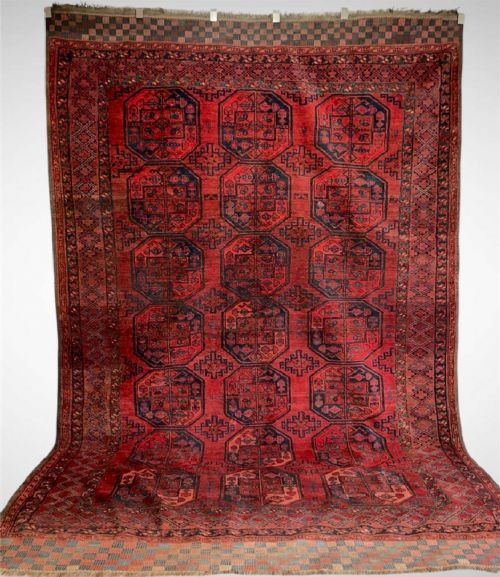


Antique Afghan Turkmen Carpet
An antique afghan turkmen carpet brings deep tribal geometry and rich madder reds into a room.
Antique Afghan Turkmen Carpet
The phrase antique afghan turkmen carpet encompasses heavy tribal floor coverings woven by nomadic and village weavers across Central Asia and northern Afghanistan. Buyers will find large main carpets, smaller village rugs, and specialised formats such as prayer rugs or chuvals.
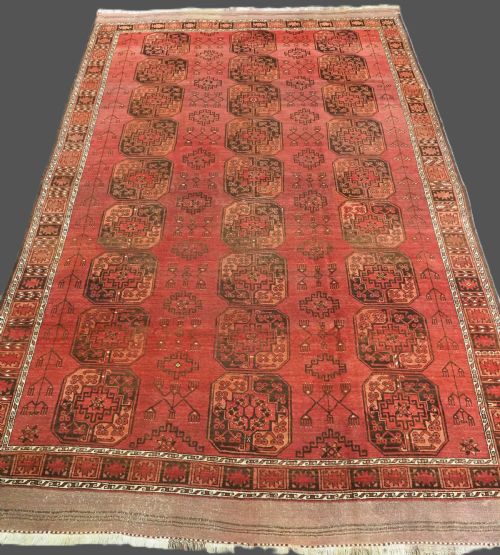
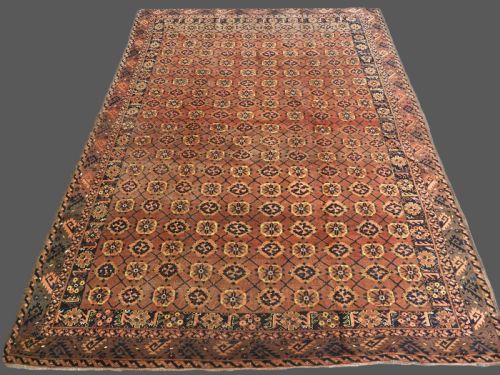
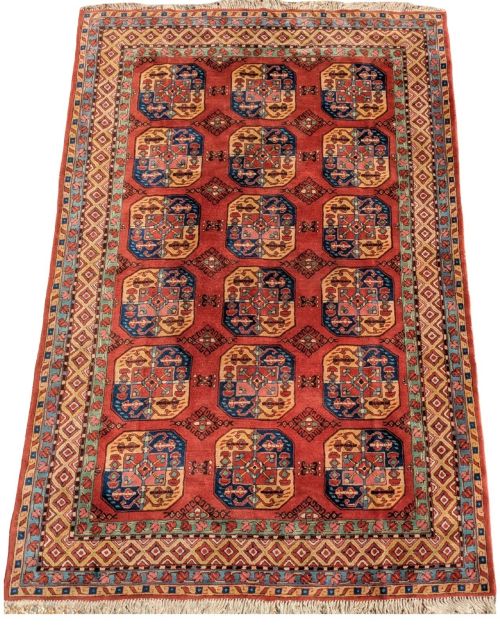
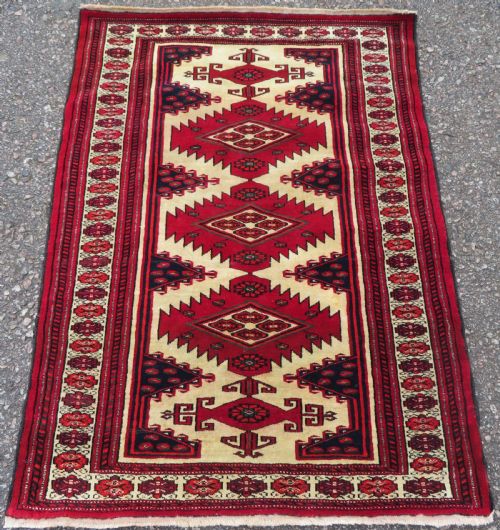
The selection on this page centres heavily on pieces attributed to the Ersari and Kizil Ayak sub-tribes, dating from the mid nineteenth century through the early twentieth century. These textiles display traditional gul motifs, turreted designs, and mihrab arches rooted in tribal heritage.
How They Were Made
Weavers constructed these carpets using hand-spun wool for the pile, often supported by foundations of wool, cotton, goat hair, or horsehair. Natural dyes provided the distinctive palette of warm reds, deep plums, and soft golds.
The dense knotting technique produced a hard-wearing and heavy-duty fabric designed for practical domestic use in tents and village houses.
Antique Afghan Turkmen Carpet Retail Price Guide 2026
Typical asking prices for afghan turkmen carpet among the pieces listed under this phrase on Sellingantiques today, from the lower quarter to the upper quarter. They describe what is for sale here now, not the wider market.
Listings span the period from 1850 to 1930, utilising wool, natural dyes, cotton, goat hair, and horsehair.
What Varies in Quality
Quality rests upon the fineness of the knotting and the crispness of the tribal gul design executed across the field. Superior examples display depth in their natural dyes, ranging from rich madder to subtle secondary tones.
Structural integrity of the wool pile and the survival of original borders and selvedges distinguish standard room-sized carpets from exceptional collector pieces.
The Antique Afghan Turkmen Carpet Glossary
- Gul
- A repeating medallion or octagonal motif central to Turkmen carpet design. Each tribal group utilised distinct variations of these primary guls.
- Mihrab
- The arched niche design found specifically on prayer rugs, directing the worshipper's focus. It often incorporates rams horn or lantern motifs.
- Chuval
- A large storage bag face woven by tribal groups for domestic utility. These smaller formats share the same wool and natural dye properties as main carpets.
- Madder
- A natural dye derived from plant roots producing the characteristic warm reds seen in these textiles. Its depth varies according to the preparation.
- Kelleh
- A long, rectangular format of carpet traditionally suited for specific room proportions. They display the same tribal design vocabulary as square or main carpets.
Antique Afghan Turkmen Carpet: Frequently Asked Questions
How do I identify an Ersari rug?
Ersari rugs typically display large guls, often octagonal or elephant's foot motifs, rendered in warm red tones. Their borders incorporate complex geometric shrub or leaf patterns.
They originate from northern Afghanistan and reflect the traditional design grammar of the Ersari sub-tribe.
Where were these carpets woven?
These carpets were produced by nomadic and village weavers in northern Afghanistan and the wider Central Asian region. Major centres included regions like Andkhoy and Qarqueen.
Weavers worked within family or tribal groups using local materials and traditional dyeing methods.
Are these carpets durable for daily use?
Constructed from heavy hand-spun wool pile on sturdy foundations of wool, cotton, or goat hair, these textiles were built for enduring utility. Their dense pile resists heavy foot traffic.
Proper placement with an appropriate underlay protects the historical foundation fibres in modern living spaces.
How do I date an old Turkmen carpet?
Dating relies on assessing the wool quality, the organic nature of the natural dyes, and the specific structural characteristics of the foundation. Pieces from the nineteenth century often show softer wool and deeper, oxidized madder tones.
Later examples from the early twentieth century shift slightly in palette and weave density.