


Anglo Ottoman Table
An anglo ottoman table brings together intricate eastern geometry and British domestic comfort, offering a striking focal point for a living space.
Anglo Ottoman Table
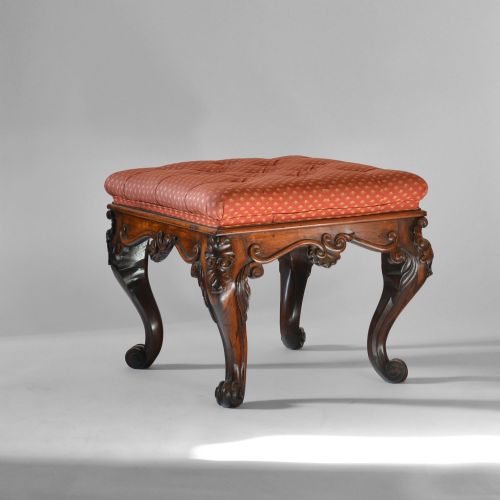
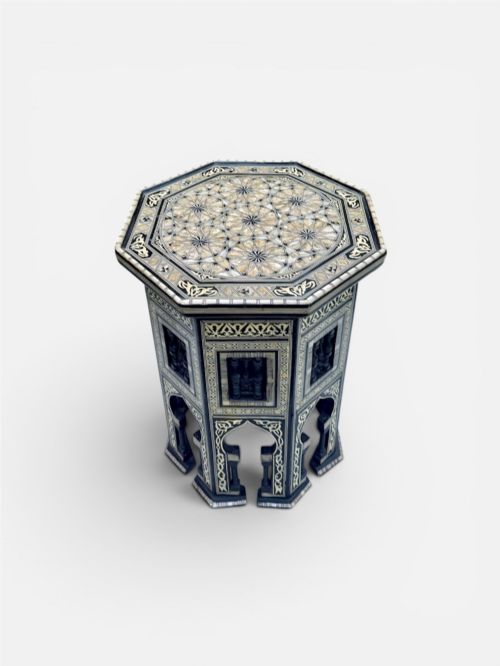
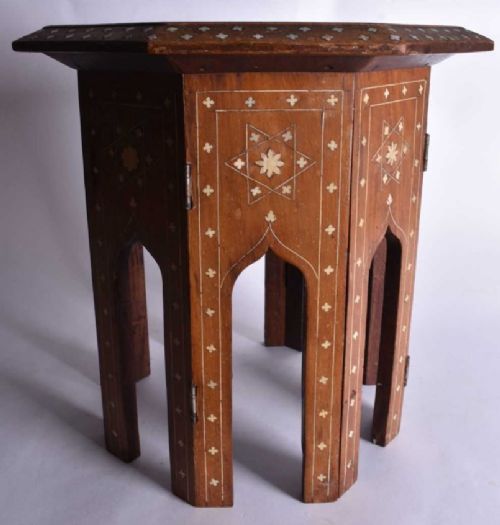
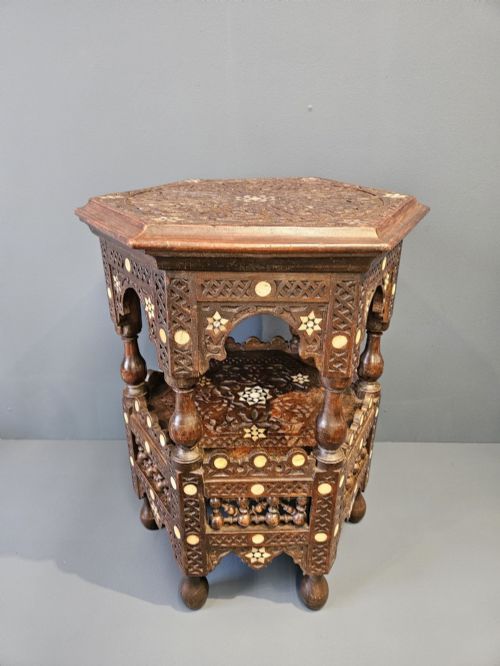
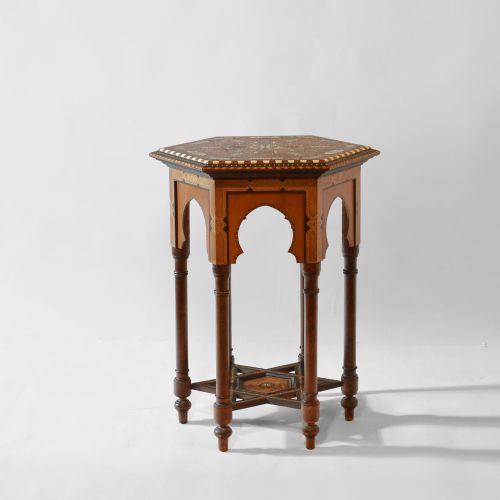
An anglo ottoman table represents a fascinating cross-cultural intersection of nineteenth-century design, merging Islamic and Moorish joinery with British interior tastes. These pieces frequently manifest as octagonal or hexagonal occasional tables, alongside related forms such as folding Damascus tables and low stools.
The surviving pieces on this page span from the Victorian era into the early twentieth century, reflecting the height of the aesthetic movement and exotic revivalism. Buyers will encounter side tables featuring intricate geometric profiles, alongside occasional items like inlaid stools and writing desks.
Originating from diverse stylistic traditions including Syrian, Moorish, and Anglo-Indian workshops, these items serve as practical coffee tables or display surfaces. They bring rich texture and complex woodwork directly into contemporary residential schemes without losing their historic character.
Materials and construction
Makers utilised dense timbers such as walnut, rosewood, and various hardwoods as the foundational structure for these tables, providing a sturdy base for elaborate decoration. These dark woods contrast sharply with the pale, luminous highlights applied across the surface.
Surface decoration relies heavily on meticulous hand inlay, employing natural materials like mother-of-pearl and bone to create complex geometric tile patterns and interlocking stars. Artisans also used deep hand carving to shape folding hexagonal and octagonal frames without relying on modern metal hinges.
Some tables double as clever folding puzzles, unfolding from flat wooden panels into sturdy octagonal stages without a single metal hinge in sight.
Assessing quality
The distinction between standard and exceptional pieces rests upon the precision of the geometry and the density of the inlay work across the timber surface. Superior examples maintain tight, flush joints where mother-of-pearl and bone segments meet the surrounding hardwood.
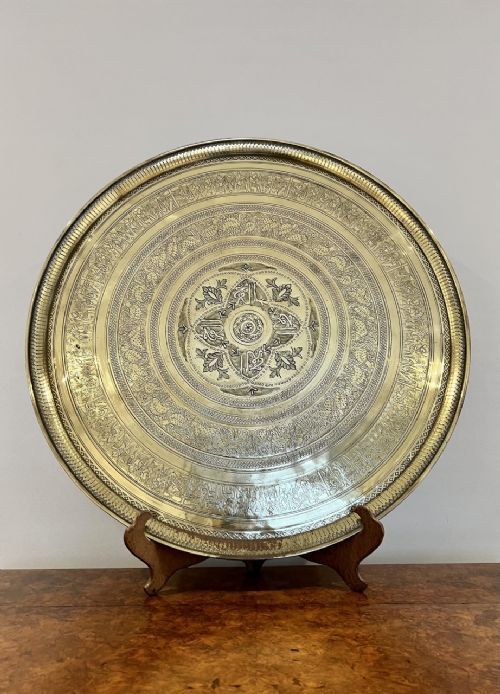
Depth of carving and clarity in the hand-engraved details distinguish workshop output, as finer pieces display crisp edges and deeply undercut patterns rather than shallow surface scoring. The integrity of the folding mechanism and the stability of the multi-sided frame further indicate superior craftsmanship.
Liberty and Co
The Anglo Ottoman Table Glossary
- Damascus table
- A folding occasional table originating from Syria, constructed with multiple sides and intricate mosaic inlay. These pieces fold flat for transport and expand into sturdy geometric stands.
- Mother-of-pearl
- The iridescent inner layer of mollusc shells, harvested to create luminous, pale geometric tessellations on dark wood surfaces. Artisans cut this material into tiny triangular and polygonal tiles.
- Moorish Revival
- An architectural and decorative style popular during the nineteenth century that reinterpreted Islamic design motifs for Western homes. It prioritises horseshoe arches, intricate lattice work, and star patterns.
- Octagonal
- Having eight sides and eight angles, forming the characteristic geometric footprint for many Near Eastern occasional tables. This shape allows complex inlay patterns to repeat symmetrically around the centre.
- Metamorphic
- Describing a piece of furniture designed to transform its function, such as a writing table that converts into an occasional surface. These versatile forms were prized in Victorian domestic interiors.
Anglo Ottoman Table: Frequently Asked Questions
How do I clean an inlaid wooden table?
Dust these surfaces gently with a dry, soft cloth to prevent particles from settling in the tiny crevices between the bone and mother-of-pearl inlay. Avoid liquid polishes and damp cloths, as moisture can loosen the delicate natural materials from their wooden channels over time.
Apply a microcrystalline wax sparingly if the hardwood requires nourishment, buffing it carefully away from the inlaid sections. Maintaining a stable indoor humidity level protects the timber from expanding and cracking the surrounding geometric mosaic work.
Are folding Damascus tables structurally stable?
Folding Damascus tables rely on an ingenious interlocking wooden lattice frame that expands to support the octagonal or hexagonal top without traditional metal hardware. When opened correctly, the weight of the tabletop locks the intersecting wooden legs firmly into position.
While they function reliably as side tables or coffee surfaces, users should lift rather than drag them when repositioning to prevent strain on the delicate hinge joints. Placing them on even flooring ensures the interconnected base remains balanced and secure.
What is the difference between Moorish and Anglo-Indian styles?
Moorish pieces draw inspiration from Islamic architecture of the Mediterranean and Middle East, featuring dense geometric strapwork, star polygons, and arches. The construction often employs contrasting dark woods inlaid with bone and mother-of-pearl.
Anglo-Indian furniture reflects British colonial production in the subcontinent, frequently showcasing deep, relief-carved foliage and wildlife across native hardwoods like rosewood and walnut. Both traditions prioritized hand craftsmanship but utilised distinct regional motifs and carving techniques.
How do I date a nineteenth-century inlaid table?
Examine the timber substrate and the type of adhesives used beneath the mother-of-pearl and bone inlay, as nineteenth-century workshops relied on natural hide glues. The complexity of the geometric patterns and the specific style of the revivalism often provide reliable clues to the decade of manufacture.
Maker attribution stamps, paper labels, or signatures occasionally appear on the underside of the tabletop or along the interior folding frame. Comparing the carving depth and wood grain against documented examples helps narrow the production period between the Victorian era and the early twentieth century.