




Anglo Islamic Furniture
Anglo Islamic furniture brings together intricate geometric woodwork and Eastern craftsmanship, offering striking seating and tables for the home.
Anglo Islamic Furniture
Anglo Islamic furniture combines traditional Middle Eastern decorative motifs with British forms from the nineteenth and early twentieth centuries. When searching for anglo islamic furniture, buyers encounter occasional tables, window seats, and cabinets designed for Western interiors.
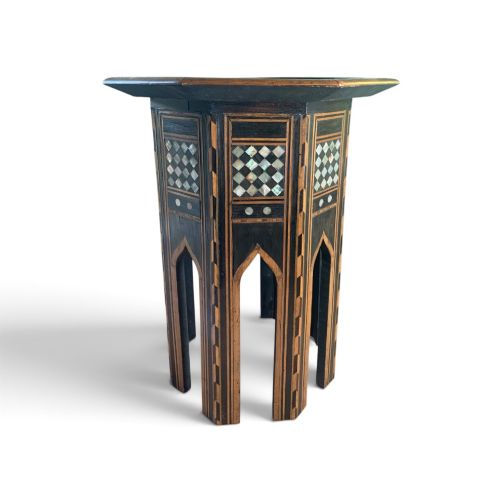
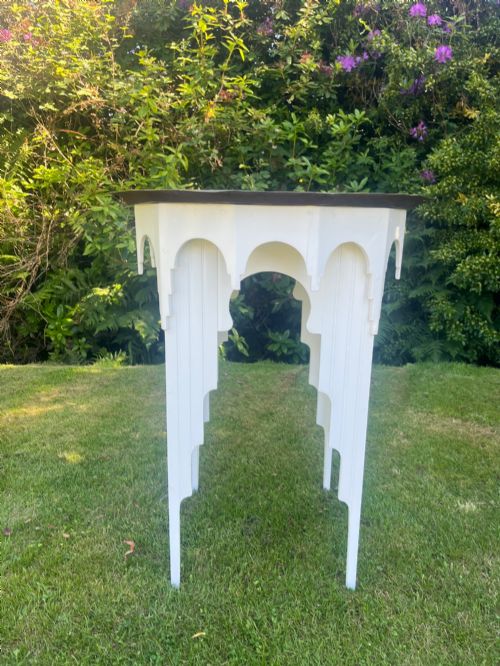
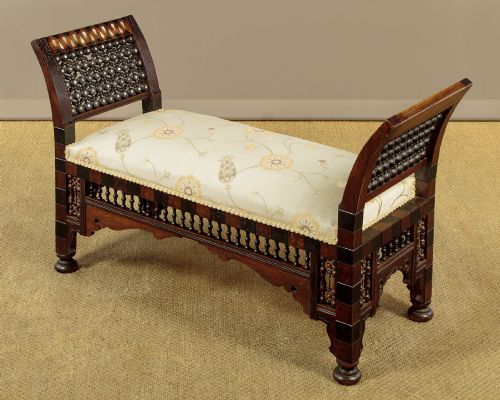
The pieces appearing here span the Victorian era through the 1930s, reflecting a sustained British appetite for exotic design. Octagonal side tables, conversation seats, and side chairs represent the most common forms available.
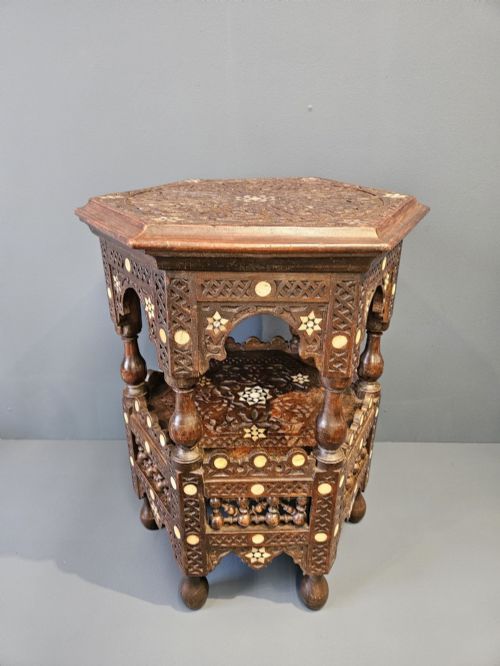
Moorish Revival and Syrian styles dominate the selection, often incorporating intricate joinery suited to both grand reception rooms and smaller studies. Each item demonstrates the cross-cultural exchange between British retail taste and Eastern artisan traditions.
Materials and Construction
Makers utilised dense hardwoods such as walnut, oak, and ebony as the primary structural foundation for these tables, chairs, and cabinets. These sturdy timbers supported complex architectural forms and intricate surface decoration.
Surfaces feature extensive inlay work executed in bone, mother-of-pearl, abalone, and contrasting woods. Artisans carved geometric strapwork and lattice panels directly into the hardwood frames, creating deep relief and textured surfaces.
Listings feature items dated from the Victorian period through the 1930s, constructed in hardwood, bone, and mother-of-pearl.
Assessing Craftsmanship
Quality in these pieces rests on the precision of the geometric woodwork and the completeness of the surface inlay. Superior examples retain every tiny piece of bone and mother-of-pearl, whereas lesser pieces show gaps or hasty replacements.
The depth and crispness of the hand carving distinguish finer workshop output from simpler commercial production. Well-executed joints and stable hardwood frames separate robust pieces from those prone to structural movement.
The Anglo Islamic Furniture Glossary
- Moorish Revival
- A nineteenth-century architectural and decorative style inspired by North African and Spanish Islamic design. It heavily influenced British furniture makers seeking exotic aesthetics.
- Mother-of-Pearl
- The iridescent inner layer of mollusc shells, utilised extensively for geometric surface inlay. It creates shimmering contrast against dark hardwoods.
- Octagonal
- Having eight sides and eight angles. This geometric shape frequently defines the tabletops and lamp stands in this category.
- Metamorphic
- A term for furniture designed to transform into different forms or serve multiple functions, such as a writing table that alters its configuration.
Anglo Islamic Furniture: Frequently Asked Questions
What is anglo islamic furniture?
Anglo islamic furniture refers to nineteenth and early twentieth-century pieces made for the British market using Middle Eastern decorative techniques.
These items blend traditional Eastern geometric carving and inlay with familiar Western furniture forms like side tables and window seats.
How do I care for inlaid wood?
Inlaid surfaces require stable room temperatures and minimal exposure to direct sunlight to prevent the wood and bone from drying out.
Dust gently with a soft dry cloth and avoid harsh liquid polishes that might loosen delicate mother-of-pearl elements.
Where were these pieces used?
Victorian and Edwardian households placed these decorative tables and chairs in drawing rooms, smoking rooms, and entrance halls.
Their striking geometric patterns and exotic materials provided a fashionable talking point for guests.
How do I date an inlaid table?
Dating relies on examining the timber construction methods, the style of the hardware, and the specific mix of inlay materials.
Nineteenth-century examples often feature heavier hardwood carcasses and denser hand-cut bone work compared to later twentieth-century iterations.