




Orientalist Style Furniture
These pieces of orientalist style furniture bring Moorish, Islamic, and Japonisme influences into the home through intricate woodwork and inlay.
Orientalist Style Furniture
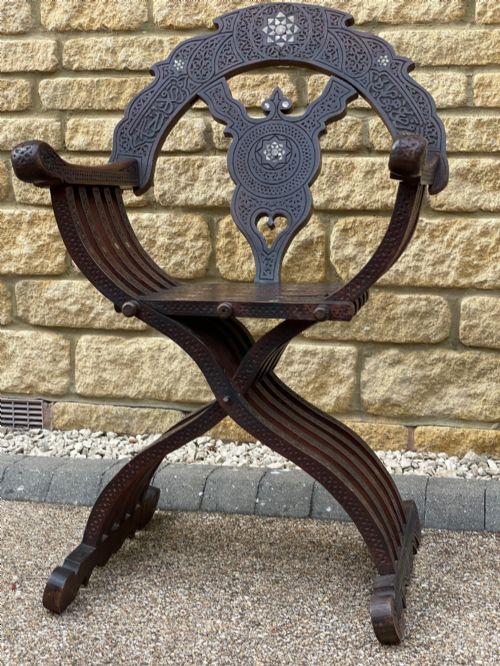
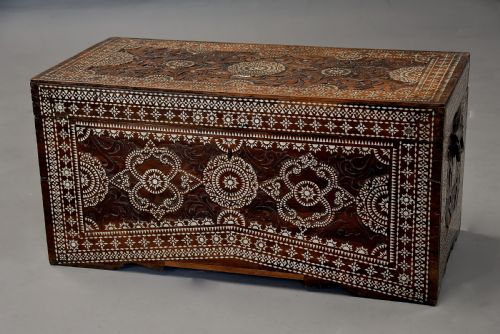
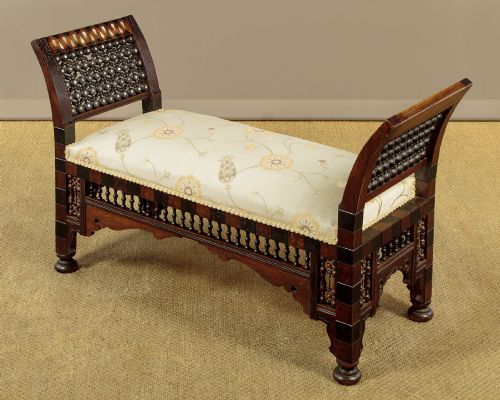
Orientalist style furniture encompasses seating, tables, and storage pieces drawn from Moorish Revival, Islamic Revival, and Japonisme aesthetics. Buyers seeking orientalist style furniture encounter occasional tables, armchairs, and trunks dating from the nineteenth and early twentieth centuries.
The selection ranges from North African centre tables to Syrian pearl inlaid window seats and occasional tables by notable makers. Hardwoods form the base for intricate decorative schemes spanning Mamluk Revival and Aesthetic Movement designs.
How they were made
Construction relies on solid hardwoods such as walnut and ebonised wood shaped into octagonal tables, cabinets, and seating frames. Carving provides deep relief work across panels and structural elements.
Surface enrichment involves detailed inlay using mother of pearl, bone, and brass wire. Cairo ware silver-inlaid brass and Boulle marquetry further augment the timber surfaces.
Listings feature walnut, hardwood, and ebonised wood embellished with mother of pearl, bone, brass, and fabric across periods spanning the mid-nineteenth to early twentieth centuries.
What varies in quality
Quality rests upon the precision of the joinery and the density of the carved or inlaid ornament across the piece. Finer examples display tightly fitted mother of pearl and bone sections set flush into the timber substrate.
Attribution to known makers such as Gabriel Viardot or Carlo Bugatti elevates the standing of an item. The complexity of the revival style, from simple Moorish occasional tables to elaborate conversation seats, dictates the overall execution.
Gabriel Viardot·Liberty & Co.·Carlo Bugatti
The Orientalist Style Furniture Glossary
- Moorish Revival
- An architectural and decorative style drawing inspiration from the historic architecture of Spain, North Africa, and the Middle East. It frequently utilises horseshoe arches, intricate geometric lattice, and inlaid surfaces.
- Japonisme
- The influence of Japanese art and design on Western decorative arts during the late nineteenth century. This movement is evident in the work of makers like Gabriel Viardot.
- Cairo Ware
- Metalware originating from Egypt, typically brass inlaid with silver and copper calligraphy or geometric patterns. These items were often adapted as tables or stands for Western interiors.
- Boulle Inlay
- A technique of marquetry using brass and tortoiseshell or alternative contrasting materials pressed into a wooden ground. It appears on revival seating frames of the early twentieth century.
- Etagere
- A set of open shelves for displaying small objects or sheet music, common in late nineteenth and early twentieth-century cabinet making.
Orientalist Style Furniture: Frequently Asked Questions
What defines orientalist style furniture?
These pieces incorporate design elements from Islamic, Moorish, and Japanese traditions adapted by European and Middle Eastern makers. They include geometric inlays, carved woodwork, and exotic motifs.
The aesthetic became popular during the nineteenth century as global trade and travel expanded decorative vocabularies in domestic interiors.
How do I care for inlaid wood?
Protect inlaid surfaces from direct sunlight and extreme humidity fluctuations to prevent the wood from shrinking and the pearl or bone from loosening. Dust gently with a dry, soft cloth.
Avoid commercial polishes containing silicone or heavy waxes that can build up within the recesses of the carved and inlaid details.
Where were these pieces used originally?
They were placed in smoking rooms, drawing rooms, and studies of late Victorian and Edwardian homes to create an exotic, cosmopolitan atmosphere. Occasional tables and conversation seats facilitated gatherings.
Today, they function as focal points in contemporary or traditional rooms, serving as practical seating and display surfaces.
How do I distinguish revival periods?
Look to the specific stylistic vocabulary and material combinations, such as the distinct brass wire of Cairo ware or the ebonised aesthetic forms associated with specific makers. Dates span from the mid-nineteenth century through the 1930s.
Construction methods and timber choices also provide clues to the era of manufacture, moving from heavy Victorian hardwood carving to lighter twentieth-century frames.