


Dark Wood Inlaid Settee
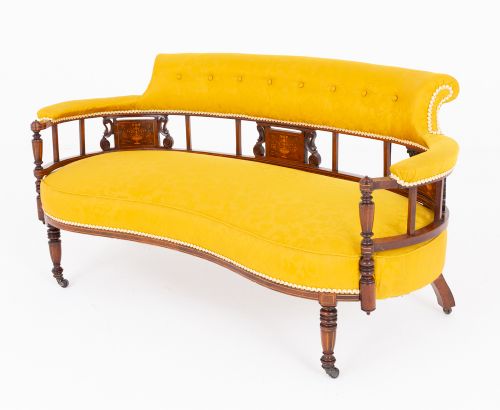
These dark wood inlaid settee examples combine rich timbers with crisp marquetry, offering character and seating for period interiors.
Dark Wood Inlaid Settee
A dark wood inlaid settee brings together rich timbers such as rosewood and mahogany with contrasting decorative elements. These pieces appear across Victorian, Edwardian, and early twentieth-century periods, showing shifts from late Victorian formality to Edwardian lightness.
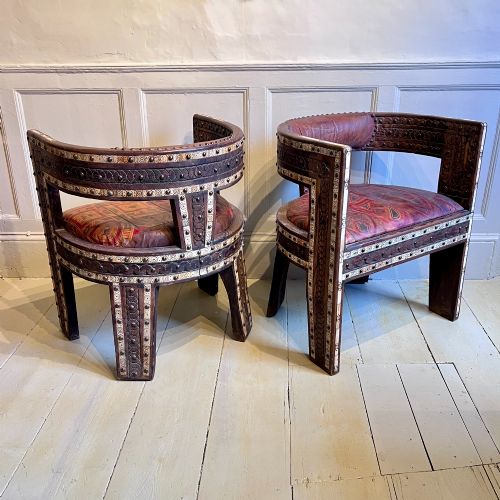
Most examples you encounter on this page date from the late nineteenth and early twentieth centuries, including styles like Dutch Neo-Classical and Moorish Revival. Forms range from end-of-bed sofas and couches to parlour suites paired with matching armchairs.
Makers utilised various hardwoods as a base, embellishing them with intricate marquetry and contrasting stringing. Selecting the right piece involves noting whether the timber matches your existing furniture and fits your available space.
Materials and construction methods
Craftsmen built these frames using dense hardwoods including rosewood and mahogany, chosen for their durability and deep natural colour. These solid foundations support elaborate surface decoration without warping over time.
Surface enrichment relies on precision woodwork, incorporating contrasting satinwood, bone, and marquetry details set flush into the timber. Upholstery finishes the work, historically featuring fabrics such as damask to complement the dark polished frames.
Assessing craftsmanship and finish
The distinction between standard and superior examples lies in the crispness of the inlay work and the depth of the timber polish. Finer pieces display seamless integration of contrasting woods like satinwood and bone into the dark ground.
Structural harmony also dictates quality, where proportion and carving remain balanced rather than heavy. Pieces retaining their original timber surfaces and upholstery schemes command greater attention from discerning collectors.
The Dark Wood Inlaid Settee Glossary
- Marquetry
- A technique of forming decorative patterns using thin veneers applied to a wooden structure. It differs from inlay by covering the entire surface rather than set-in recesses.
- Satinwood
- A durable, lustrous timber native to India and Ceylon, prized for its pale yellow colour. Craftsmen used it extensively for contrasting stringing and detailed motifs.
- Rosewood
- A heavy, dark timber with distinct grain patterns and a sweet scent when cut. It provides a rich dark ground for lighter decorative elements.
- Stringing
- Thin lines of contrasting wood or bone inlaid into channels in the primary timber. This technique defines panels and outlines the structural edges of the furniture.
- Moorish Revival
- An architectural and decorative style popular in the nineteenth century, drawing on Islamic design motifs. Such pieces often feature intricate geometric patterns and exotic hardwood constructions.
Dark Wood Inlaid Settee: Frequently Asked Questions
What periods do these settees come from?
The available pieces span the late nineteenth and early twentieth centuries, taking in Victorian, Edwardian, and nineteen-thirties eras. This range covers diverse aesthetic movements from formal Victorian designs to lighter Edwardian interpretations.
Studying the specific timber choices and inlay patterns helps place an item within its historical decade. Most listings cluster around the transition from the nineteenth to the twentieth century.
How were these settees used originally?
These pieces served primarily in formal drawing rooms, parlours, and occasionally as end-of-bed seating in grand bedrooms. They provided decorative seating for entertaining guests rather than casual lounging.
Matching suites often included armchairs to create a unified seating arrangement. Their ornate woodwork ensured they functioned as statement furniture within domestic interiors.
How do I care for rosewood and mahogany?
Maintain the timber by keeping pieces away from direct sunlight and sudden temperature changes that can dry out the wood. Regular dusting with a soft, dry cloth preserves the polished surface without building up residue.
Avoid using silicone-based polishes, which can penetrate historic finishes and attract dust. Professional wax polish applied sparingly helps maintain the natural sheen of the hardwood.
How can I distinguish Victorian from Edwardian pieces?
Victorian examples typically feature heavier dark rosewood or mahogany frames with dense, elaborate carving and formal upholstery. They lean towards darker interiors and rich colour palettes.
Edwardian pieces often appear lighter in scale, sometimes incorporating satinwood and bone inlay on mahogany bases. These later designs reflect a shift towards brighter, airier domestic spaces.