



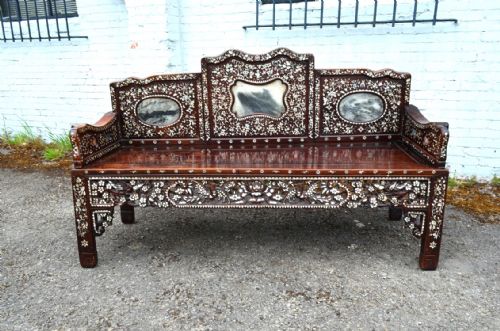


Inlaid Wood Bench
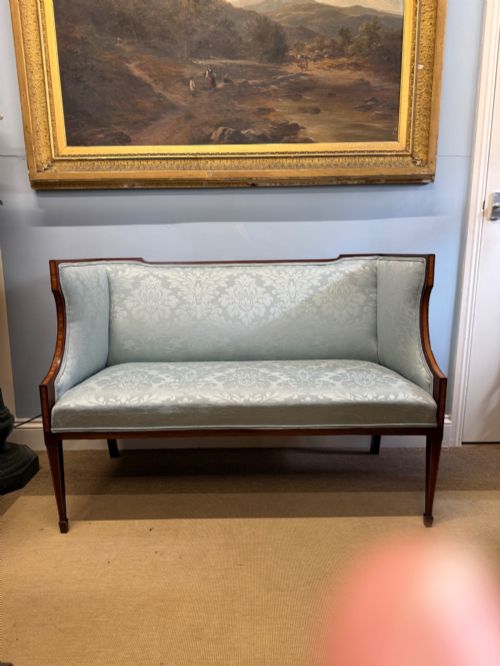
An inlaid wood bench brings warmth and pattern to a hallway or parlour, offering a seat paired with meticulous surface decoration.
Inlaid Wood Bench
An inlaid wood bench brings together structural seating and detailed surface ornamentation, spanning forms from long settees to compact window seats and piano stools. When you search for an inlaid wood bench, you encounter various seating formats designed for parlours, bedrooms, and reception rooms across multiple eras.
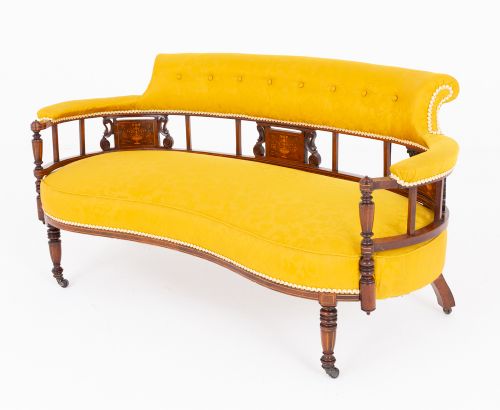
The pieces appearing in these listings stretch from the Victorian and Edwardian periods into the early twentieth century, taking shape as two-seater sofas, settees, and regional specialisms like Syrian or Chinese export work. Mahogany, rosewood, and satinwood provide the primary timber foundations for these seating designs.
Makers and workshops from different traditions contribute distinct silhouettes, from British Edwardian parlours to Anglo-Indian and Dutch marquetry workshops. Buyers find that these benches function equally well as practical seating and as decorative focal points within traditional and eclectic interiors.
Quality markers
The distinction between standard examples and superior pieces rests largely on the complexity and precision of the surface decoration. Crisp, tightly fitted marquetry and varied contrasting materials indicate higher workshop standards.
Timber selection heavily influences overall merit, with rich grain patterns in rosewood, mahogany, or satinwood elevating the presence of the seat. Structural integrity, including the rigidity of the joints and the original condition of the inlaid elements, dictates the long-term desirability of each piece.
Piano stools occasionally moonlight as hidden seats for clandestine sheet music storage.
James Shoolbred & Co.
The Inlaid Wood Bench Glossary
- Marquetry
- The art and craft of applying decorative veneer pieces to a structure to form intricate designs. This technique allows for elaborate pictorial or geometric compositions across the seat back or frame.
- Satinwood
- A durable, lustrous timber originating from tropical regions, valued for its pale golden colour and smooth grain. It frequently serves as a contrasting veneer or primary wood in Edwardian pieces.
- Settle
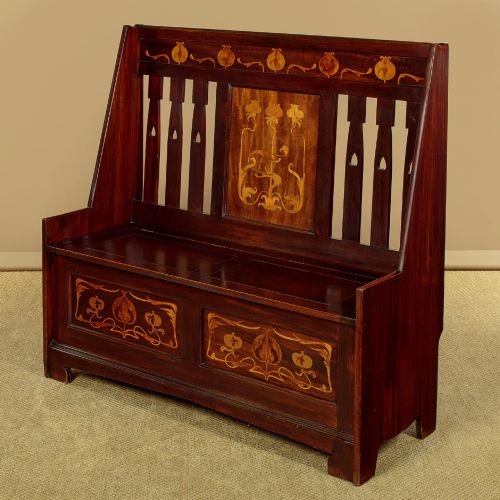
- A wooden bench featuring a high back, solid arms, and often an enclosed base to block draughts. Historic examples often incorporate panelled or inlaid decoration.
- Bone inlay
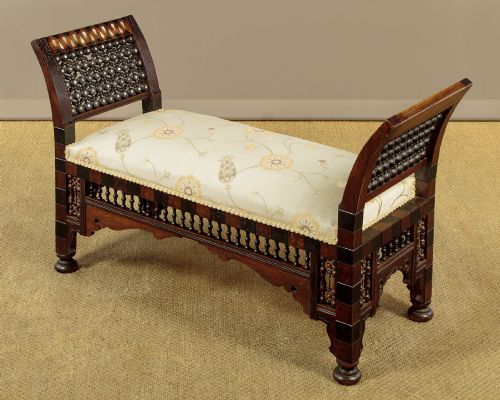
- The practice of embedding thin sections of carved bone into timber channels to create bright, contrasting linear motifs. This technique appears across various regional and revival styles.
Inlaid Wood Bench: Frequently Asked Questions
How do I care for an inlaid wood bench?
Keep the timber conditioned with appropriate furniture wax and avoid placing the piece in direct sunlight or near heat sources, which can dry out the wood and loosen delicate inlay elements.
Dust regularly with a soft, dry cloth to prevent grime accumulation in the microscopic crevices surrounding the marquetry or bone details.
What periods do these benches cover?
The selections span the late nineteenth century through the Edwardian era and into the early twentieth century, including Victorian, Arts and Crafts, and various revival styles.
Each period brings distinct stylistic cues, from heavy Victorian rosewood to lighter Edwardian satinwood and mahogany designs.
Where should I place an inlaid bench?
These pieces suit low-traffic hallway settings, bedroom ends, or quiet parlour corners where their decorative surfaces remain visible without enduring heavy daily wear.
Ensure the placement protects delicate upholstery fabrics and intricate mother-of-pearl or bone inlays from accidental impacts.
How do I distinguish Edwardian from Victorian pieces?
Victorian examples generally feature darker, denser timbers like rosewood and heavier proportions, often paired with elaborate carving and deep-toned marquetry.
Edwardian pieces tend to display lighter mahogany or satinwood frames with airier proportions and refined, delicate inlay patterns.