
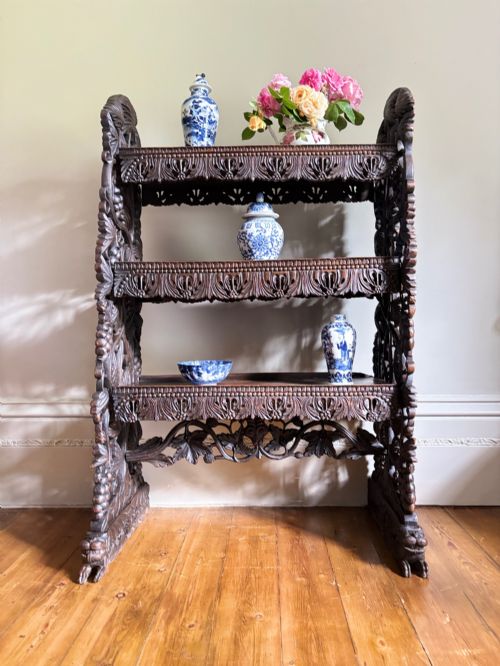
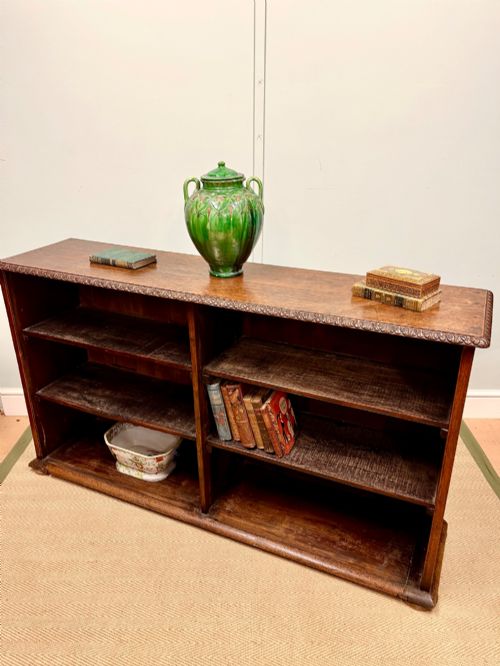
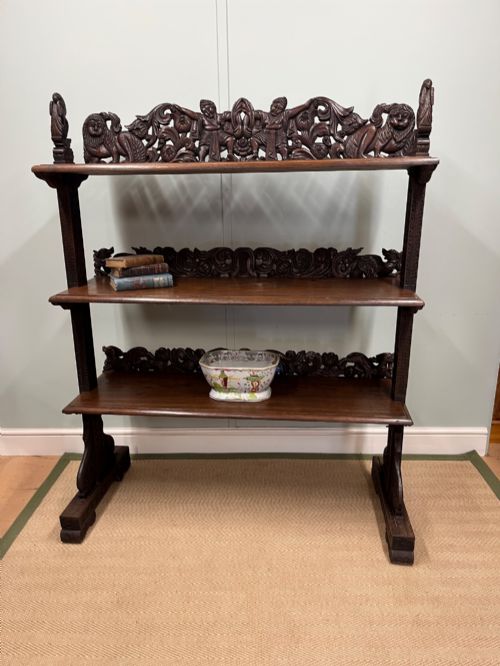


Anglo Indian Carved Shelf
An anglo indian carved shelf brings dense colonial craftsmanship and rich timber straight to a plain wall.
Anglo Indian Carved Shelf
An anglo indian carved shelf spans wall brackets, multi-tiered units, and floor-standing whatnots originating from the nineteenth century. The selection leans heavily towards wall-mounted timber shelves and multi-tier buffets carved in rich hardwoods.
Makers shaped these items in styles crossing Anglo-Indian, Victorian, and Anglo-Indian Colonial traditions. Buyers encounter wall brackets alongside larger three-tier buffets, side cabinets, and revolving bookcases.
How they were made
Artisans utilised dense timbers including teak, satinwood, rosewood, padauk, mahogany, and ebony. These woods provided the heavy structure necessary for deep, intricate carving.
Brass elements sometimes supplemented the construction, while ebonisation darkened specific mahogany or timber surfaces for contrast. The joinery supported elaborate fretwork and tiered frameworks without modern adhesives.
Listings combine nineteenth-century dates with robust tropical hardwoods like padauk, teak, and satinwood alongside traditional mahogany.
What varies in quality
Depth and precision of the chisel work define the upper tier of these pieces. Crisp foliage and animal motifs separated standard production from superior commission pieces.
The choice of timber creates a natural hierarchy, where dense padauk and figured satinwood command greater visual weight than simpler softwoods or plain secondary timbers.
The Anglo Indian Carved Shelf Glossary
- Padauk
- A heavy, durable tropical hardwood with a deep reddish-brown tone. It holds intricate carved details exceptionally well.
- Etagere
- A piece of furniture consisting of a set of open shelves for displaying small objects. The term often overlaps with a whatnot in nineteenth-century listings.
- Fretwork
- Ornamental perforated wood carving produced by fretsawing. It creates delicate, open patterns across panels and mirror frames.
Anglo Indian Carved Shelf: Frequently Asked Questions
How were anglo indian carved shelves used?
These pieces served primarily for displaying small decorative objects, porcelain, and books in nineteenth-century drawing rooms.
Wall-mounted versions held lighter ornaments, while floor-standing whatnots and buffets accommodated heavier volumes and larger decorative displays.
What woods will I find?
The listings show a strong preference for dense tropical hardwoods such as teak, padauk, satinwood, rosewood, and ebony.
Mahogany and assorted hardwoods also appear frequently, often enhanced by intricate hand-carved detailing across the tiers.
Are wall brackets heavy?
Solid timber construction means even smaller wall brackets possess considerable weight for their size. Secure wall fixings are essential for safe mounting.
Larger three-tier buffets and side cabinets require floor placement due to their substantial hardwood frames.
How do I spot the period?
Nineteenth-century pieces display hand-cut joinery and deep relief carving executed in heavy tropical timbers. Surface patination develops naturally over decades of handling.
Stylistic markers bridge Victorian domestic tastes with colonial craftsmanship traditions from regions like Burma and Ceylon.