
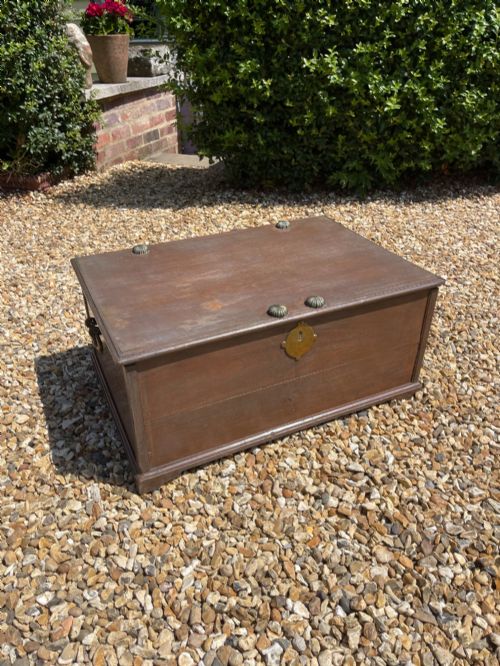
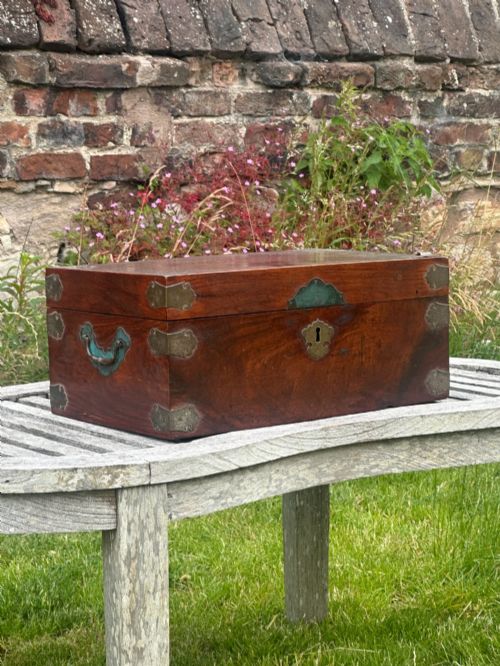
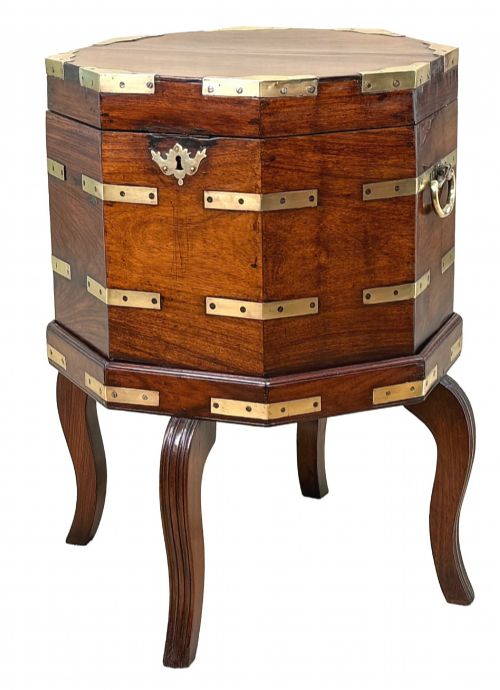


Anglo Indian Campaign Chest
When you handle an anglo indian campaign chest, you hold portable history built for officers on the move.
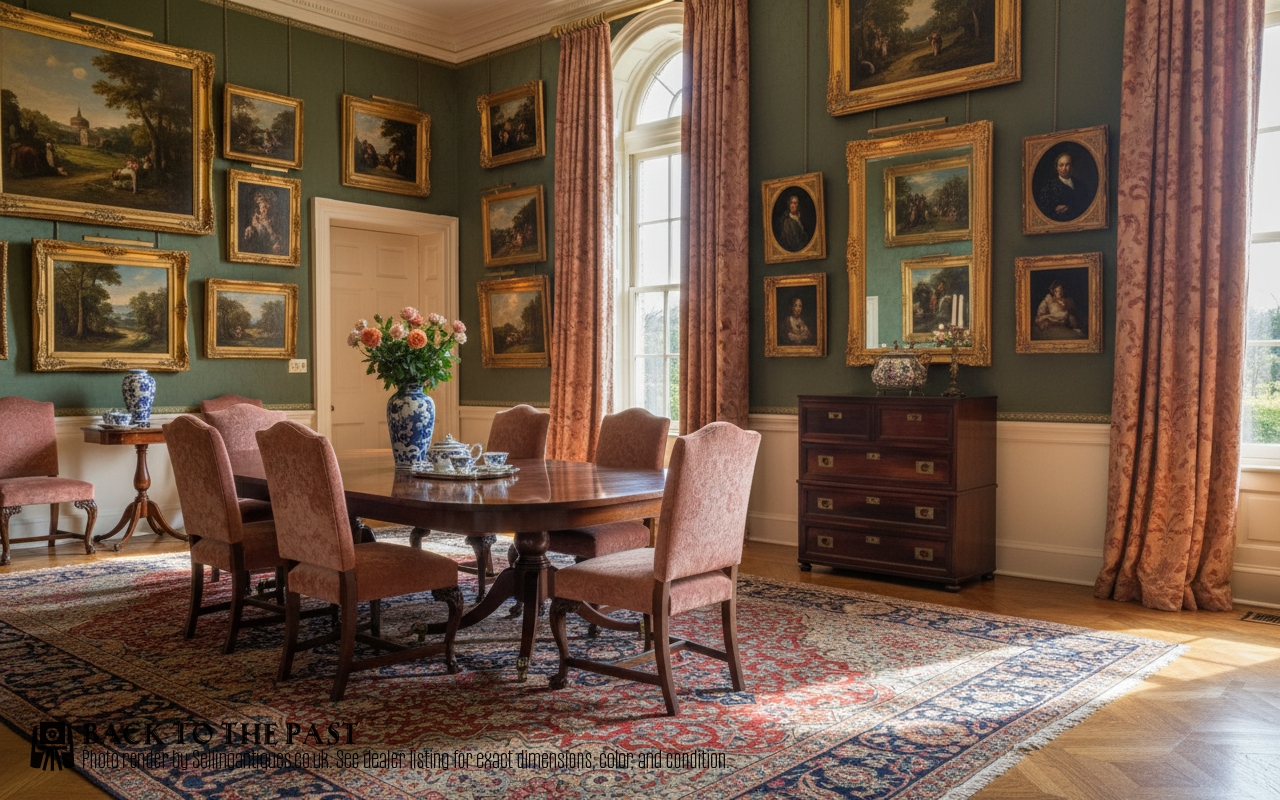
Anglo Indian Campaign Chest
When searching for an anglo indian campaign chest, you are looking at utilitarian furniture built for colonial officers, merchants, and travellers across the nineteenth century. These pieces divide into sections for transport on horseback, ships, or trains, allowing efficient movement across territories.
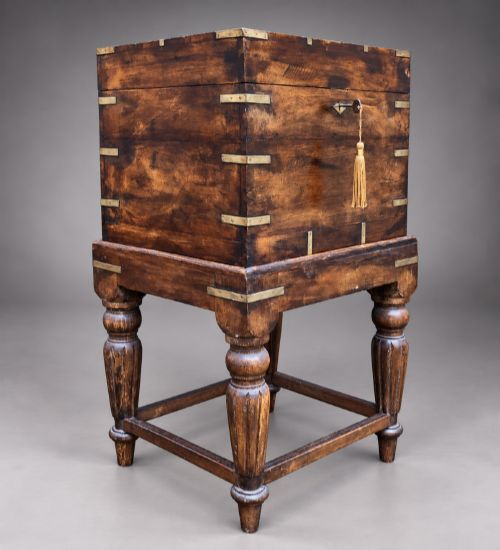
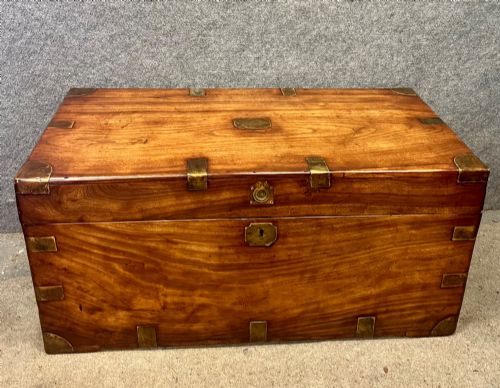
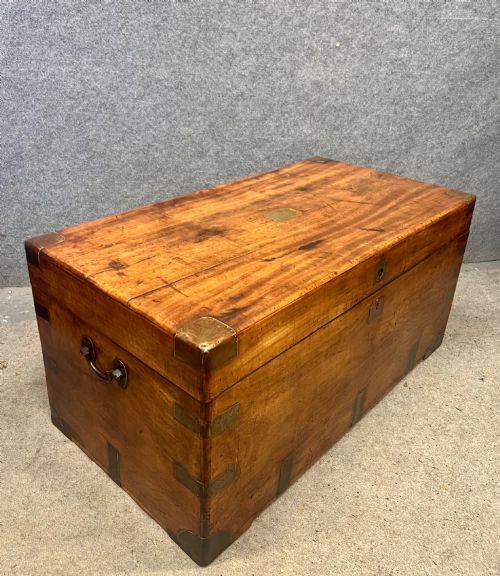
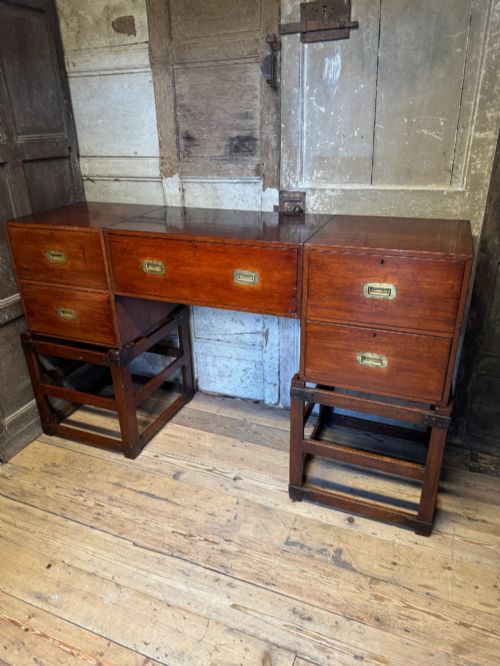
The most common formats on this page are two-section chests of drawers fitted with inset brass handles and reinforced corners. Alongside standard drawer arrangements, you will find secretaire chests with fitted writing desks, trunk-style storage boxes, and specialist pieces such as cellarettes.
Materials and construction
Craftsmen built these items from dense, durable timbers suited to tropical climates, primarily selecting teak, padouk, camphor wood, and rosewood. These woods resist humidity and warping while providing a heavy, robust structure for long journeys.
Makers reinforced the joints and edges with brass straps, corner plates, and flush handles to prevent damage during transit. The hardware is secured with numerous screws, binding the timber sections together securely.
Listings feature items from the eighteenth century up to 1920, constructed in teak, camphor wood, padouk, mahogany, rosewood, and satinwood.
Judging quality
Quality rests on the selection of timber and the precision of the brass work. Superior examples utilise solid, highly figured woods like padouk or rosewood rather than secondary timbers, paired with heavy cast brass mounts rather than thin pressed sheet metal.
The integrity of the partitioning and the complexity of the interior fittings also distinguish finer items. A secretaire drawer with neat pigeonholes, hidden compartments, and smooth sliding mechanisms represents a higher tier of workmanship than a basic storage box.
The Anglo Indian Campaign Chest Glossary
- Secretaire chest
- A chest where one drawer pulls out and folds down to reveal a fitted writing surface with small drawers and pigeonholes. This combines desk and storage functions into a single transportable unit.
- Padouk
- A heavy, durable exotic hardwood with a reddish-brown colour that darkens with age. It was favoured by colonial makers for its stability and resistance to insects.
- Camphor wood
- A fragrant timber used frequently for trunks and storage chests to protect textiles from moths and dampness. The wood retains a distinct herbal scent long after manufacture.
- Brass bound
- Furniture edged and reinforced with brass strips and corner brackets to withstand the rigours of travel. This metalwork protects vulnerable joints from impact.
Anglo Indian Campaign Chest: Frequently Asked Questions
Why are these chests made in sections?
The modular construction allowed heavy furniture to be dismantled into manageable parts for loading onto pack animals or ships. This design made long-distance travel practical for officers relocating between posts.
Each section typically locks into the adjacent unit using brass brackets or pins, ensuring stability when assembled in temporary quarters.
How do I care for camphor wood furniture?
Keep these items away from direct sunlight and extreme radiator heat to prevent the timber from drying out or splitting. Natural wax applied occasionally helps maintain the lustre of the wood.
Avoid placing damp objects directly on the surface, as moisture can mark the polished finish of older tropical hardwoods.
What is the difference between a trunk and a chest?
A trunk generally opens from a single top lid and functions as an open storage well for bulkier garments or equipment. It often includes rope or metal carrying handles on the sides.
A chest contains horizontal drawers accessed from the front, offering structured organisation for smaller clothing items and documents.
How do I date an anglo indian chest?
Dating relies on examining the construction methods, secondary woods, and the style of the brass hardware. Earlier pieces from the eighteenth and early nineteenth centuries often feature simpler brass strapping and hand-cut dovetails.
Victorian examples from the mid to late nineteenth century frequently display standardised recessed brass handles and more complex internal locking mechanisms.