
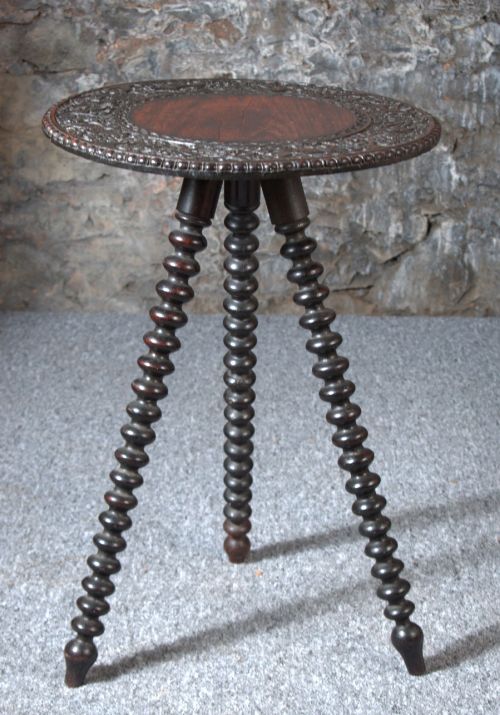


Anglo Burmese Furniture
Anglo burmese furniture brings dense colonial carving and sturdy tropical timber straight into a room, offering genuine historic character for traditional interiors.
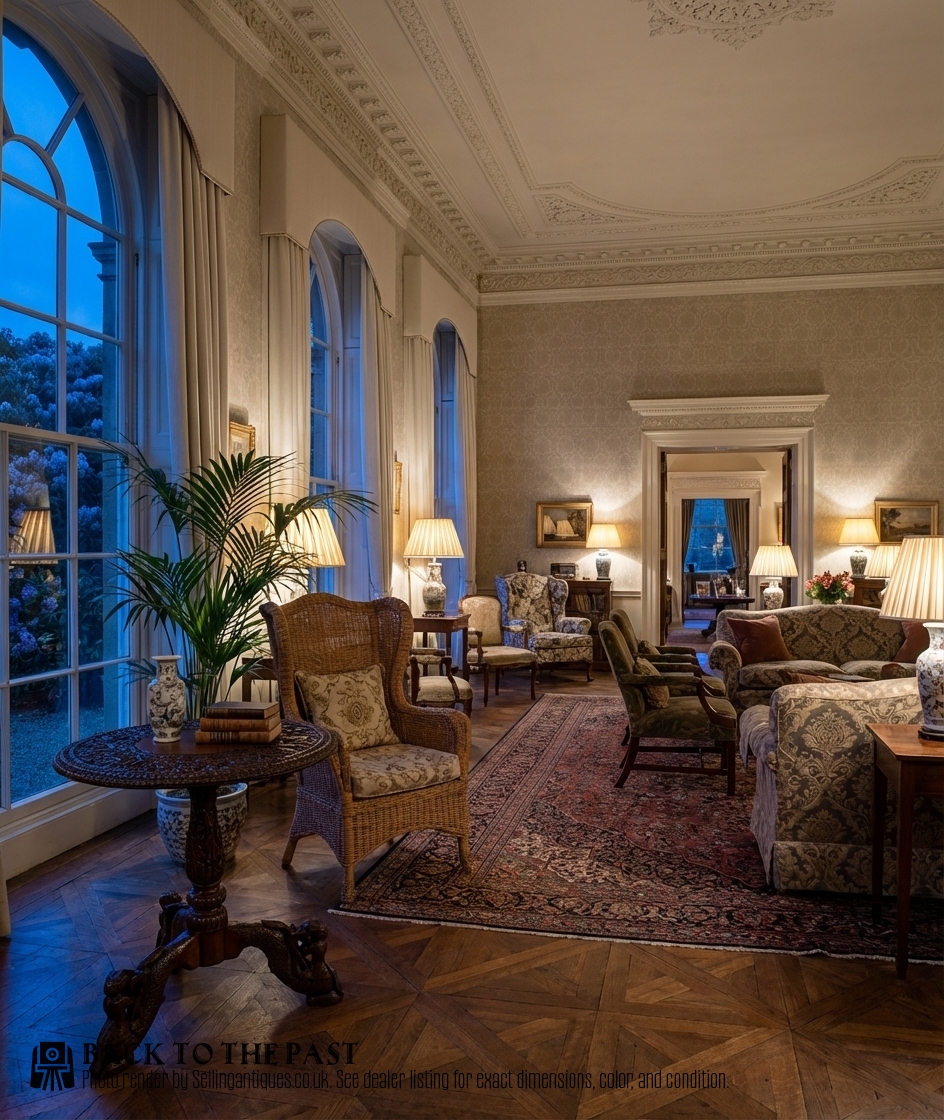
Anglo Burmese Furniture
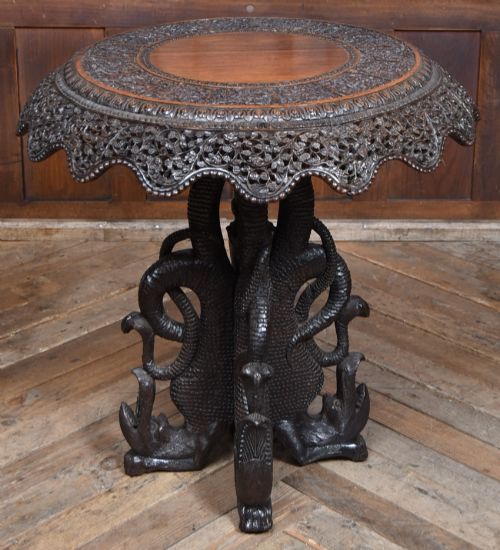
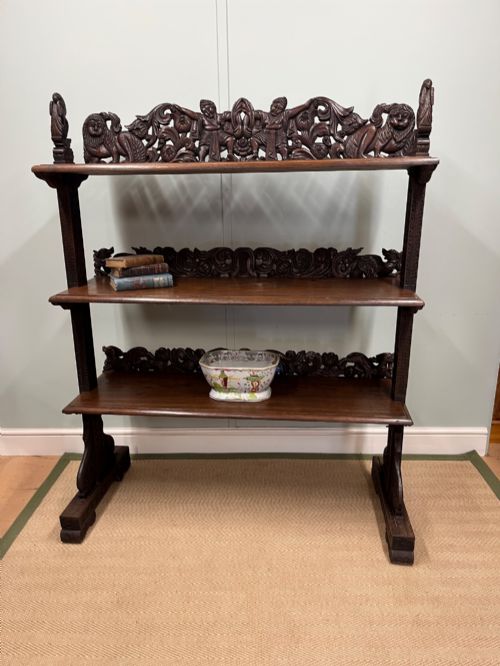
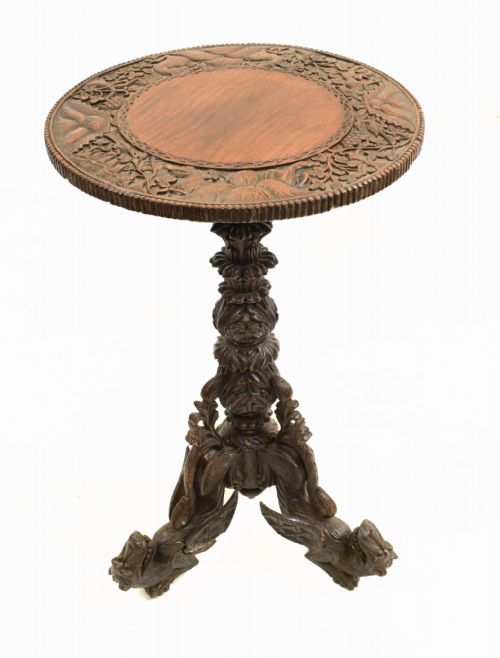
Anglo burmese furniture spans heavy sideboards, tiered buffets, and occasional tables originating from the nineteenth century. Buyers encounter carved padouk wood side tables and teak occasional pieces most frequently on this page.
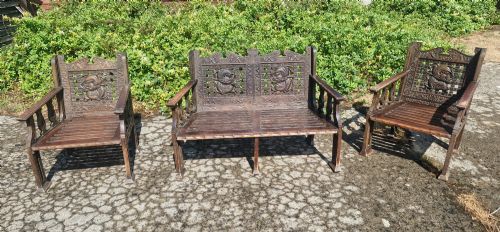
Makers produced practical household forms including console tables, folding chairs, and newspaper racks alongside ornate temple and armchair seating suites. These pieces combine British colonial utility with intricate Burmese vernacular carving traditions.
The objects date largely from the Victorian era, spanning decades from eighteen-forty through to nineteen-thirty. Most pieces utilise dense tropical hardwoods finished with elaborate hand-carved relief details.
Materials and construction
Artisans constructed these items primarily using solid teak, padouk wood, and assorted tropical hardwoods. These heavy timbers provided the structural strength required for deeply undercut carving work.
Craftsmen applied hand-carved relief decoration across structural surfaces, utilising brass hardware and occasional needlepoint upholstery on seating suites. Lacquer finishes appear on specific table surfaces alongside painted treatments on village furniture.
Several seating pieces feature carved elephant legs and peacock motifs, bringing local wildlife directly into Victorian parlours.
Assessing quality and craftsmanship
Quality rests upon the depth and precision of the hand carving across the timber surface. Crisply defined foliage and animal motifs separate superior items from softer, shallower execution.
The choice of dense timbers such as padouk or teak ensures lasting structural integrity. Superior examples maintain solid joinery without excessive movement in the heavy wood panels.
The Anglo Burmese Furniture Glossary
- Padouk wood
- A dense, durable tropical hardwood favoured for nineteenth-century colonial furniture production. It accepts intricate hand carving without splintering.
- Tilt top table
- A table featuring a hinged top that folds flat when not in use. This mechanism saved space in colonial household interiors.
- Folio stand
- A vertical rack designed for holding newspapers, folios, or magazines. These stands often feature folding wooden frames and carved panels.
- Tiered buffet
- A large sideboard or serving cabinet featuring multiple open display shelves supported by carved pillars. These units provided substantial storage in dining spaces.
Anglo Burmese Furniture: Frequently Asked Questions
What is anglo burmese furniture?
Anglo burmese furniture refers to nineteenth-century wooden pieces made in Burma during British colonial rule. These items combine British domestic forms with traditional Burmese woodcarving.
Craftsmen built these furnishings from dense tropical hardwoods like teak and padouk. The resulting pieces range from small occasional tables to large sideboards and seating suites.
How do I clean teak and padouk furniture?
Clean these wooden surfaces using a soft, dry cloth to remove dust from the deep carvings. Avoid harsh chemical cleaners that strip the historic finish from the timber.
Condition the wood occasionally with appropriate natural wax to maintain the grain. Keep the pieces away from direct heat sources to prevent the heavy tropical timber from splitting.
Where was this furniture made?
Workshops in Burma produced these carved items during the nineteenth and early twentieth centuries. Local artisans utilised native timbers available in the region.
British residents and administrators commissioned or purchased these goods for colonial residences. Merchants subsequently shipped many of these items back to Britain.
How do I identify a nineteenth-century piece?
Examine the timber species, construction methods, and carving style to determine the age of an item. Nineteenth-century examples typically utilise solid teak or padouk with hand-carved relief decoration.
Look for traditional joinery methods and signs of age within the secondary woods. The presence of nineteenth-century hardware also helps confirm the manufacturing period.