


Aneroid Barograph Recorder
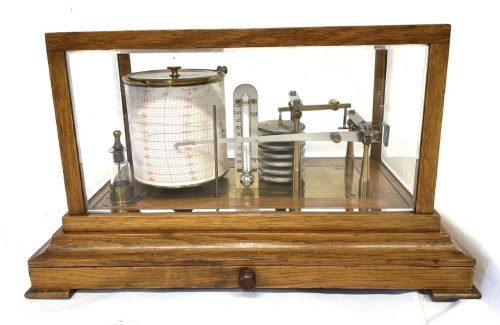
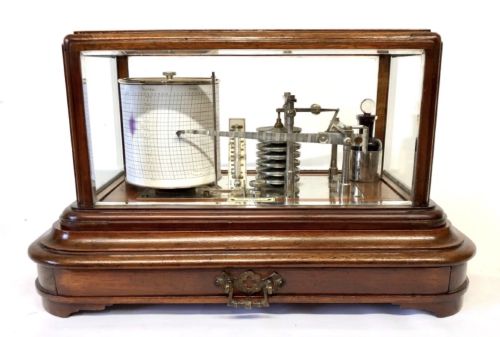
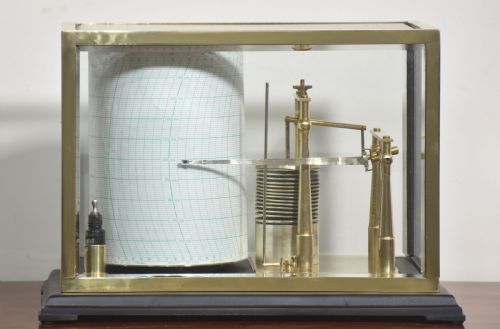
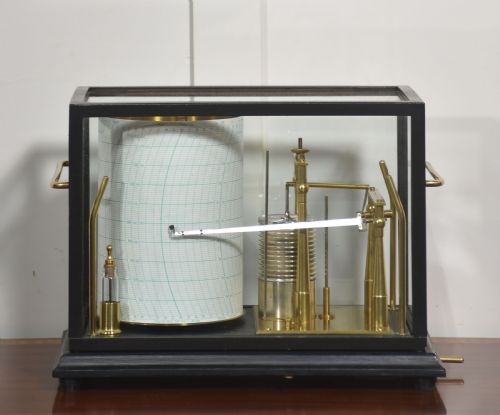
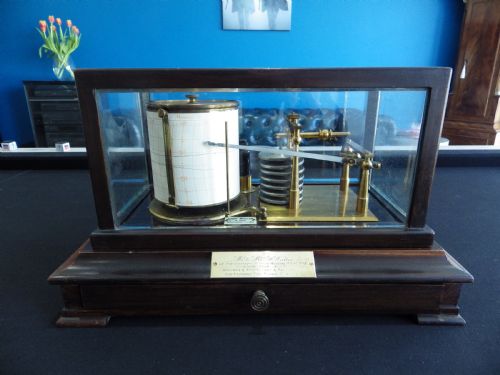
An aneroid barograph recorder is a scientific instrument that charts atmospheric pressure over time, housed in a timber case with glass panels.
Aneroid Barograph Recorder
An aneroid barograph recorder is a mechanical recording barometer that maps shifts in weather onto a rotating drum holding a paper chart. When a buyer searches for this phrase, they are looking at self-recording meteorological instruments designed to trace continuous atmospheric data.
The versions most commonly met on this page span the Victorian, Edwardian, and interwar periods, with dates ranging from the late nineteenth century into the 1940s. These pieces take the form of scientific instruments that combine a aneroid barometer mechanism with a clockwork recording cylinder.
Most examples sit within fitted wooden enclosures, frequently featuring bevelled glass panels to view the delicate brass levers and bellows inside. Some editions include supplementary thermometers or dedicated storage drawers beneath the main bed for spare recording charts.
Materials and construction
The outer enclosures are built from dense timbers such as oak, mahogany, and walnut, frequently finished with bevelled glass panels to protect the internal movement while keeping the recording drum and arms visible. These wooden cases often incorporate small brass feet, hinges, and carrying handles.
Inside the case, the mechanism relies upon brass plates, steel springs, and stacked vacuum capsules that expand or contract with changing air pressure. A linked arm holding a nib moves across a paper chart mounted on a clockwork-driven drum.
Some models carry railway company interest, recording barometric pressure as locomotives rumbled past the station office.
Distinctions in standard
The standard of an aneroid barograph recorder is often judged by the crispness of the timber joinery and the clarity of the maker's signature engraved on the bedplate or clockwork dial. Well-appointed models feature heavy bevelled glass panes fitted tightly into rebated frames rather than plain sheet glass.
Precision in the brass levers and the smoothness of the clockwork drum dictate how reliably the instrument tracks barometric fluctuations over a weekly cycle. Inclusion of original signed components, auxiliary thermometers, and intact chart drawers elevate the standing of an individual piece.
Short And Mason·Negretti And Zambra·R Fuess·Jules Richard·Gaupp And Co
The Aneroid Barograph Recorder Glossary
- Aneroid barometer
- An instrument that measures atmospheric pressure using expanding metal vacuum capsules rather than liquid mercury. It forms the primary sensing element within these recording devices.
- Chart drawer
- A shallow compartment built into the wooden base of the case designed to hold spare paper recording graphs. This addition keeps consumables neatly stored directly beneath the instrument.
- Clockwork drum
- The rotating brass cylinder driven by an internal spring mechanism that carries the graduated paper chart. It completes one rotation over the span of a week.
- Bevelled glass
- Pane edges ground and polished at an angle before being set into the wooden case. This traditional glazing method catches light and adds depth to the viewing windows.
Aneroid Barograph Recorder: Frequently Asked Questions
How does a barograph work?
A stack of metal vacuum capsules expands and contracts as atmospheric pressure rises and falls. This physical movement transfers through a train of delicate brass levers to a pen arm.
The pen arm rests against a paper chart secured around a rotating clockwork cylinder, tracing a continuous ink line that records weather trends over seven days.
Where should I place a barograph?
These instruments require a stable surface away from direct sunlight, strong heat sources, and heavy vibrations that might disturb the sensitive internal mechanism or the clockwork drum.
A study, hallway, or living room sideboard makes a suitable spot where the mechanical movement and rotating drum can be viewed safely.
How do I read the charts?
The vertical axis on the paper chart shows atmospheric pressure measured in millibars or inches of mercury, while the horizontal grid lines represent time across the days of the week.
A rising ink trace indicates improving weather, whereas a downward slope signals approaching storms or unsettled conditions.
How do I date a wooden barograph?
Dating relies upon stylistic clues within the timber case, such as Edwardian inlaid mahogany or heavier Victorian oak framing, alongside any engraved signatures on the brass bedplate.
Makers' marks and retail signatures, including those from firms like Harrods or Short and Mason, help narrow down the period of production.