


Antique Barometer Drawer
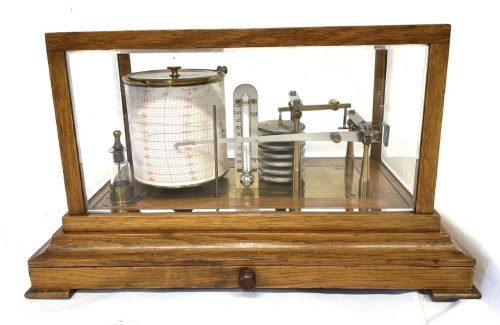
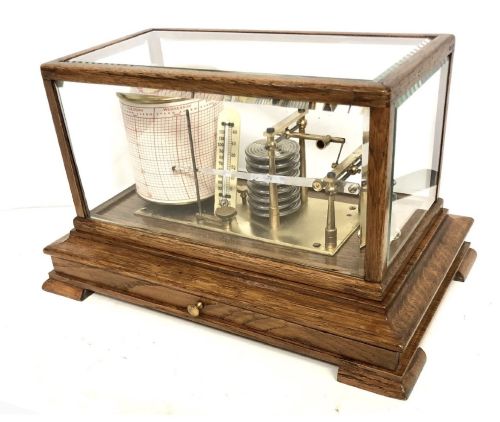
These antique barometer drawer pieces are recording weather instruments housed in wooden cases with fitted lower storage spaces for paper charts.
Antique Barometer Drawer
When you search for an antique barometer drawer, you are looking at barographs and scientific instruments designed to record atmospheric pressure over a weekly period. These scientific instruments combine a sensitive mechanical recording drum with a lower pull-out compartment specifically sized to store spare recording paper charts.
The versions you are most likely to meet on this page date from the Victorian and Edwardian periods through to the nineteen thirties. They appear predominantly in oak or mahogany five-glass cases, frequently incorporating thermometers and barometer dials alongside the main recording mechanism.
Construction and materials
These instruments rely on seasoned hardwoods such as oak, mahogany, and walnut to build the protective cases that shield the delicate internal brass and steel mechanisms. Glass panels, often bevelled, are fitted into the timber frames to allow a clear view of the operating drum and levers while protecting them from dust and air currents.
Makers integrated paper charts within the fitted drawer beneath the main recording bed, ensuring that spare recording sheets remained flat and dry close to the instrument. Inlays in styles ranging from Art Nouveau to Edwardian decorative motifs were occasionally applied to the timber exteriors.
Assessing quality and craftsmanship
The distinction between standard production pieces and finer examples rests in the precision of the brass movements and the quality of the timber casing. Signed pieces bearing the names of established instrument makers command greater attention due to the higher grade of their mechanical components and recording accuracy.
Cabinetwork details such as bevelled glass, tightly fitted joinery, and well-constructed chart drawers indicate superior execution by the maker. The condition of the original paper charts and the legibility of the retailer or maker inscriptions also influence the standing of the piece.
Short & Mason London·Casella London·Baines Harrogate·Harrods of London·Negretti & Zambra
The Antique Barometer Drawer Glossary
- Barograph
- A self-recording barometer that automatically plots atmospheric pressure on a paper chart over a set duration. This mechanical instrument uses an aneroid mechanism connected to an inked nib.
- Chart drawer
- The integrated lower storage compartment designed to hold spare recording papers beneath the main instrument. This pull-out space keeps records organised close to the recording drum.
- Bevelled glass
- Glass panes featuring an angled edge ground down around the perimeter to fit neatly into timber rebates. This treatment adds a refined visual detail to the instrument case.
- Thermometer
- A secondary weather indicator frequently mounted alongside the main recording drum to show ambient temperature. These elements provide a complete record of atmospheric conditions.
- Aneroid
- A type of barometer operating without liquid by measuring the changes in pressure on a flexible metal box. The movement translates expansion and contraction into needle or arm deflection.
Antique Barometer Drawer: Frequently Asked Questions
What is an antique barometer drawer used for?
These instruments were utilised to measure and record barometric pressure continuously over the course of a week. The lower drawer provided a dedicated storage space for keeping replacement paper recording charts flat and clean.
They served as functional meteorological tools in homes and offices, allowing observers to track weather trends by inspecting the inked lines left on the rotating drum.
How do I date an oak or mahogany cased barograph?
Dating relies on examining the timber species, the style of the case construction, and any maker signatures or retailer stamps present on the instrument. Edwardian and Victorian examples typically display heavier timber framing and specific brass casting styles.
Later pieces from the nineteen thirties often feature lighter oak finishes and simpler case designs without ornate mouldings. Checking the paper chart drawer for original printed dates or retailer labels can also help narrow the period.
Where should I place a barograph in my home?
These instruments require a stable surface away from direct sunlight, radiators, and draughts to ensure the internal mechanism records accurate pressure changes. Placing the piece on a sturdy sideboard or desk protects the sensitive brass components from vibrations.
Because the five-glass case offers an all-round view of the mechanism and the chart drawer sits conveniently below, a waist-height surface allows easy viewing of the rotating drum.
How do I tell different makers apart?
Maker identification depends on reading the engraved signatures on the metal bedplate, the paper recording drum, or the enamel barometer dial. Prominent firms such as Short & Mason or Negretti & Zambra inscribed their names directly onto the scientific components.
Retailers like Harrods often added their own names to the instruments they sold. Examining the style of the brass levers and the quality of the timber case can also point toward specific workshops.
What maintenance do these wooden cased instruments need?
Routine care involves keeping the timber clean with a soft cloth and occasionally dusting the glass panels with a dry brush. The internal brass mechanism should be handled by a specialist if servicing is required.
Ensuring the chart drawer remains free from dampness helps protect the spare paper records stored inside the base. Regular checking prevents moisture from affecting the timber casing and the metal components.