
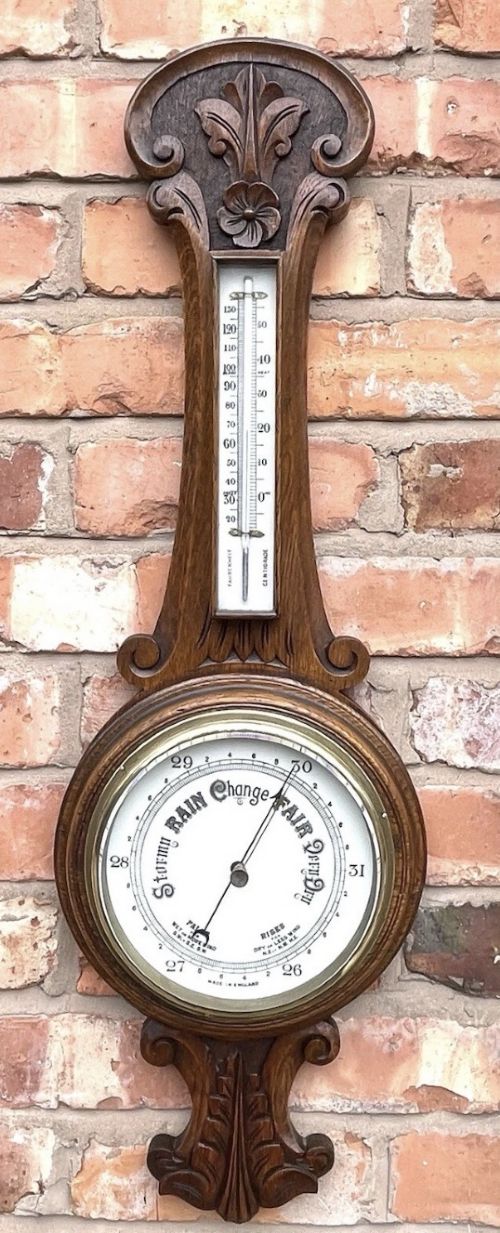


Aneroid Banjo Barometer
An aneroid banjo barometer measures atmospheric pressure through a sealed metal capsule rather than liquid mercury, taking the distinctive drop-shape that suits a hallway wall.
Aneroid Banjo Barometer
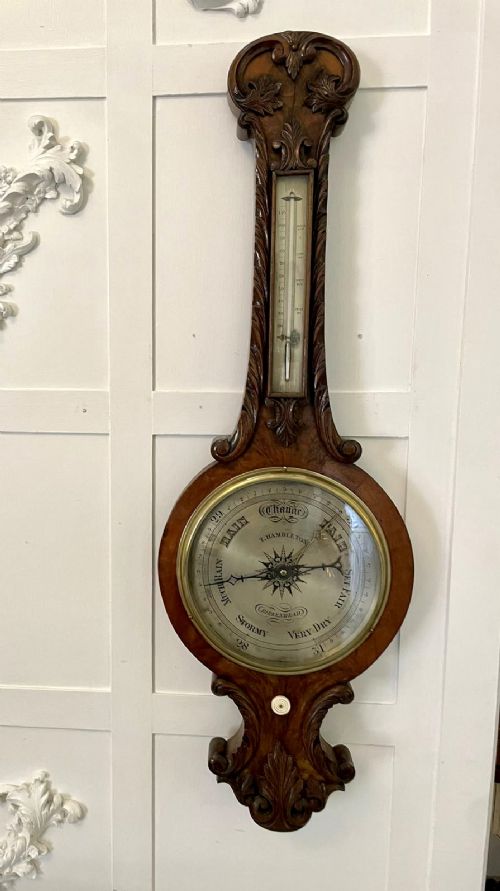
An aneroid banjo barometer combines a domestic weather glass with a wooden wall case shaped like the musical instrument, appearing frequently in Victorian and Edwardian iterations. These pieces served both practical forecasting and decorative domestic display in nineteenth and early twentieth century hallways and reception rooms.
The selection here draws principally from Victorian and Edwardian examples, alongside pieces from the nineteenth century and the opening decades of the nineteen hundreds. Wall hanging formats dominate the inventory, often combining the pressure dial with a thermometer or a clock face.
How they were made
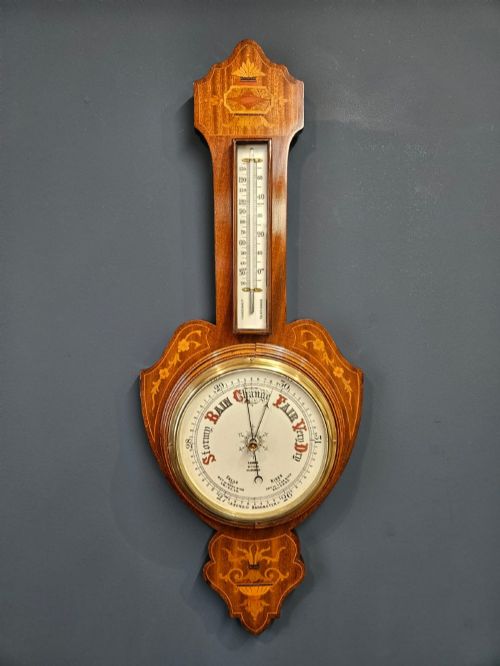
Cases utilise dense hardwoods including oak, mahogany, walnut, burr walnut, and rosewood, sometimes enhanced with satinwood inlay, mother-of-pearl, or marquetry. Timber selection dictated the visual weight of the wall hanging, with carved oak and polished burr walnut providing robust housing for the internal brass and glass mechanisms.
The mechanical heart relies on the aneroid capsule, a corrugated metal box evacuated of air that expands and contracts with barometric shifts, moving pointers across a graduated dial protected beneath glass. Makers integrated these delicate pressure-sensing assemblies into carved wooden frames designed to hang securely from domestic walls.
Aneroid Banjo Barometer Retail Price Guide 2026
Typical asking prices for aneroid banjo barometer among the pieces listed under this phrase on Sellingantiques today, from the lower quarter to the upper quarter. They describe what is for sale here now, not the wider market.
Oak, mahogany, walnut, burr walnut, rosewood, and satinwood provide the primary timber foundations across these aneroid banjo barometer listings.
What varies in quality
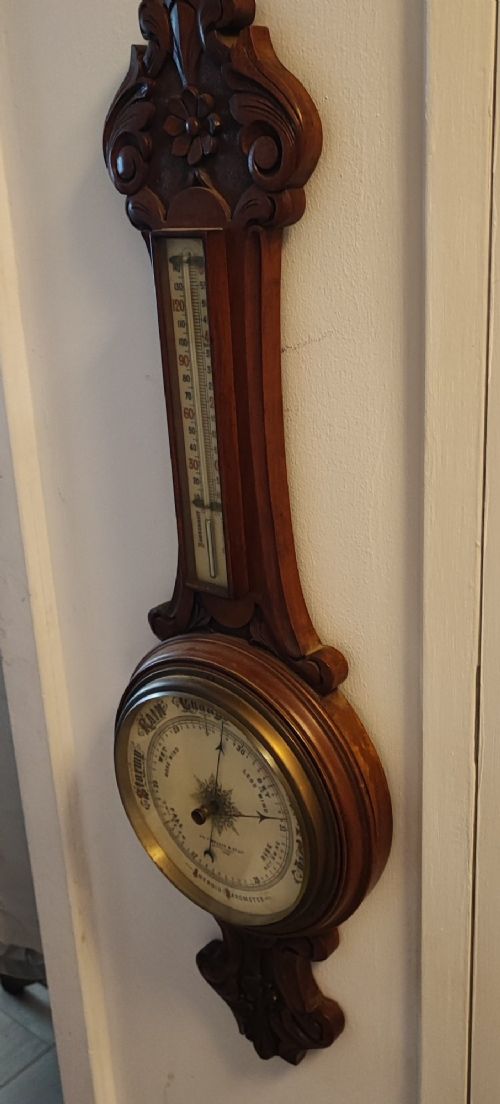
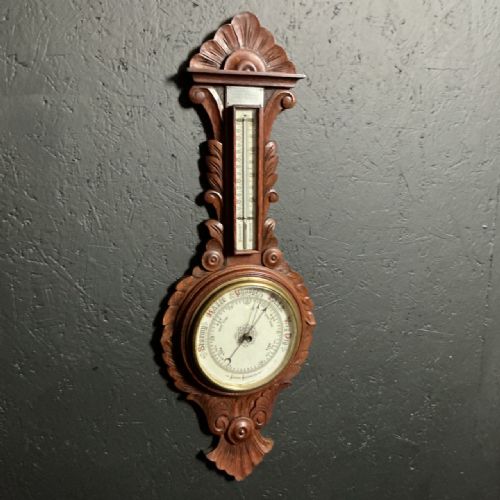
Depth and crispness of wood carving separate standard production pieces from finer workshop outputs, particularly where foliage, scrolls, or Neo-Classical motifs adorn the mahogany or oak cases. Superior examples display clean joinery, well-figured timber veneers like burr walnut or rosewood, and balanced proportions across the neck and base of the banjo shape.
The sophistication of the dial face and auxiliary instruments, such as integrated thermometers or clock movements, marks the tier of the piece. High-grade specimens incorporate engraved brass bezels, protective convex glass, and supplementary indicators executed with precision.
W Watson & Sons·Maple & Co·Hayward of Ashford·L. Malacrida·CHADBURNS CASTLE ST. LIVERPOOL·CSSA Ltd London·Winstanley of Wigan
The Aneroid Banjo Barometer Glossary
- Aneroid barometer
- An instrument that measures atmospheric pressure using a flexible metal vacuum capsule instead of liquid mercury. This design allowed barometers to be mounted upright or at any angle without spilling.
- Banjo barometer
- A wall barometer housed in a case shaped like a banjo, featuring a narrow neck leading down to a larger circular dial base. This layout accommodated weather dials, thermometers, and hygrometers.
- Marquetry
- The art of applying decorative pieces of veneer to a wooden structure to form geometric or pictorial designs. It appears on select Neo-Classical cases.
- Bezel
- The metal ring that holds the glass face in position over the barometer dial. Better examples utilise heavy cast brass with secure fixings.
Aneroid Banjo Barometer: Frequently Asked Questions
How do aneroid banjo barometers work?
Inside the wooden case, a sealed corrugated metal box expands or contracts as atmospheric pressure rises and falls. A system of delicate levers transfers this movement to the indicator hand visible on the dial.
Unlike traditional mercury columns, this closed metal system contains no liquid, making the instrument stable and suitable for vertical wall hanging.
How do I date an aneroid banjo barometer?
Dating relies on the combination of timber, case style, and dial signature. Victorian examples often feature heavy carved oak or burr walnut, while Edwardian versions lean towards lighter inlaid mahogany.
Inscribed maker signatures or retailer details on the dial face provide the most reliable pointers to a specific period or workshop origin.
Where should I hang a banjo barometer?
Select an interior wall away from direct sunlight, central heating radiators, and constant draughts. Rapid temperature fluctuations can affect the internal metal capsule and skew weather readings.
Most pieces use a secure wall bracket positioned to bear the weight of the dense hardwood case safely.
What is the difference between Victorian and Edwardian models?
Victorian aneroid banjo barometers typically display deeper wood carving, robust oak or rosewood housings, and substantial proportions. They prioritise heavy decorative presence in reception spaces.
Edwardian alternatives often introduce finer inlay work, sleeker mahogany or satinwood surfaces, and slightly more restrained outlines suited to lighter interior schemes.