

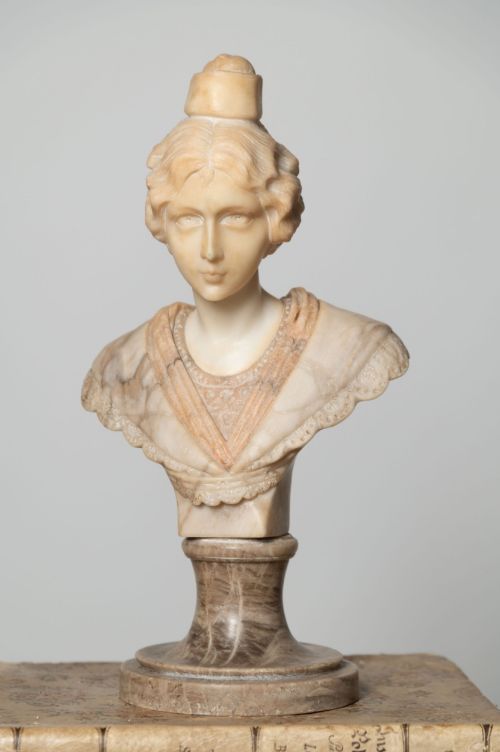
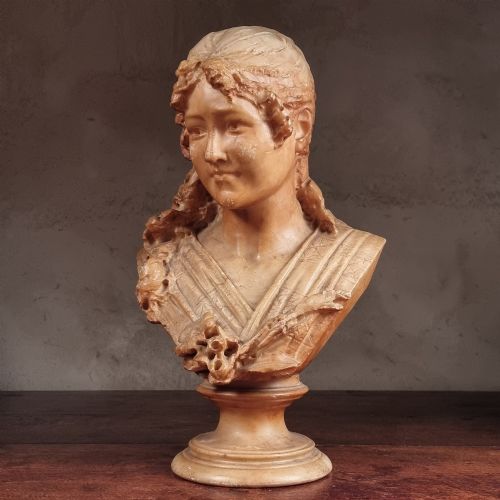
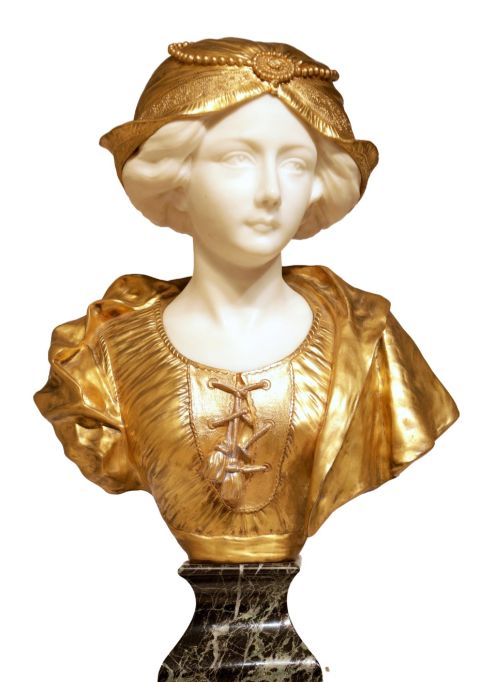
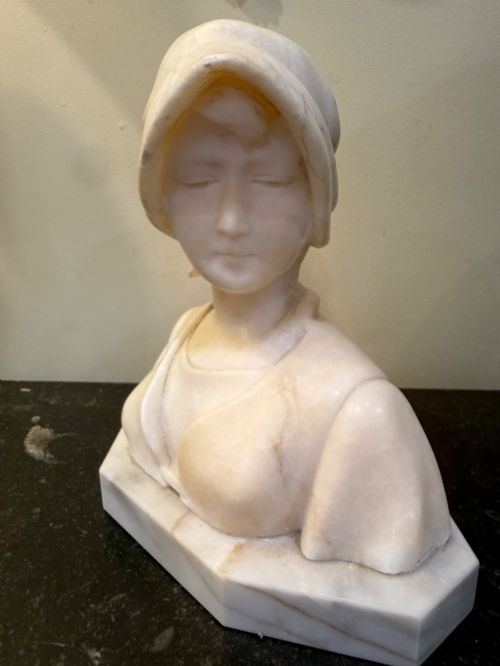
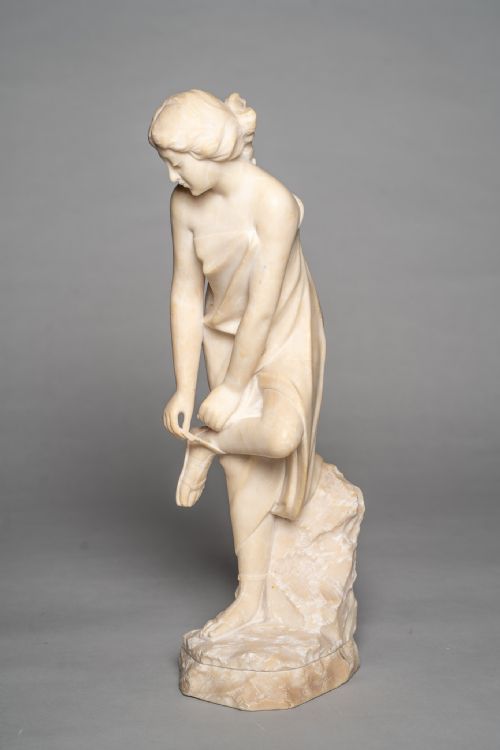
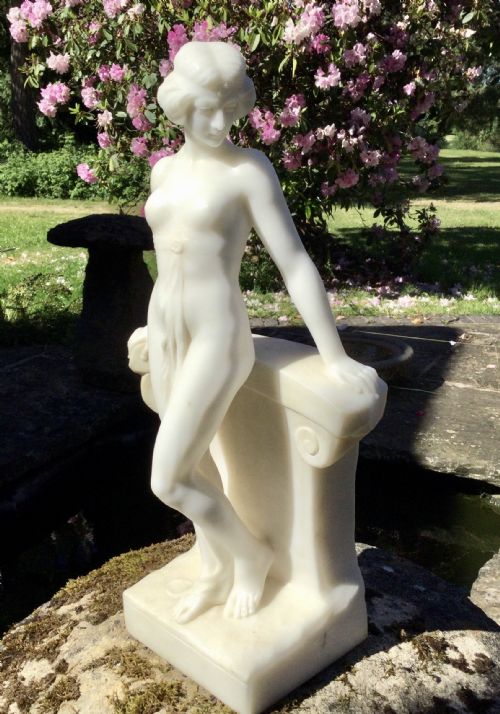
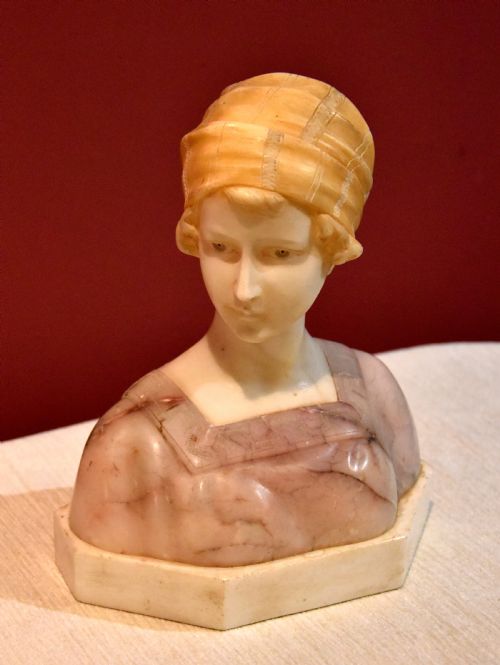
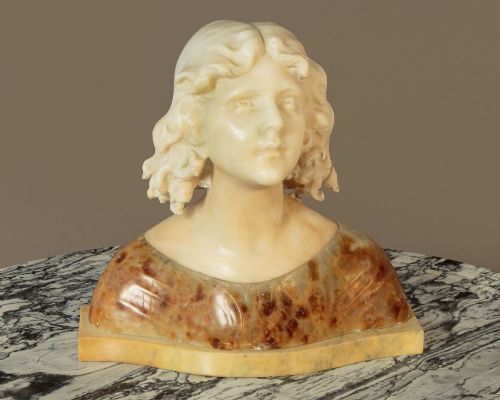


Alabaster Female Sculpture
An alabaster female sculpture brings nineteenth-century portraiture and classical mythology into domestic spaces through translucent stone and expressive carving.
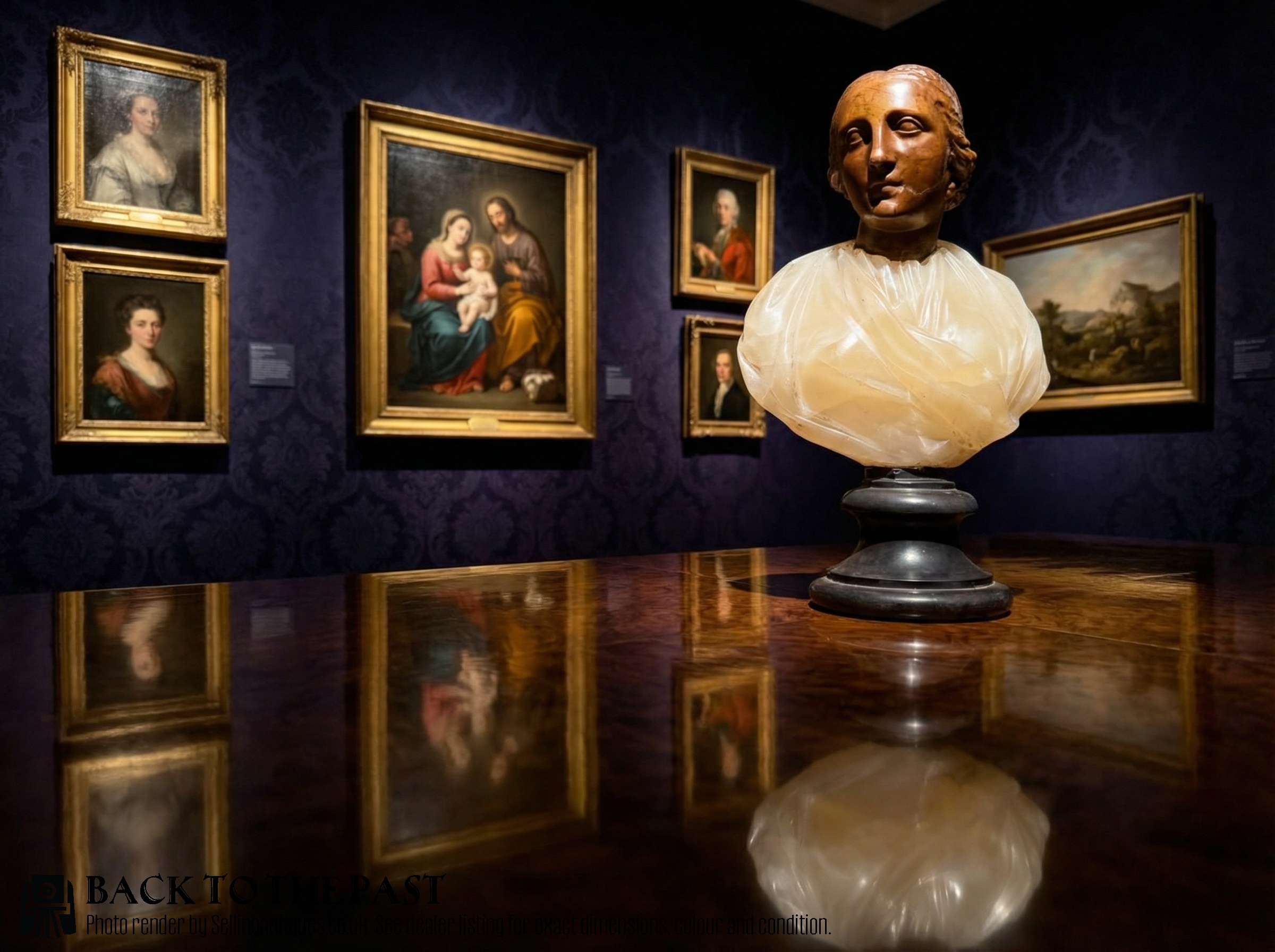
Alabaster Female Sculpture
When you search for alabaster female sculpture, you encounter a range of nineteenth-century and early twentieth-century works originating primarily from workshops in Italy and France. These pieces take the form of portrait busts, full-length figures, reclining nudes, and allegorical subjects such as goddesses and water carriers.
The objects span Victorian, Art Nouveau, and Art Deco movements, reflecting the shifting tastes in European sculpture from classical revivalism toward stylised modern forms. Busts of young women and girls dominate the selection, often accompanied by mythological representations like Hestia or literary subjects such as Mignon.
Makers and studios across Europe produced these sculptures to satisfy a strong demand for domestic art during the late nineteenth and early twentieth centuries. The surviving examples demonstrate varying scales, from modest bookends to large sculptural centrepieces.
Materials and Techniques
Carvers shaped these sculptures from blocks of soft alabaster, frequently combining the translucent stone with contrasting elements of white or grey marble, bronze, and gilt metal. Artisans exploited the natural softness of gypsum-based alabaster to achieve fine details in hair, drapery, and facial expressions.
Many works incorporate mixed media, mounting alabaster figures onto bases of veined marble, slate, or spelter. Some Italian and French examples utilise two-tone alabastering techniques, contrasting warm tinted sections with natural white stone to heighten visual depth.
Distinctions in Execution
Quality rests upon the crispness of the chisel work and the sensitivity with which the carver handled the translucent material. Finer pieces display subtle gradations in the stone, delicate undercut hair, and expressive hands, whereas lesser examples rely on mechanical finishing and display opaque, flat surfaces.
The integration of materials also determines the standing of a piece; works where the alabaster flows naturally into bronze drapery or sits securely upon a substantial marble plinth demonstrate superior workshop collaboration.
Affortunato Gory·Auguste Henri Carli·Fritz Kochendorfer·George Van Der Straeten·Emilio P. Fiaschi
The Alabaster Female Sculpture Glossary
- Alabaster
- A soft, fine-grained stone prized for its translucency and ease of carving. It requires careful handling because moisture damages the surface.
- Spelter
- A zinc alloy commonly used as a cheaper substitute for bronze in figural bases and mounts. It takes patination well to imitate heavier metals.
- Ormolu
- Gilt bronze applied to mounts and decorative elements on nineteenth-century sculpture bases. The technique involves mercury gilding or modern electroplating.
- Allegorical
- Representing an abstract idea or mythological concept through a human figure. Works often depict specific deities or personified virtues.
Alabaster Female Sculpture: Frequently Asked Questions
How do I clean alabaster sculptures safely?
Dust these pieces regularly with a dry, soft microfibre cloth to prevent particulate accumulation in the carved crevices. Avoid water, chemical solvents, and abrasive cleaners entirely, as alabaster dissolves easily in moisture and absorbs liquids.
For stubborn grime, consult a professional conservator rather than attempting wet cleaning at home. Protecting the stone from direct sunlight and high humidity preserves its delicate translucency over time.
Where should I display a heavy stone bust?
Place your sculpture on a sturdy, level surface such as a dedicated hardwood console or a reinforced pedestal that supports the full weight of the stone and marble base. Ensure the location remains away from high-traffic walkways where the piece might get knocked.
Keep the sculpture away from direct heat sources like radiators and fireplaces, which can dry out and destabilise the stone over prolonged periods.
How do I distinguish nineteenth-century works from later copies?
Examine the tooling marks under magnification; hand-carved nineteenth-century pieces display subtle chisel variations, whereas later reproductions often show mechanical sanding patterns. The patination on associated bronze or spelter elements also indicates age through natural oxidation.
Signatures carved directly into the stone or cast into metal bases provide further clues, though studio signatures require cross-referencing with known period active dates.
What distinguishes Art Nouveau pieces from Victorian ones?
Victorian classical sculptures adhere strictly to rigid symmetrical proportions and historical motifs, drawing heavily on antiquity and traditional drapery. Art Nouveau examples embrace asymmetric flowing lines, organic whiplash curves, and naturalistic flora integrated into the hair and base.
The choice of accompanying materials also shifts, with Art Nouveau carvers favouring mixed media like iridescent patinated bronze and variegated marble.